
Architect service online platforms have changed how homeowners and developers get professional design help. Here's a quick overview of what they are and how they work:
Getting a home designed used to mean weeks of back-and-forth with a local firm, unpredictable fees, and limited choices. Today, that's no longer the case.
Online architect platforms now connect clients with vetted professionals worldwide — often within hours. You can review 3D renders of your future home before a single wall goes up. You can compare fixed-price quotes without surprise fees. And you can manage the entire project from a single dashboard, on your schedule.
The technology driving this shift — BIM software, AI-powered rendering, smartphone scanning apps, and cloud collaboration tools — has matured significantly. As of May 2026, the options available to homeowners and developers are more capable and more accessible than ever.
I'm Rebecca Falzano, Creative Director with nearly 15 years of experience in design, storytelling, and content creation. My background working alongside architects, designers, and creative professionals gives me a grounded perspective on how architect service online platforms are reshaping the industry — and what actually matters when choosing one.
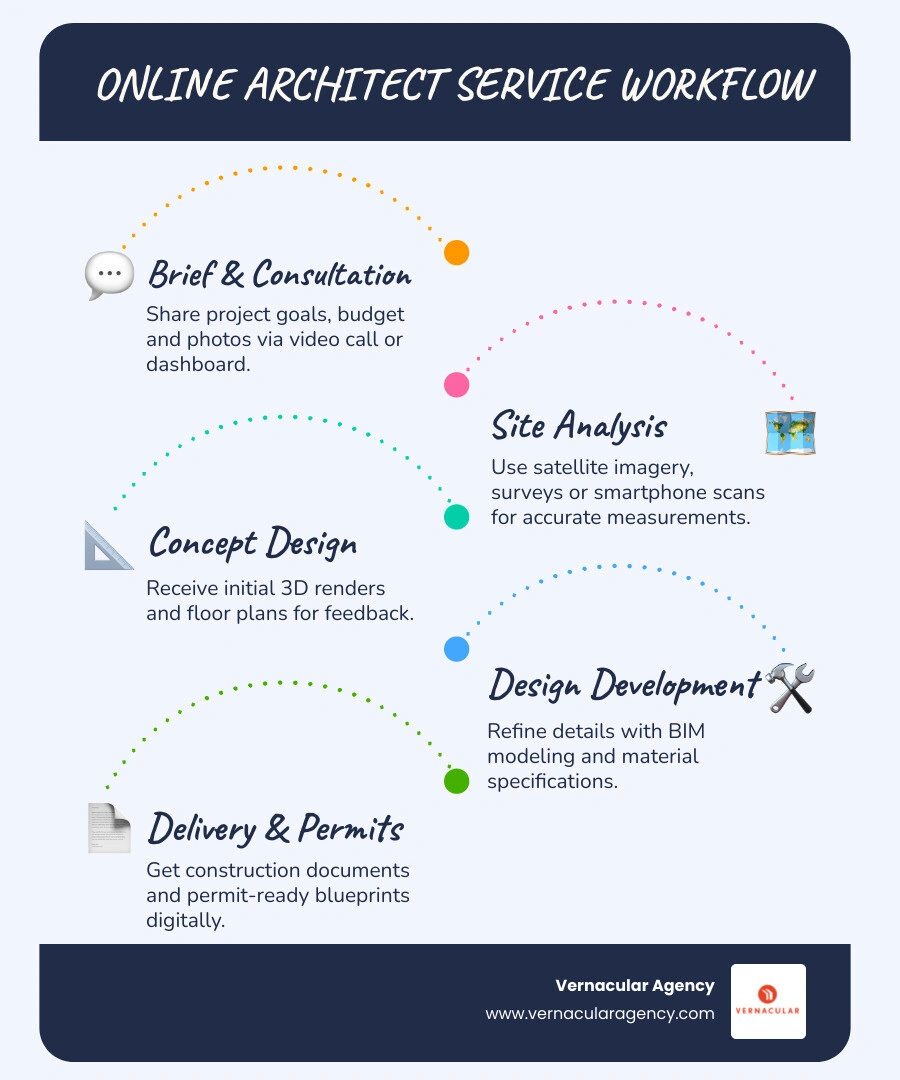
Architect service online word guide:
When we talk to clients about moving their design process to a digital space, the first question is usually: "Why?" The answer lies in a blend of efficiency and economics. As of 2026, choosing an architect service online isn't just a "budget" alternative; it’s often the more sophisticated choice for modern project management.
One of the most significant draws is cost-effectiveness. Statistics show that online architectural services are typically 20-30% more affordable than traditional in-person firms. This isn't because the quality is lower—it’s because digital firms have drastically reduced overhead. There are no expensive downtown studios to maintain or travel fees to bill. These savings are passed directly to you.
Furthermore, the Online Architectural Services model offers a level of transparency that traditional billing often lacks. Instead of wondering what an hourly rate will eventually total, many online platforms offer standardized service tiers and fixed-price packages. Whether you need a simple room renovation or a complex new build, you know the cost before the first line is drawn.
Speed is another major factor. Traditional firms often juggle local site visits and physical meetings, which can lead to "dead time" in a project schedule. Online services leverage global talent and asynchronous workflows, meaning your project can often progress while you sleep. With 24/7 digital dashboards, you can check the status of your blueprints at 10 PM on a Sunday without waiting for an office to open on Monday morning.
In the past, you were limited to the talent within a 30-mile radius of your property. If you lived in a rural part of Maine and wanted a cutting-edge, sustainable "Passive House" design, you might have been out of luck. Today, an architect service online allows you to hire a niche designer who specializes in exactly what you need, regardless of where they are located.
Whether you are looking for luxury residential experts or specialists in historical renovations, the digital marketplace opens doors to a wider pool of vetted talent. For firms looking to establish themselves in this space, our Architecture Firm Digital Strategy Guide highlights how specialized expertise is becoming the primary differentiator in the 2026 market.
With thousands of professionals available on various platforms, choosing the right partner requires a bit of homework. We recommend a three-step vetting process:
Many of our clients are surprised by how thorough the remote process actually is. It’s not just "drawing a few lines"; it’s a rigorous, data-driven methodology. Here is how a typical architect service online unfolds in 2026:
1. The Project Brief: Everything starts with a conversation. You’ll use customization tools to specify your goals, style preferences, and budget. This is where you share your "must-haves" and your "dream-ofs."2. Site Analysis: You might wonder how they "see" the land. Architects now use high-resolution satellite imagery and topographical surveys to understand your site’s orientation, sun paths, and slope. 3. Conceptual Design: The architect presents initial ideas, often through interactive digital whiteboards where you can leave comments in real-time.4. Design Development: This is where the concept turns into a functional building. 3D models are refined, and material selections are made.5. Construction Documents: The final stage involves creating the technical blueprints that contractors use to build. These are delivered via digital protocols, ready for printing or tablet use on-site.
For firms wanting to refine this workflow, Digital Marketing for Architecture Firms provides insights into how to present this process clearly to potential clients.
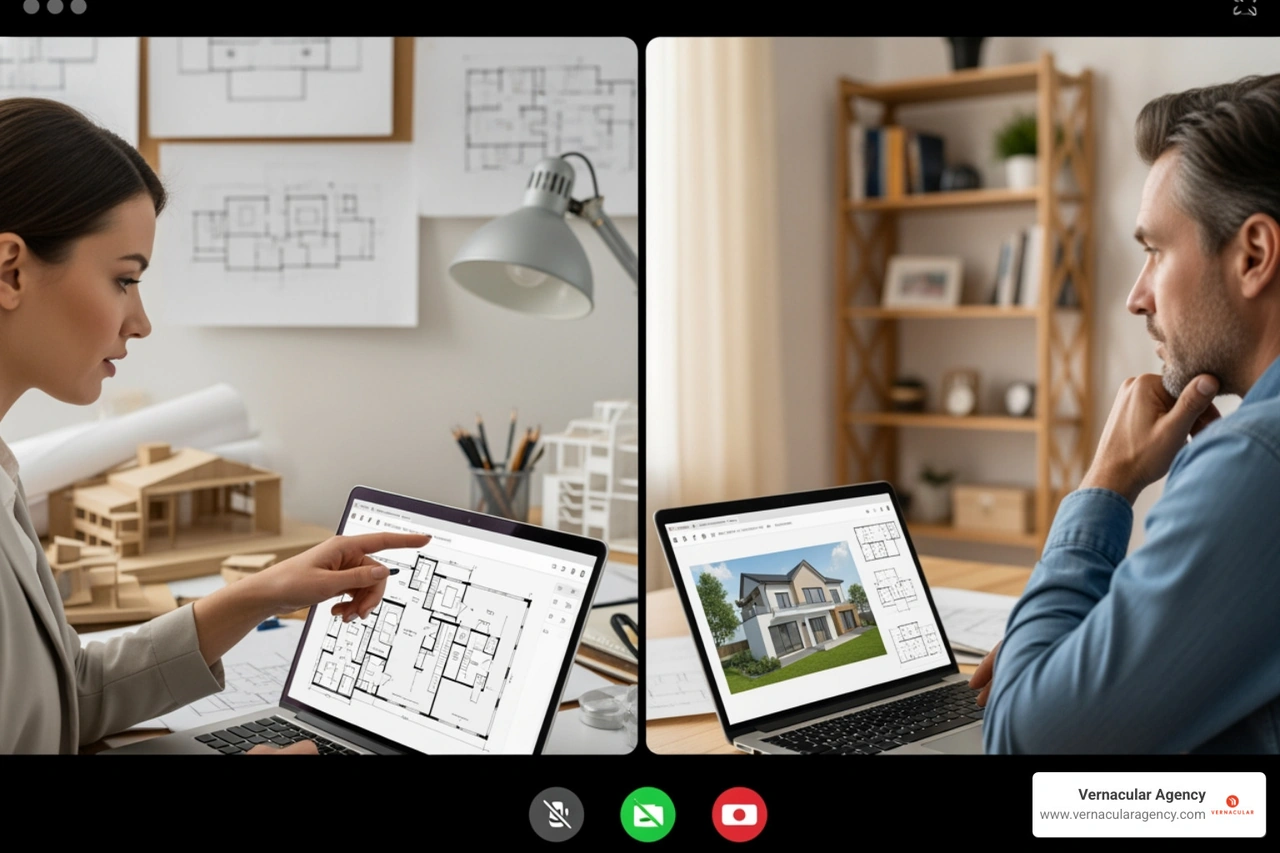
The initial meeting has moved from the conference room to the video call. But 2026 technology has made these calls incredibly productive. Reputable services now offer real-time sketching during video consultations. As you describe wanting more light in the breakfast nook, the architect can adjust the 3D model right in front of your eyes. This immediate feedback loop eliminates the "I’ll get back to you in a week" delay typical of traditional firms.
The "wow" factor of an architect service online usually happens during the visualization phase. Using AI-powered photorealistic rendering, you can "walk through" your home before it exists. You can see how the light hits the floor at 4 PM in November or how a different countertop material changes the mood of the kitchen. Once the visuals are approved, the BIM (Building Information Modeling) software generates the technical floor plans and material specifications with surgical precision.
The backbone of any successful online design is the tech stack. In 2026, we’ve seen a massive leap in how clients and architects interact.
If you’re a firm looking to optimize your digital presence, check out our Architecture Firm Website Design Tips 2026 for advice on integrating these tools into your client portal.
Pricing for an architect service online is generally more transparent than traditional models. Most platforms use one of three structures:

Many reputable platforms now use secure payment systems like Stripe to protect both parties. Some even offer money-back guarantees if the initial concepts don't align with your vision. To learn more about how firms position these prices, see our Architect Marketing Complete Guide.
A common concern with using an architect service online is: "Will this work in my town?" The short answer is yes, but it requires a coordinated approach.
Most high-end online architects design according to the International Building Code (IBC) and International Residential Code (IRC). However, local zoning laws in places like Portland, Maine, can have specific quirks. To bridge this gap, online firms often use AI-assisted code compliance tools that cross-reference your address with a database of over 150 jurisdictions.
For the final "stamp" required for a permit, the online architect will often coordinate with a local structural engineer or a "permit expeditor." They provide the code-compliant design, and the local professional verifies that it meets specific regional requirements (like snow load ratings for Maine winters). This "hybrid" model gives you the best of both worlds: world-class design and local legal compliance.
In 2026, we rarely need a person with a tape measure to visit. Most clients use smartphone scanning apps that create a digital twin of the property. For new builds on empty land, architects use satellite data and topographical surveys. If the project is highly complex, they may recommend you hire a local surveyor for a one-off visit to provide a "point cloud" file.
Yes, provided they are prepared to professional standards. Most online services provide "permit-ready" sets. However, keep in mind that many jurisdictions require a local professional's seal. Reputable online firms will work directly with your local engineer or contractor to ensure the documents are accepted without a hitch.
While an architect service online is incredibly powerful, it isn't a magic wand. For extremely complex historical restorations where structural "surprises" are hidden behind every wall, an in-person architect might be preferable. Additionally, if you are the type of person who needs to physically touch every material sample with your architect, the digital model—while visually perfect—cannot yet replicate the tactile feel of a specific slab of Maine granite.
The shift toward architect service online platforms represents a fundamental change in how we build our world. It’s a move toward accessibility, transparency, and high-tech collaboration. At Vernacular Agency, we’ve seen how a strong digital strategy can transform a traditional firm into a global player, and how homeowners can finally get the design quality they deserve without the "architectural ego" or the massive price tag.
Whether you are a homeowner in Maine looking to expand your footprint or a firm looking to scale your digital presence, the future of architecture is online.
Ready to elevate your firm's digital presence? Explore our Marketing Services for Architects to see how we can help you lead the digital transformation.
