
Architectural content writing is the practice of translating complex design concepts and spatial experiences into clear, engaging narratives. It combines technical knowledge with creative storytelling to make architecture accessible to diverse audiences—from potential clients to industry peers. The purpose is to attract clients, establish thought leadership, and differentiate your firm through project descriptions, blog posts, case studies, and website copy.
In today's digital landscape, the ability to communicate a project's vision through writing is as important as the design itself. This skill creates a "digital edifice"—a strong online presence that fortifies brand values and attracts the right projects. Yet many architects struggle to transition from visual thinking to written expression, leaving their best work unfinded.
Your firm creates stunning buildings, but if you can't translate that vision into words, those stories remain locked away. The business case for content is compelling: content marketing generates 3x more leads than traditional marketing while costing 62% less. For architecture firms, strategic content writing helps you stand out, showcase your unique design philosophy, and build relationships with high-value clients.
I'm Rebecca Falzano, Creative Director at Vernacular Agency, with nearly 15 years of experience as a shelter magazine editor and writer. I've helped architecture firms transform complex design concepts into compelling narratives that drive measurable business results.
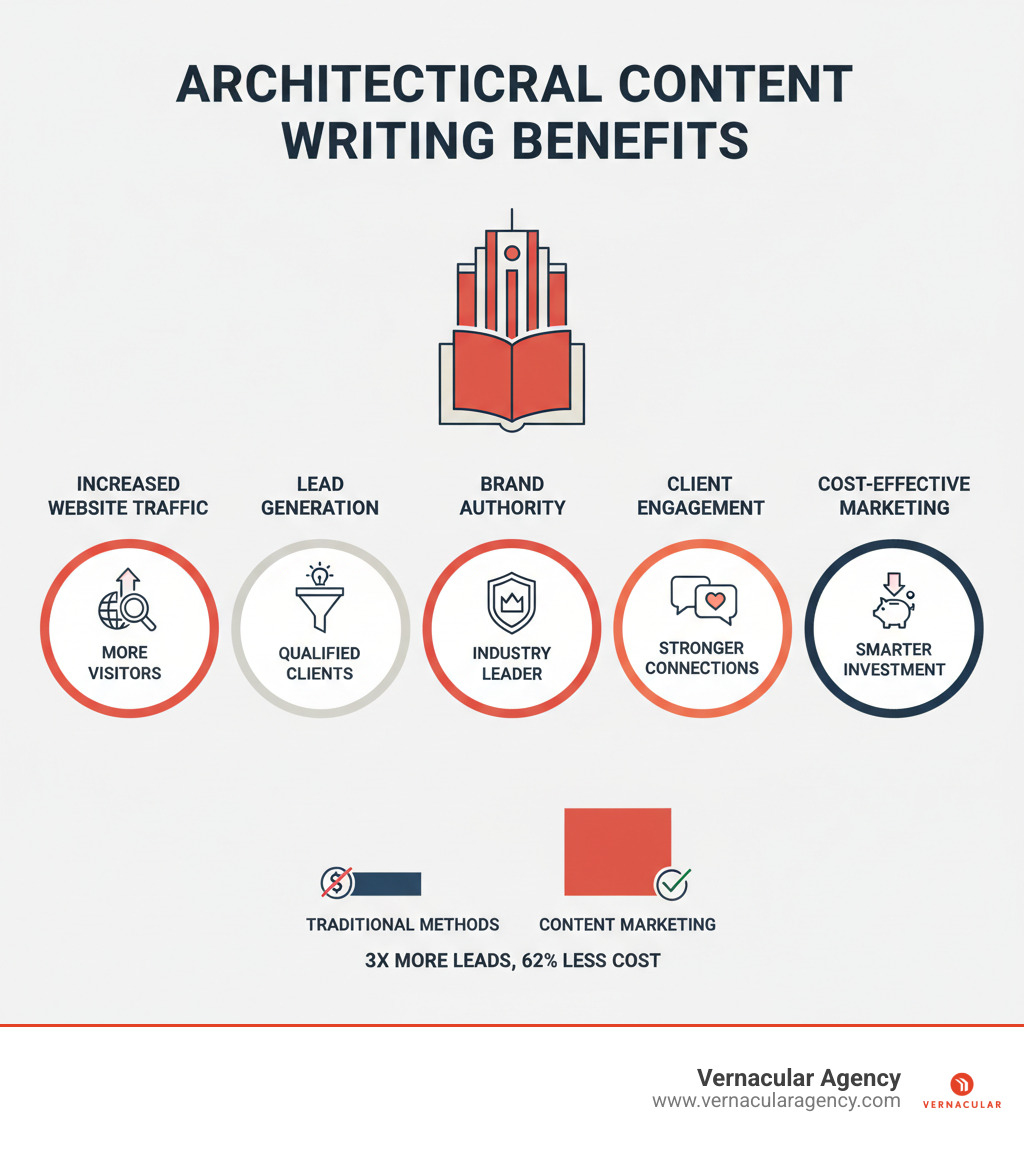
Every remarkable building starts with a blueprint—and the same principle applies to architectural content writing. A thoughtful content strategy is the foundation that supports everything you publish, ensuring each piece strengthens your brand and connects with the right clients. It's a cohesive system that reflects your brand objectives, speaks to your target audience, and positions you as a leader. When done right, this strategic approach generates three times more leads than traditional marketing while costing 62% less.
Your content strategy translates your design vision into narratives that resonate with readers, ensuring every article and case study reinforces your firm's unique value. For guidance on developing this broader framework, explore our insights on Marketing Strategy for Architects.
Before writing, ask: Who are we? and Who needs to hear from us? Start by defining your brand values and mission. What drives your design? Whether it's sustainable design, adaptive reuse, or innovative commercial spaces, what sets you apart should be articulated in your content. Understanding your Brand Identity for Architects provides the clarity you need to communicate authentically.
When you establish clear brand objectives—like innovation, craftsmanship, or community-focused design—you attract clients who share your values. Identifying your ideal clients is equally crucial. Are you speaking to homeowners, corporate developers, or industry peers? Each audience has different needs. A developer wants to see ROI, while a homeowner wants to feel confident you'll create their dream space.
Competitor analysis helps identify gaps in the conversation. What questions aren't being answered? By understanding your audience and the competitive landscape, you can position your content to fill those gaps and stand out.
A solid content strategy balances ambition with practicality. Start with clear goals: Do you want to increase brand awareness, generate leads, or establish thought leadership? Your goals determine what you create and how you measure success.
Weave industry trend research into your content. Addressing topics like energy consumption or sustainable housing positions you as forward-thinking. To bring these elements together, consider using an Architecture Marketing Plan Template: The Ultimate Guide. A structured approach ensures your content strategy supports your business goals from day one.
Once your blueprint is in place, it's time to bring your designs to life through words. This is where architectural content writing transforms from strategy into art, turning buildings into narratives that resonate with readers. Every structure has a story—the client's vision, the challenges overcome, the community impact. Effectively communicating a project is arguably as important as the design itself.

The goal isn't to impress peers with "ArchiSpeak," that insider language that alienates clients. Your writing should welcome readers in, not shut them out. This balance between technical insight and accessible narrative is what makes content compelling. Our Content Creation & Creative Direction Services help firms master this balance.
To craft compelling narratives, use these strategies:
In architecture, words and images work together. High-quality photography, project renderings, and diagrams are essential. They create aspiration and help convey spatial experiences that words alone cannot. Optimize images for search engines and pair them with clear, evocative captions.
Architectural content writing thrives across multiple formats:
Each format works together to create a comprehensive content ecosystem. Our Website Design for Architects services ensure these diverse content types are beautifully integrated into a cohesive online presence.
Creating great architectural content writing is only half the battle. To realize its potential, you must ensure it reaches the right people. Strategic promotion and search engine optimization (SEO) turn your content into a powerful tool for attracting high-value clients.

Effective content marketing builds genuine relationships. By consistently sharing valuable insights, you position your firm as a trusted expert, turning readers into loyal clients. The results can be remarkable; one firm saw a 7x increase in digital leads and a 5.3x increase in website traffic through strategic content marketing. To learn more about the strategies that drive these results, visit our page on Digital Marketing for Architecture Firms.
SEO makes your content findable. When someone searches for "sustainable architect in Portland," you want your firm to appear. SEO-optimized content can increase organic search traffic by 1000%, making it a highly cost-effective marketing investment.
By implementing these strategies, you increase online visibility and attract more qualified leads. For a complete guide, check out SEO for Architects: The Complete Guide.
Once your content is optimized, promote it to build connections.
To know if your efforts are working, measure your success. Use Google Analytics to track website traffic and user behavior. Track leads from contact forms to see which content generates business. Monitor engagement metrics (likes, shares, comments) on social media to see what resonates. Finally, ask new clients how they found you. This data helps you refine your architectural content writing strategy for maximum impact.
Good architectural content writing transforms your firm from a service provider into a trusted authority. It builds a case for your designs that goes beyond visuals, showing potential clients not just what you've built, but how you think and what you value. When you develop insightful case studies that explain your process, you build trust and demonstrate value in a way photos alone cannot. For strategies on turning this trust into opportunities, explore our guide on Lead Generation for Architects.

Certain mistakes can undermine even the most brilliant design work. Here are common pitfalls and how to avoid them:
Being a great architect doesn't automatically make you a great writer. Professional architectural copywriters understand both worlds and can translate your design intent into content that connects with real people.
Working with a specialized agency ensures your brand is optimized for digital reach while you focus on creating incredible architecture. For comprehensive support, consider partnering with a specialized Marketing Agency for Architects.
To engage a broader audience, focus on storytelling over specifications. Explain the why behind your design choices and how they improve the lives of the people using the space. Use analogies to make complex ideas relatable—for example, describe a courtyard as "an outdoor room with the sky as its ceiling." This helps non-architects visualize your concepts. Most importantly, read your work aloud. If it sounds like a textbook, rewrite it to be more conversational and human.
Several formats are key for a successful content strategy. Project case studies are non-negotiable; they showcase your design process and prove you can deliver results. Blog posts are your SEO workhorses, helping you rank in search results and establishing you as a thought leader on topics like sustainable design. Finally, visual content on social media, especially Instagram and Pinterest, is essential for building brand awareness where potential clients are already looking for inspiration. Don't forget your core website copy, as it's often the final touchpoint that converts a visitor into a lead.
Measuring your content's ROI doesn't have to be complicated. Start with Google Analytics to track website traffic, see where visitors are coming from (organic search, social media), and which pages are most popular. Next, track lead generation by monitoring how many people fill out your contact form or download your portfolio. This shows which content is driving business inquiries. Finally, look at engagement metrics on social media (likes, shares, comments) and in your email newsletters (open rates, click-through rates). These numbers tell you what content resonates most with your audience, helping you refine your architectural content writing strategy.
Your designs tell powerful stories of innovation and problem-solving. Architectural content writing is the tool you use to share that vision with the world, turning technical concepts into narratives that connect, inspire, and convert prospects into clients.
Throughout this guide, we've covered how to build a content blueprint, craft compelling narratives, and maximize your reach with SEO. The firms that thrive today are those that communicate their value as clearly as they demonstrate it. By sharing the story behind your work, you build the trust that leads to your next great project.
We know that writing isn't every architect's strength, and your time is better spent designing. At Vernacular Agency, we translate architectural vision into words that work—words that rank in search engines and resonate with your ideal clients. Your portfolio speaks volumes, but your content gives it a voice.
Your next client is searching for exactly what you offer. Let's make sure they find you. Build your firm's digital presence with our expert web development services.
