
An architectural photography website is your digital portfolio, sales tool, and brand ambassador. Here’s what you need to know.
Essential Elements of a Successful Architectural Photography Website:
The numbers tell a compelling story. The global architectural photography market is projected to grow from $1.2 billion in 2022 to $2.1 billion by 2030. More importantly, 85% of potential clients visit a photographer's website before making a booking decision.
Your website isn't just a nice-to-have. It's the difference between being found and being invisible.
In the competitive field of architectural photography, your online presence is paramount. As one creative director put it: "Your website serves as your digital storefront, a curated gallery showcasing your unique vision and technical prowess to potential clients and collaborators."
The challenge is creating a site that does justice to your work while attracting the right clients—one that's fast, beautiful on any device, and converts visitors into customers.
With nearly 15 years of experience in creative direction, I've guided countless photographers in building compelling architectural photography websites. In this guide, I'll walk you through the essential elements that transform a simple portfolio into a powerful business tool.
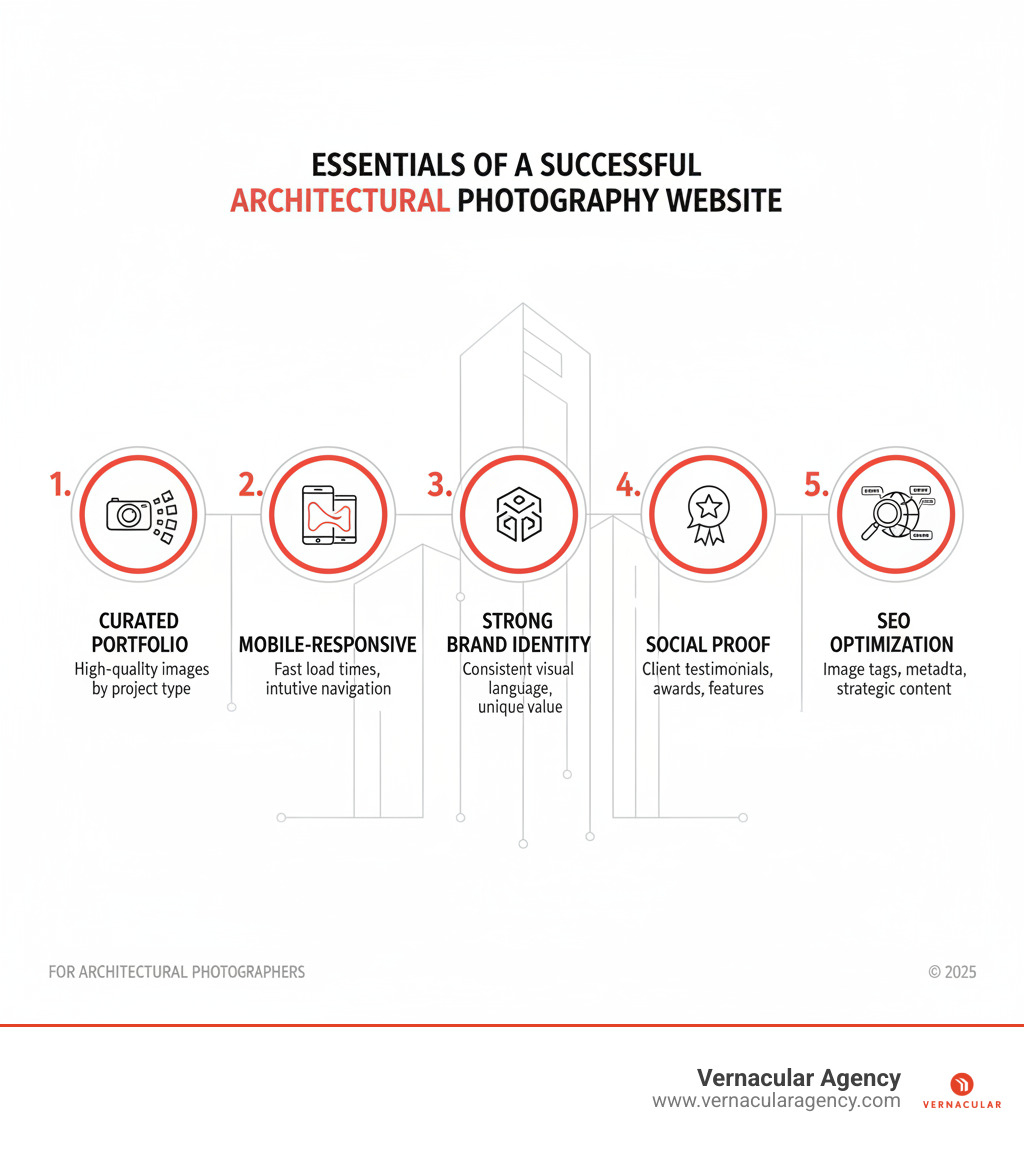
Your architectural photography website is like a building—it needs a solid foundation and an effortless user experience. Just as you wouldn't photograph a poorly designed space, don't settle for a website that fails to do justice to your work.
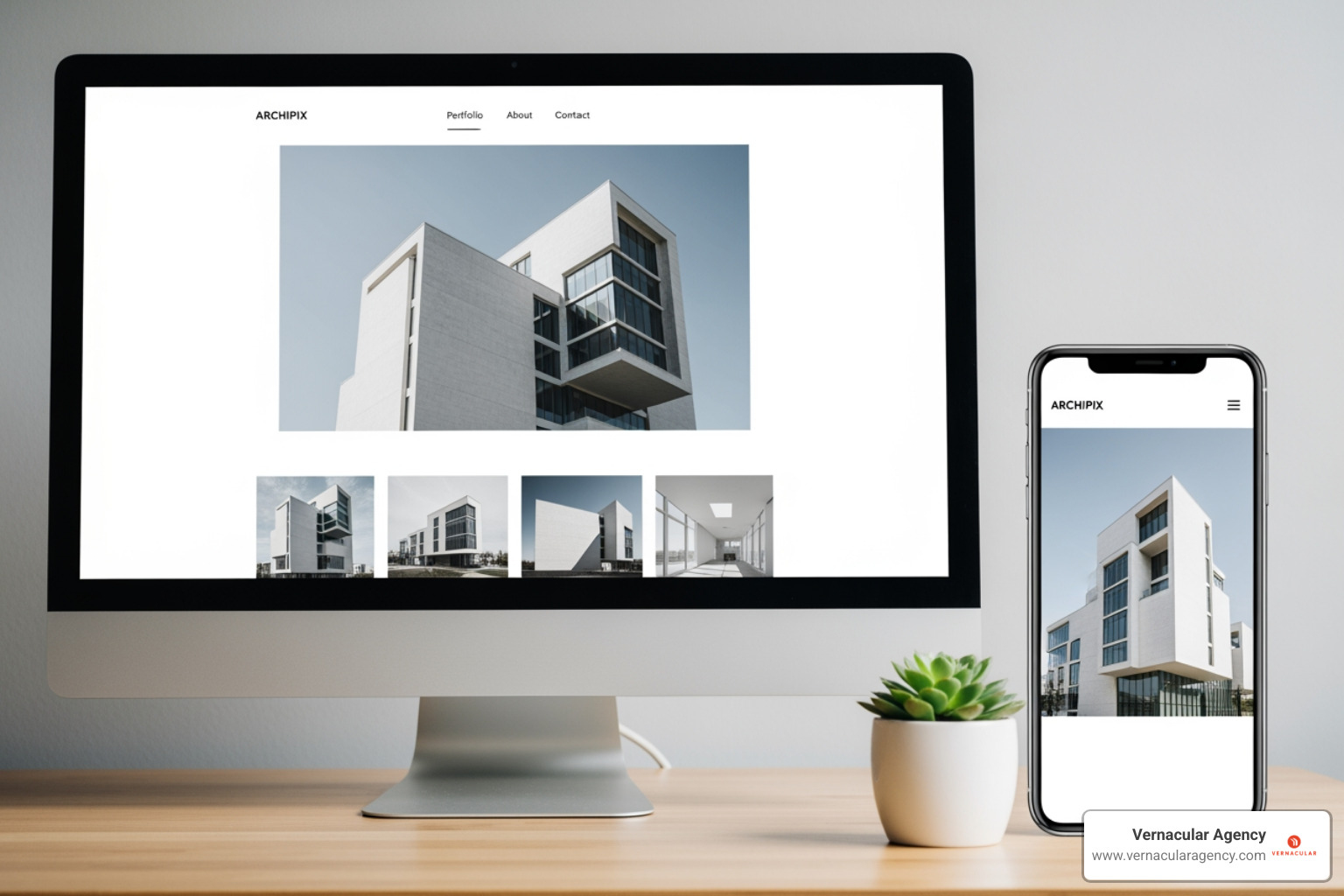
Your website should improve your photography, not compete with it. This means embracing minimalist design, using negative space to let your images breathe, and ensuring navigation is intuitive. When a website gets this right, client inquiries can jump by up to 50%.
The goal is simple: let your images be the star.
Before uploading a single photo, you must decide where your architectural photography website will live. This choice affects design control, portfolio updates, and scalability.
You have two main paths: website builders or custom development.
Website builders offer ready-made templates designed for photographers. They are straightforward to use and often include features like grid layouts and full-screen galleries that are ideal for showcasing architectural photography.
However, if you want a website that truly reflects your unique vision and stands apart, custom development is worth considering. Working with a specialized team gives you complete control over every detail, ensures optimal performance, and allows your site to grow with your business.
WordPress sits in the middle, offering flexibility through themes and plugins while remaining manageable for most photographers.
When choosing, consider three things: ease of use (can you update it yourself?), customization (can it achieve your vision?), and scalability (will it grow with you?).
For more insights on creating a standout online presence, explore our guide on Website Design for Architects.
Good design for an architectural photography website follows timeless principles while staying current.
Minimalism is practical. Clean layouts with plenty of negative space let your photographs command attention. Think of your site as a gallery with white walls; your images are the art.
Intuitive navigation means visitors find what they need without thinking. Your portfolio, contact page, and about section should be easy to reach. If someone has to hunt for your contact info, you've lost them.
Mobile-first design is non-negotiable. With over 60% of users on phones, your site must look stunning on every screen. Images should scale beautifully and load quickly on cellular connections.
Speaking of speed, fast load times are critical. Visitors won't wait for slow-loading pages. Optimize every image for the web, reducing file sizes without sacrificing visual quality. You must reduce the actual file resolution for faster loading, even if your CMS scales images visually.
2025 design trends include dynamic layouts, subtle interactive elements, and immersive storytelling. Think hover effects that reveal project details or galleries that pull viewers deeper into your work. We're also seeing a shift toward "warm minimalism"—clean design that feels inviting through thoughtful use of texture and color.
The best websites blend these principles seamlessly. They're fast, beautiful, and so easy to use that visitors focus entirely on your photography.
For more on creating visually compelling and functional sites, check out our insights on Architecture Website Design.
Your portfolio is the heart of your architectural photography website. It's your chance to show how you see the world—the way light transforms a space, the emotion a building can evoke, and the story behind every frame.
More isn't better. A portfolio is a gallery exhibition, not a storage unit. Curation is an art form in itself.
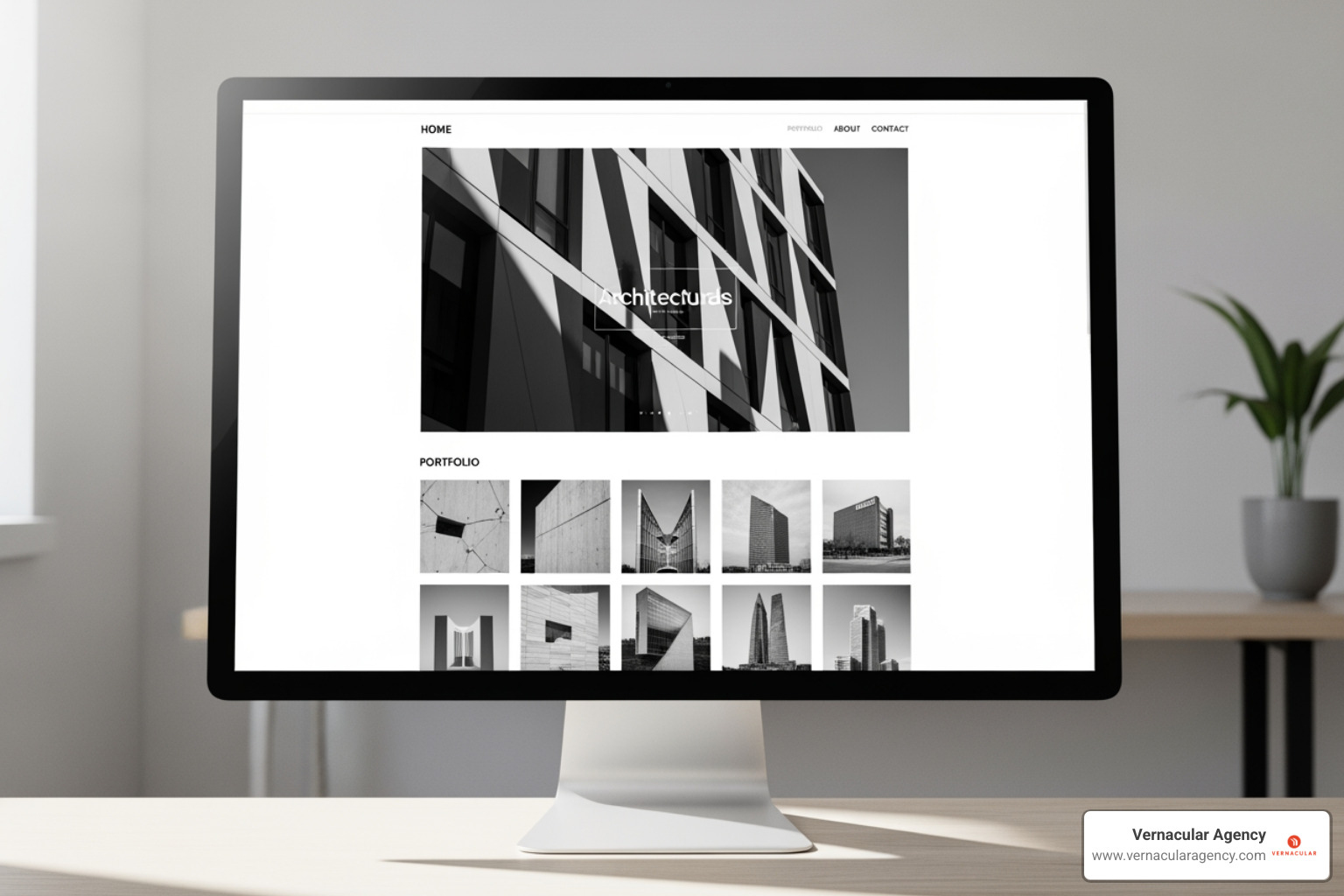
Focus on your absolute best work—typically 15-20 carefully selected projects. Each should demonstrate your technical skill and unique perspective. Quality trumps quantity in attracting high-value clients. Take inspiration from photographers like Ema Peter, whose portfolio showcases a range of spaces with impeccable quality and storytelling.
Your images should tell a story, showcase your style, and convince potential clients that you're the right photographer for them. For more guidance on structuring your visual narrative, explore our insights on Architecture Portfolio Website.
How you present your photographs makes all the difference on your architectural photography website.
Categorize your projects logically for your clients (e.g., Residential, Commercial, Public Spaces). This helps them quickly find relevant work.
Add value with detailed project descriptions. Include the project name, location, the architect or designer, and a brief story. These narratives demonstrate your understanding of architecture and problem-solving skills.
Highlighting architectural details sets you apart. Include sweeping wide shots, but also zoom in on details like material interplay or custom joints. These close-ups showcase your trained eye.
Integrate video walkthroughs and drone photography. These dynamic formats offer perspectives static images can't, revealing how a building relates to its landscape. Ensure any video is as professional as your photography.
Finally, optimize your images. Large files must be converted to web-friendly versions that load quickly without sacrificing quality. Slow galleries lose clients.
Your architectural photography website is a statement about you as an artist. Your unique vision is why clients choose you.
Define your style. Are you drawn to dramatic light, a warm lived-in quality, or surreal stillness? Understanding your aesthetic is the first step to communicating it.
Great architectural photography captures emotion in spaces. It makes viewers feel the serenity of a chapel or the energy of a plaza. Your job is to translate the architect's vision into an image that resonates emotionally.
Consistency in editing makes your portfolio cohesive. A recognizable through-line in your color grading and contrast reinforces your brand and makes your work instantly recognizable.
Curating a signature look means being selective. Every image should reflect your artistic vision and unique perspective. If an image doesn't, it doesn't make the cut, no matter how technically perfect.
For inspiration on how leading firms present their visual identity, check out examples from Great Architecture Websites.
Your architectural photography website tells a story—not just about buildings, but about you. It's your digital handshake, helping clients understand who you are, what you stand for, and why they should choose you.

Clients hire an artist with a unique perspective, not just a camera operator. Your personal narrative transforms your site from a simple portfolio into a compelling brand experience.
Your About page is where this happens. Authentically share what drew you to architectural photography. Personal narratives and project insights create genuine connections with your audience.
Your unique value proposition must be clear. Do you have an architecture background? Do you specialize in capturing the lived-in feel of residential spaces? Whatever sets you apart, own it.
Make your Contact page easy to use. Include your email, phone number, and a simple contact form. Mentioning your service area, like Portland, Maine, helps with local SEO.
A professional headshot and a concise bio humanize your brand. Highlight your experience, collaborative approach, and passion for the work.
In architectural photography, reputation is everything. Social proof is your secret weapon on your architectural photography website.
Client testimonials are gold. A rave review from a respected architect carries serious weight. Feature these prominently, especially local ones from a Maine architect if you're targeting that market.
Use case studies to tell the full story. Detail the challenge, your creative approach, and the results, such as helping a developer lease a space faster or winning an architect a design award.
Awards and publications boost your credibility. Showcase recognition from organizations like Architizer or Dezeen. Being named an Architizer A+ Award Winner or having your work selected as the Dezeen Awards Architecture Photograph of the Year tells clients you're exceptional.
Press features also matter. Display features in publications like Forbes or industry magazines prominently.
These elements are trust signals. They prove that others have trusted you with great results, making your website a persuasive argument for why you're the right choice.
You've built a stunning architectural photography website, but how do you get people to find it? This is where Search Engine Optimization (SEO) and content marketing come in.
Your website is a beautiful gallery that needs to be on a well-traveled street. The goal is to increase online visibility and attract organic traffic from ideal clients actively searching for photographers. A thoughtful SEO and content strategy can lead to remarkable results, such as a 7x increase in digital leads and a 5.3x increase in website traffic.
For a broader perspective on creating successful online presences in the design world, explore our insights on Architecture and Design Websites.
SEO for photographers is visual. We must be strategic in helping search engines understand your images.
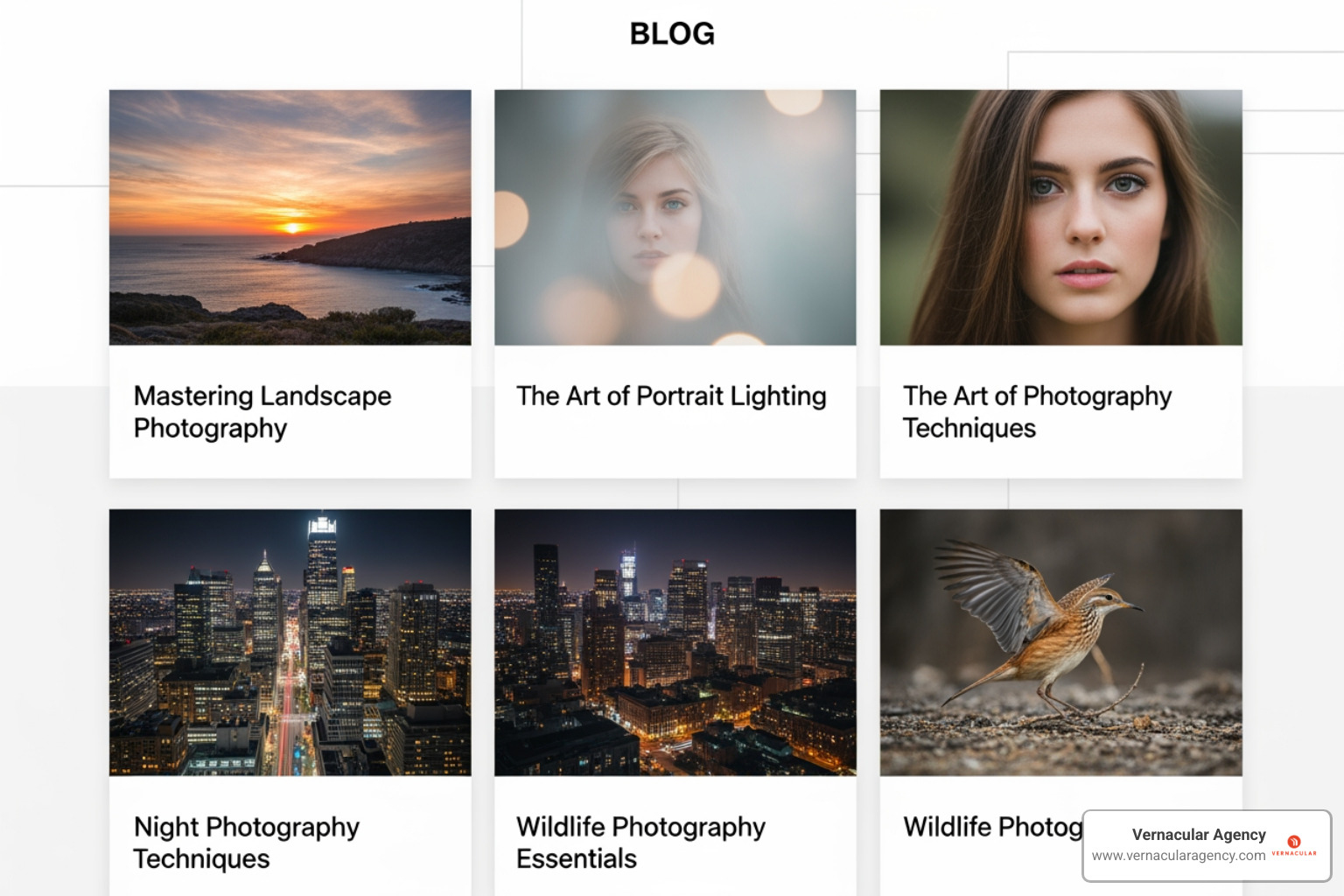
A blog is a powerful tool for establishing expertise, attracting organic traffic, and connecting with clients. You don't need to write novels; short, engaging posts that offer genuine value work beautifully.
Valuable blog content ideas include:
A blog adds depth to your work, showcasing your passion and versatility. Every post is another chance for search engines and potential clients to find you, complementing the visual impact of your Works.
Here are answers to common questions about building or refining your online presence.
Quality over quantity is key. Your architectural photography website is a curated exhibition, not a storage locker.
We recommend selecting your best 15-20 projects, with 5-10 compelling images each that tell a cohesive story. Show variety in architectural styles and project types to demonstrate your versatility. Most importantly, keep it updated to reflect your current skills and the work you want to attract.
The goal is to leave potential clients wanting more, not scrolling endlessly.
Yes. A blog transforms your architectural photography website from a static portfolio into a dynamic resource that establishes your expertise and connects with clients.
The SEO benefits alone are worthwhile. Fresh content targeting specific keywords brings new visitors to your site. A blog also gives clients insight into your process, personality, and passion. When they read about your approach, they get to know you beyond your technical skills.
Blog content is also shareable on social media, expanding your reach and positioning you as an industry expert.
Avoid these common pitfalls to stay ahead of the competition:
Building an exceptional architectural photography website isn't just a technical exercise—it's about crafting a digital home that truly represents who you are as an artist. Throughout this guide, we've walked through the essentials together: choosing the right platform and design approach, curating a portfolio that tells your story, establishing your brand with authenticity, and making sure the right people can actually find you online.
The truth is, a great architectural photography website works when all these elements come together seamlessly. Your stunning visuals need to load quickly. Your unique artistic vision needs to shine through without technical hiccups getting in the way. Your brand story needs to resonate with the architects, designers, and developers you want to work with. When these pieces align, your website becomes more than just a digital portfolio—it becomes your most effective marketing tool, quietly working around the clock to showcase your talent and connect you with new opportunities.
For photographers in Maine and beyond who are serious about growing their business, the value of a professional online presence can't be overstated. The difference between a DIY site thrown together in an afternoon and a thoughtfully designed, strategically optimized website can literally be the difference between struggling to find clients and having them seek you out.
If you're ready to create a digital presence that does justice to your craft and helps your business thrive, we'd love to help. At Vernacular Agency, we specialize in building websites that don't just look beautiful—they perform. We understand the unique needs of visual artists and know how to translate your artistic vision into a powerful online experience.
Start building your professional web presence today and let's create something remarkable together.