
Architecture firm branding is the strategic foundation that transforms talented designers into memorable, sought-after practices. In an industry where nearly 70% of potential clients choose architects based on their brand reputation, your visual identity, messaging, and client experience matter just as much as your design skills.
Key components of effective architecture firm branding include:
The architecture industry has grown significantly, with over 109,000 architects practicing in the United States alone - a 10% increase since 2008. This growth means more competition. A strong brand doesn't just help you stand out; it builds trust, attracts your ideal clients, and allows you to command premium fees.
Firms like Bjarke Ingels Group prove that a compelling brand can attract global attention. Their playful yet sophisticated identity reflects their "hedonistic sustainability" philosophy, showing that even serious architectural practices can accept bold, memorable branding.
Your brand is your firm's first impression - often made before potential clients ever see your portfolio. It's the story that connects your design philosophy to human emotions and business outcomes.
I'm Rebecca Falzano, a Creative Director with nearly 15 years of experience in brand development. I've seen how strategic branding transforms architecture firms from service providers into trusted partners who shape the built environment.
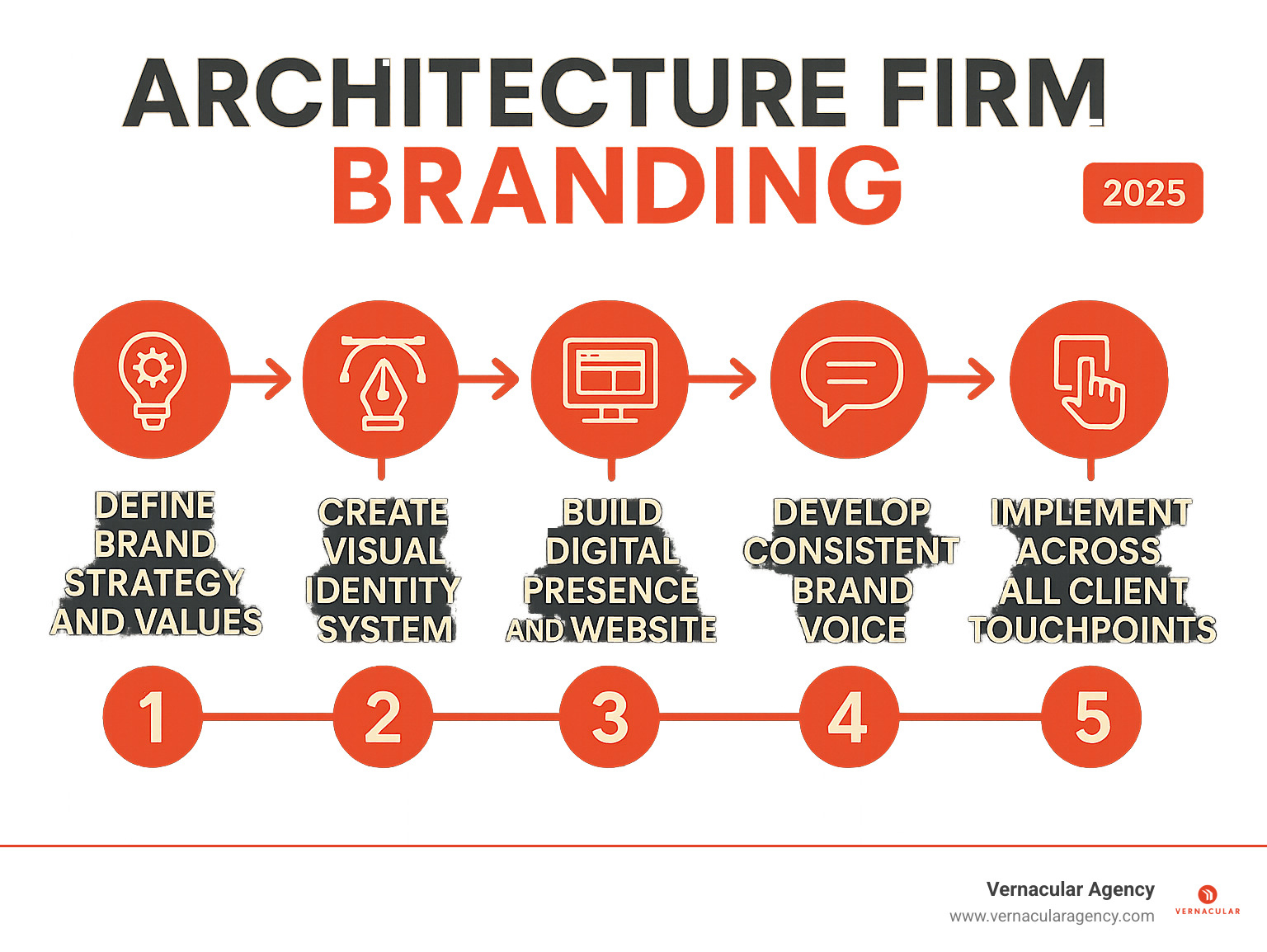
Architecture firm branding vocabulary:
The magnetic pull of a great building comes from clear vision and authentic purpose. Architecture firm branding works the same way. Before considering logos or colors, you must define who you are and what you stand for. This foundational work is what separates memorable practices from forgettable ones.

Your brand strategy is like your architectural program – it defines the essential requirements before design begins. Without this clarity, even the most beautiful logo won't connect with the right clients or attract the team members you want.
The process requires honest reflection. What drives your firm beyond just completing projects? What kind of legacy do you want to build? These aren't just philosophical questions – they're business-critical decisions that shape everything from your marketing messages to your hiring choices.
Every successful firm has a purpose beyond plans and budgets. Whether you're passionate about affordable housing, sustainable design that heals communities, or historic preservation, this "why" is your driving force.
Your mission statement should capture this in clear, simple language. Your vision paints the picture of the future you're working toward. Your core values are the principles that guide every decision, from which projects you take to how you treat your team.
These aren't just words for your website – they're the foundation of your company culture. When your values are clear and authentic, they become a magnet for both clients and talent who share your vision. The best architects want to work for firms with strong reputations and clear design philosophies.
This clarity also builds client trust. When people understand what you stand for, they feel more confident investing in your services. They're not just hiring an architect – they're partnering with someone who shares their values.
Getting clear on your "why" helps define your unique selling proposition. What can you deliver that others can't? This becomes the cornerstone of our Brand Identity services.
Just as you design buildings for specific people, your brand should speak directly to your ideal clients. The firm that designs cutting-edge tech offices needs a different brand voice than one specializing in cozy coastal homes.
Start by understanding your target audience deeply. What are their client pain points? Are they first-time homeowners overwhelmed by the process? Commercial developers racing against deadlines? Municipalities balancing historic character with modern needs?
Consider the practical details too. What project types energize your team? What budget levels allow you to do your best work? Does your geographic location influence the kind of work you want to pursue?
Creating a detailed customer persona through market research helps you understand not just who your clients are, but how they think. When you truly understand their world, you can craft messaging that makes them feel seen and understood.
With thousands of architecture firms competing for attention, you need a clear position in the market. This means understanding what makes you different – and having the confidence to own that difference.
Competitor analysis isn't about copying others. It's about finding the gaps where your firm can shine. Maybe everyone in your area focuses on modern design, but you have a gift for blending contemporary needs with traditional craftsmanship. Perhaps other firms talk about sustainability, but you live it through your material choices and construction methods.
Your specialization becomes your superpower. Whether it's sustainable design, historic preservation, or innovative commercial spaces, going deep in your area of expertise makes you the obvious choice for clients with those specific needs.
This focus prevents the trap of being everything to everyone, which leads to a weak brand. Instead, you become known for something specific. Your value proposition becomes clear, allowing you to charge premium fees, attract better projects, and build a reputation that opens doors. A clear market position helps you build a practice around work you love.
With your strategic foundation in place, it's time to bring your brand to life visually. This is the moment your brand becomes a tangible experience, much like a finished building.
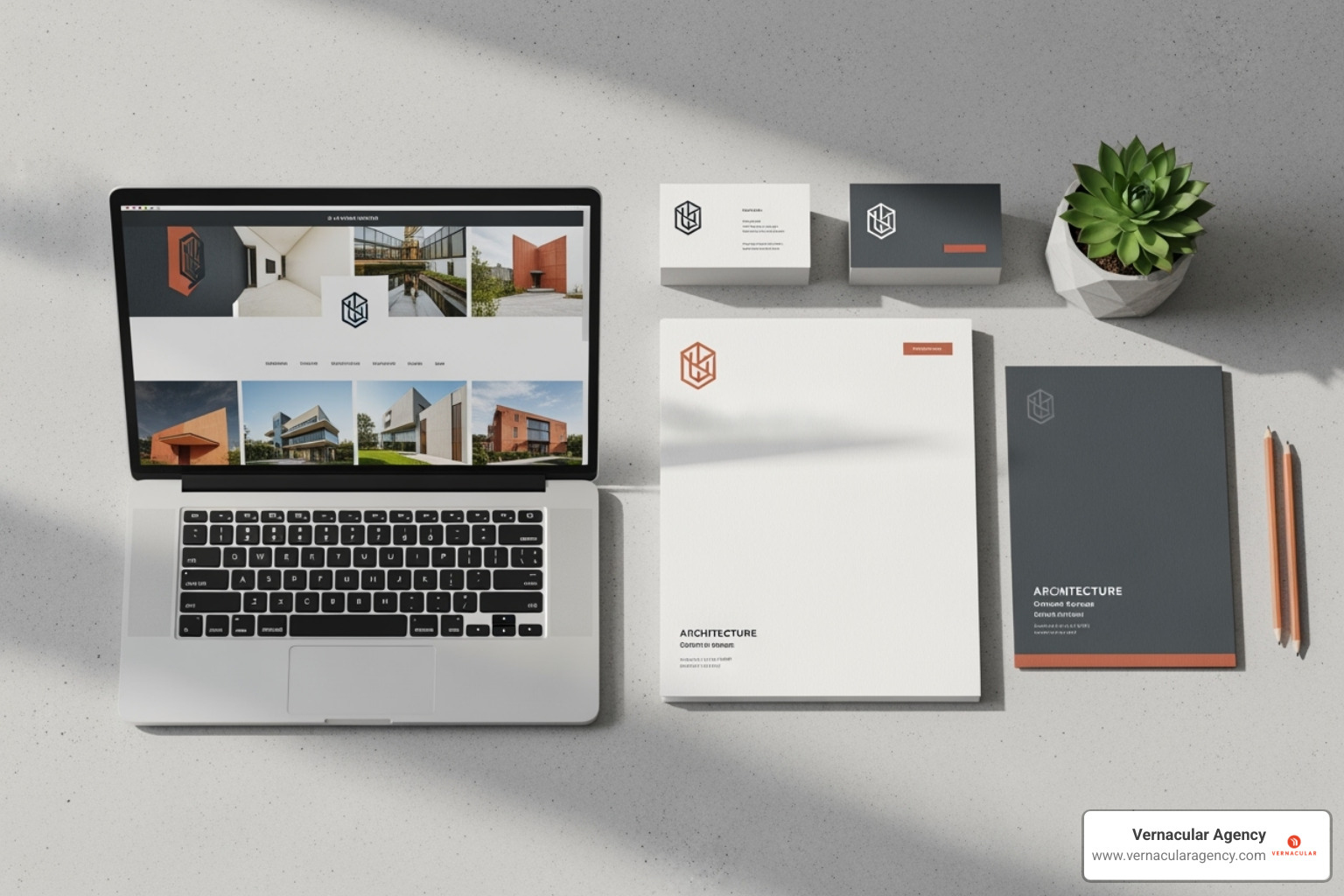
Your visual identity is how your firm shows up in the world. It's the first thing potential clients notice on your business card, website, or a construction sign. Every visual element—from your logo and colors to your typography—needs to work together like a well-designed building.
Architecture firm branding success comes from consistency. When your color palette, vocabulary, and image quality are aligned across every touchpoint, you create recognition and trust. Our Architecture Firm Brand Guidelines help ensure every visual element reinforces your core identity.
Your logo is your firm's signature, representing everything you stand for. It doesn't need to be a literal building or complex initials. The most effective logos are simple, scalable, and relevant to your firm's personality.
Think about what makes your firm special. Are you known for fluid, innovative designs? Your logo might reflect that movement. Do you specialize in clean, modern spaces? A minimalist approach could work beautifully. The key is ensuring your logo works just as well on a massive billboard as it does on a business card.
While architecture is a serious profession, your logo can still be distinctive and memorable. Modernism versus classicism, abstract versus wordmark - these are choices that should reflect your firm's unique approach to design.
Professional logo design is an investment, not an expense. A well-crafted logo signals that your firm values quality and attention to detail - exactly what clients want in their architect.
Colors and fonts are doing heavy lifting in your brand story. They trigger emotional responses and communicate your firm's personality before anyone reads a single word.
Color psychology plays a huge role here. While many architects stick to safe grays and whites, a bold color choice can make you unforgettable. I've seen firms use vibrant orange to show their creative energy, or warm earth tones to emphasize their connection to natural materials. The trick is making intentional choices that support your brand strategy.
Typography deserves just as much attention. Custom typography is becoming more popular among high-end architecture firms because it creates a truly unique identity. But even without a custom font, choosing between serif versus sans-serif and thoughtful font pairing can communicate professionalism, innovation, or artistic vision.
Readability is non-negotiable, but your typography should still feel like your firm's personality. Our Brand Identity Lookbook shows how purposeful design choices create memorable brands.
Your brand voice and storytelling are just as important as your visual elements. This is how you sound in every piece of communication - from your website copy to your social media posts to your project presentations.
Are you professional and authoritative, innovative and approachable, or academic and precise? Your tone of voice should be consistent across all platforms. This consistency builds trust and makes your firm more memorable.
Storytelling is where architects can really shine. Instead of just listing project specs, tell the story behind your designs. What challenges did you solve? How does the space improve people's lives? These project narratives create emotional connections that turn prospects into clients.
Your brand story should weave through your website copy, social media captions, and client presentations. Sharing the narrative behind your work shows clients not just what you built, but how you think and why it matters.
A 7-step guide to branding can help you develop this cohesive voice that communicates your unique value at every touchpoint.
Visual consistency across all materials reinforces your brand's presence. When someone sees your work, they should immediately recognize it as yours - not just because of the architectural style, but because of how you present it to the world.
Your digital presence is your modern storefront. Potential clients will likely encounter your architecture firm branding online long before visiting your office or seeing a building in person.
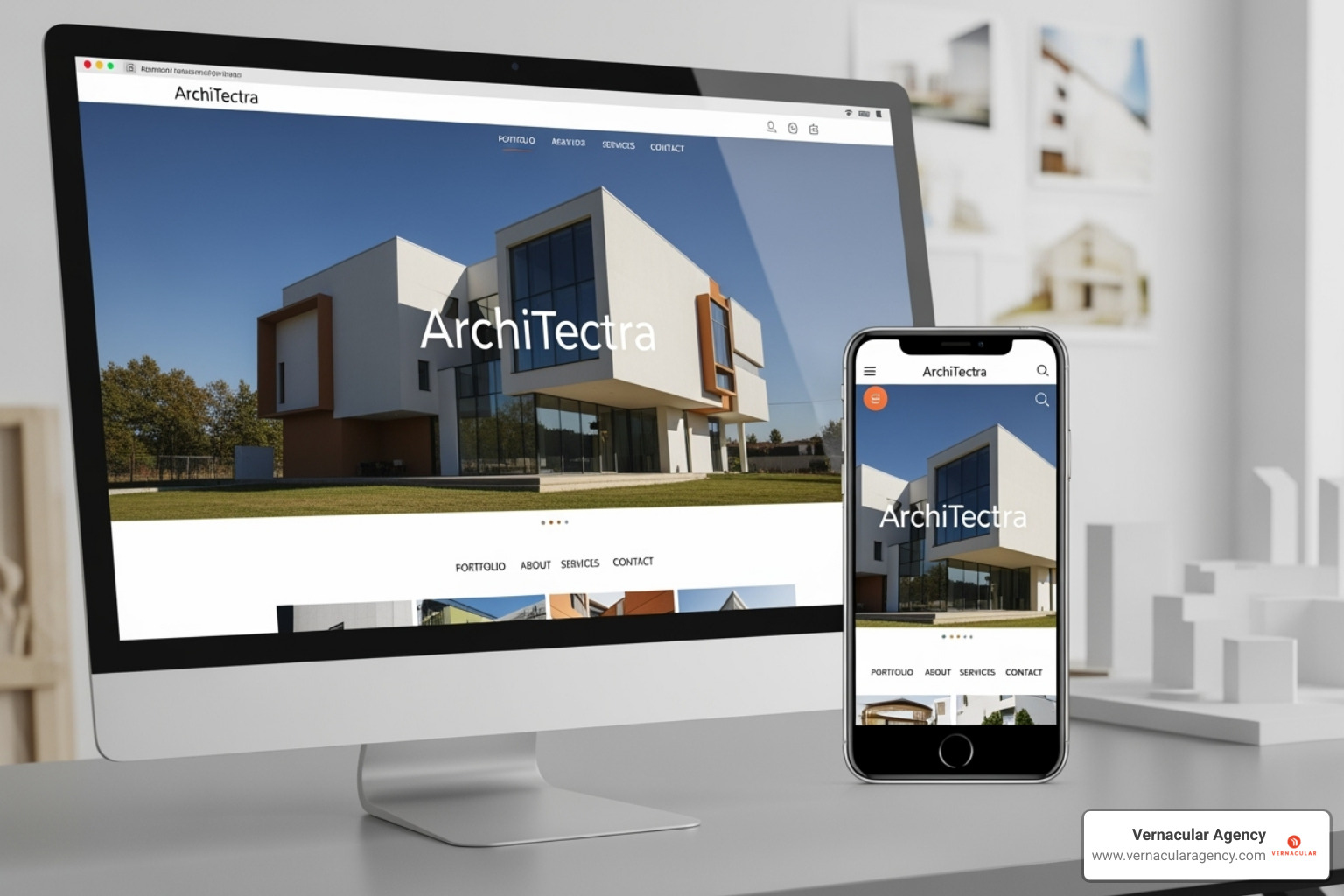
Your website and social media channels are powerful ambassadors for your firm, working around the clock to showcase your expertise and build connections. They're extensions of your brand that can attract ideal clients, establish you as a thought leader, and help you recruit top talent.
We understand that creating an effective digital presence can feel overwhelming. That's why we specialize in comprehensive strategies for Digital Marketing Agency for Architecture Firms, ensuring your online presence reflects the same quality as your built work.
Your website is where first impressions are made and relationships begin. It deserves the same thoughtful design approach as a building's entrance, focusing on how visitors will experience it.
High-quality project photography forms the heart of any successful architecture website. Professional architectural photography isn't just an expense—it's an investment in how the world perceives your work. The right photographer can capture not just what your buildings look like, but how they feel.
Beyond stunning visuals, your website needs detailed case studies that tell the complete story of each project. Share the challenges you faced, the creative solutions you developed, and the impact your work had. People want to understand your process and problem-solving abilities.
User experience matters tremendously. Your website should feel as intuitive as navigating one of your well-designed buildings. Visitors should find what they're looking for effortlessly. With so many people browsing on their phones, mobile responsiveness isn't optional—it's essential.
Don't forget to include clear calls-to-action that guide visitors toward the next step, whether it's scheduling a consultation or downloading your portfolio.
Our team creates Great Architecture Websites that serve as powerful marketing tools, turning casual browsers into engaged prospects.
Social media allows you to build genuine relationships with your audience while showcasing your work and firm's personality.
Instagram is the go-to platform for visual storytelling in architecture. It's perfect for sharing stunning project photos, design inspiration, and behind-the-scenes glimpses of your creative process. Show the journey: share sketches, construction progress, and team brainstorming sessions.
LinkedIn serves a different but equally important purpose. Here, you can establish thought leadership by sharing industry insights, commenting on trends, and connecting with potential clients and collaborators.
Behind-the-scenes content is an underused tool that humanizes your brand. Showcasing your culture, team, and daily activities builds trust with potential clients and attracts talented architects who share your values.
Community engagement transforms social media from a broadcasting tool into a conversation starter. Respond to comments, share others' work that inspires you, and participate in industry discussions. This builds loyalty and creates a sense of community around your brand.
A few well-crafted posts each week, consistently shared, can build significant brand awareness. The key is authenticity—let your firm's genuine personality shine through.
A strong architecture firm branding foundation is just the beginning. Your brand is a living entity that must grow with your firm, adapting to new challenges while staying true to its core identity. Like maintaining a building, regular care and thoughtful updates are essential.
The most successful firms understand that brand management is an ongoing process, not a one-time project. Industry trends shift, client expectations evolve, and your firm's capabilities expand. Your brand should reflect these changes while maintaining the consistency that builds trust.
Even well-intentioned firms can stumble. Inconsistency is perhaps the biggest threat to your brand's credibility. When your logo or tone varies across platforms, it signals a lack of attention to detail.
Another common mistake is trying to be everything to everyone. This dilutes your message and confuses clients. A firm claiming expertise in everything from tiny homes to skyscrapers often lacks credibility in any specific area.
Not understanding your audience can derail even the most beautiful brand identity. If your sophisticated brand doesn't resonate with your target market, you'll struggle to connect.
Many firms also make the mistake of underinvesting in design quality. Poor-quality photography, amateur graphics, or a clunky website suggests that your architectural work might have similar shortcomings.
Finally, chasing trends over authenticity can make your brand feel hollow. While staying current is important, jumping on every trend without considering if it fits your firm's personality creates a brand that feels unconvincing.
Understanding if your branding investment is paying off requires tracking the right metrics. While the impact isn't always immediate, there are clear indicators of success.
Your website analytics tell a powerful story. Are more people visiting your site? Are they staying longer? Most importantly, are they taking action by filling out contact forms? These conversion rates connect brand efforts to business results.
Pay close attention to lead quality and quantity. A successful brand attracts better inquiries from potential clients who understand your value and fit your ideal profile.
Client feedback surveys provide invaluable insights. Ask new clients what drew them to your firm and how your brand materials affected their perception.
Social media engagement, press mentions, and industry recognition all build brand awareness and create future opportunities. When you A/B test different ad designs, you get concrete data about which messages resonate most strongly with your audience.
A strong brand reputation creates a positive cycle. Talented architects want to work for firms with clear vision and strong reputations. When your brand effectively communicates your values and design philosophy, it becomes a powerful recruiting tool.
Your brand also plays a crucial role in building client trust. In an industry of significant investments and long-term commitments, clients need confidence. A thoughtful, consistent brand signals professionalism before they ever see your portfolio.
Your brand often determines whether you're even considered for a project. When clients feel confident in your brand, they're more willing to invest in higher-level services and refer you to their networks.
The compound effect of strong branding positions your firm as a thought leader, attracts media attention, and creates opportunities for industry recognition. These benefits build momentum over time, making your branding one of the most valuable investments for your firm's future.
The approach to architecture firm branding varies by firm size.
Small boutique firms have an advantage in their personal connection. Their branding often revolves around the personal brand of the principal architect and a highly specialized niche. This allows for agility in branding, reflecting a specific vision and hands-on approach that attracts clients seeking a unique story and direct relationship.
Large corporate firms focus on collective identity and established reputation. Their branding must communicate stability, broad expertise, and the ability to handle large-scale projects. Consistency across multiple offices and teams is key, with an emphasis on scalability of services and proven track records to build credibility with diverse client types.
Budgeting for architecture firm branding depends on your scope. While basic DIY solutions exist, professional agency services provide more strategic and polished results. A comprehensive investment typically includes brand strategy, custom logo and visual identity systems, professional photography, website development, and marketing collateral.
It's crucial to view branding as an investment, not an expense. A strong brand allows you to command premium fees, attract ideal clients, and build long-term business value, often paying for itself through better projects. The exact budget depends on your firm's size and goals, but it should always align with your business objectives.
Current trends in architecture firm branding reflect shifts in client expectations. Successful firms are connecting with clients and talent through:
The goal is to use trends to improve your authentic brand story, staying relevant while remaining true to your firm's unique identity and values.
Think of your architecture firm branding as the foundation that everything else builds upon. Just like you wouldn't construct a building without solid groundwork, you can't build a thriving practice without a strategic brand identity.
We've covered the essential steps: defining your authentic strategy by uncovering your "why" and ideal clients, and exploring the visual language of logos, colors, and messaging that brings your brand to life.
Your digital presence serves as the modern front door to your practice. A well-designed website and thoughtful social media strategy don't just showcase your work - they build trust and attract the clients you actually want to work with.
The real power of strong branding lies in its ability to shape your firm's destiny. When nearly 70% of potential clients choose architects based on brand reputation, your investment in branding directly impacts your bottom line. It's not just about looking professional; it's about commanding premium fees, attracting top talent, and building lasting relationships.
Branding is an ongoing journey, not a one-time project. The most successful architecture practices understand that their brand is working 24/7 - building recognition, establishing trust, and opening doors to new opportunities.
At Vernacular Agency, we've seen how the right brand strategy transforms architecture firms from service providers into sought-after partners. Our comprehensive approach takes you from initial brand definition through website development and ongoing marketing efforts, all custom for both local Maine markets and national reach.
Your architectural designs shape the built environment and improve lives. Your brand should do the same for your business - creating connections, opening possibilities, and building the future you envision for your practice.
Start building a brand that lifts your practice by exploring our services