
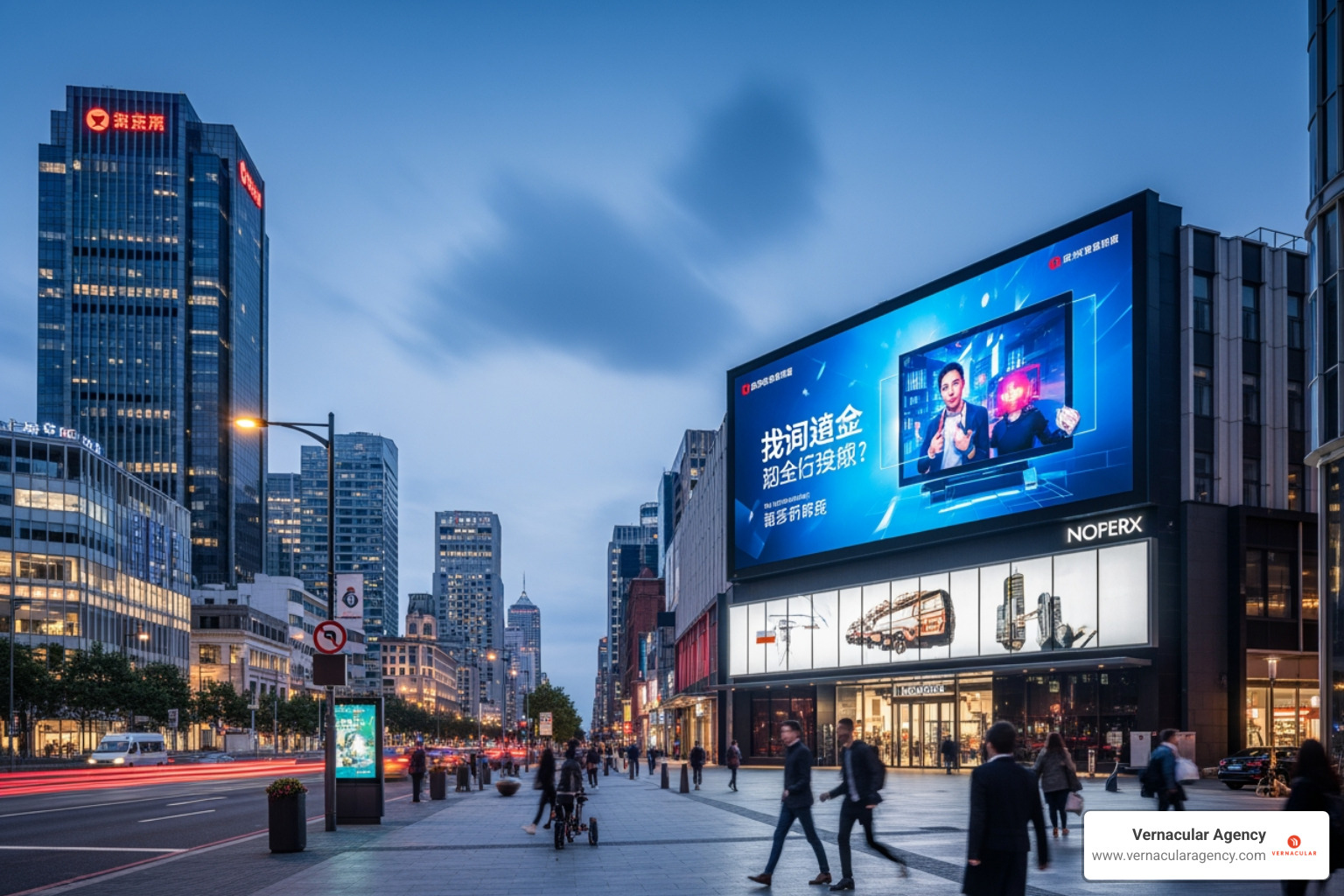
Digital outdoor media is advertising displayed on electronic screens in public spaces—from massive LED billboards along highways to digital displays in shopping malls, transit stations, and airports. Unlike traditional static billboards, digital outdoor media (also called DOOH or Digital Out-of-Home) allows brands to show dynamic content that can change based on time of day, weather conditions, live events, or audience data.
Key features of digital outdoor media:
The shift to digital has made outdoor advertising more flexible, targeted, and effective than ever before. Traditional billboards required weeks of lead time and locked you into fixed messaging. Digital screens let you adjust creative on the fly, test different messages, and trigger content based on real-world conditions like weather or local events.
What makes digital outdoor media particularly powerful is its ability to reach consumers during their daily routines—commuting, shopping, traveling—when they're alert and receptive. The format combines the mass reach of traditional outdoor advertising with the precision and flexibility of digital marketing. And because it doesn't rely on cookies or personal data, it sidesteps privacy concerns that plague other digital channels.
I'm Rebecca Falzano, Creative Director at Vernacular Agency, where I guide content creation and design strategy for brands seeking cohesive, impactful marketing across all channels, including digital outdoor media campaigns that connect with audiences in real-world moments. My background in editorial storytelling helps brands craft messages that resonate whether they appear on a screen, in print, or on a 40-foot digital billboard.
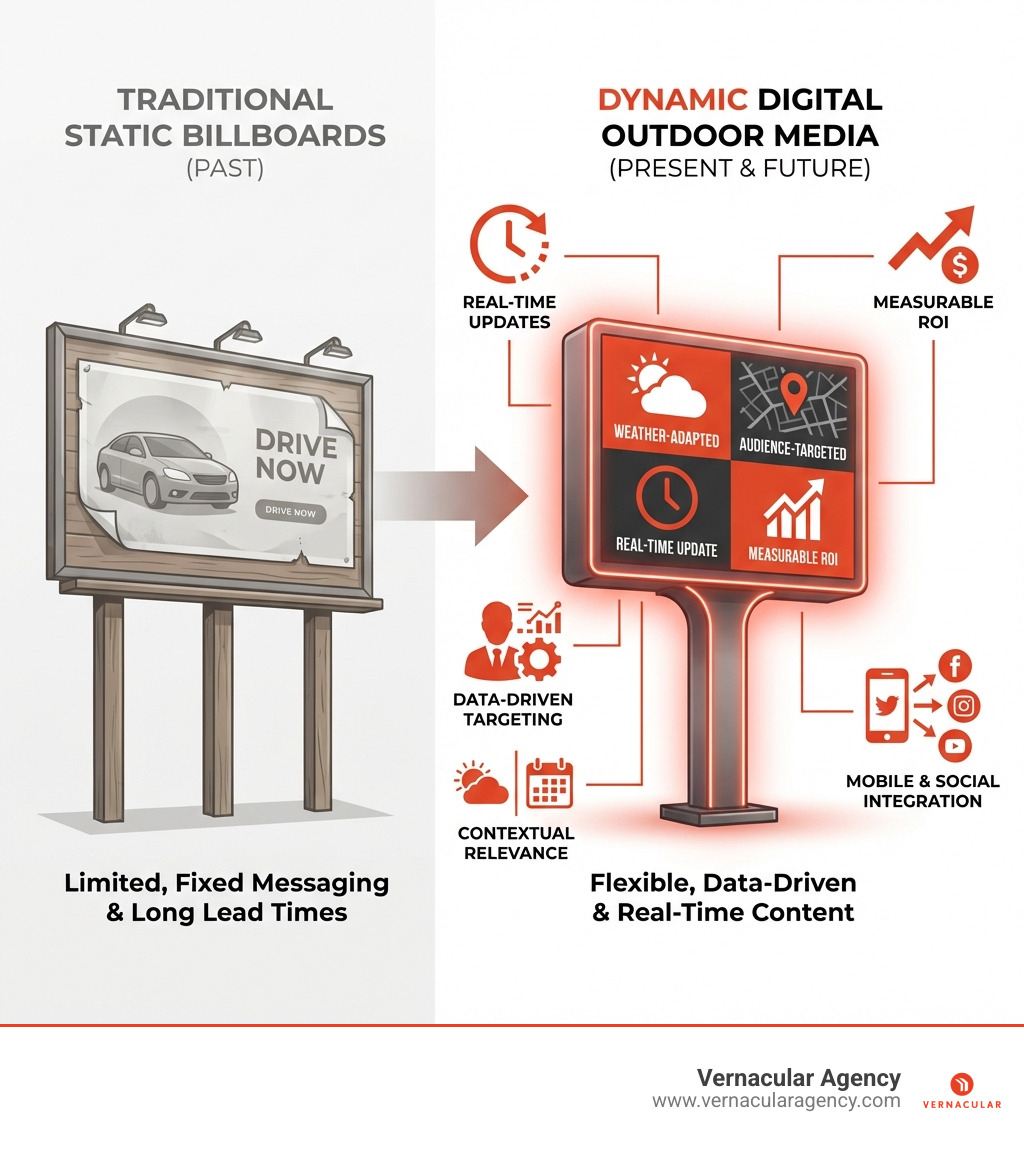
When we talk about the "revolution" in outdoor advertising, we aren’t just talking about bigger screens. We’re talking about a fundamental shift in how brands occupy physical space. Digital outdoor media, frequently referred to as Digital Out-of-Home (DOOH), represents the intersection of the physical world and digital intelligence.
According to the Digital Out-of-Home (DOOH): Definition and Core Features, DOOH refers to digital media used for marketing purposes outside of the home. This includes everything from the giant "spectaculars" you see in places like Times Square to the small screens on top of gas station pumps or inside elevators.
The most compelling argument for digital outdoor media is its "unskippable" nature. In an era where 25% of traditional search traffic is expected to drop by 2026 due to AI-driven shifts and ad-blockers are standard on most browsers, DOOH remains bulletproof. You cannot "X" out of a billboard on I-295, and you can’t scroll past a digital screen in a Portland transit hub. This is why nine in ten U.S. adults (88%) notice OOH ads, a statistic that most digital display ad managers would dream of achieving.
In the old days (which, in marketing years, was about ten minutes ago), buying a billboard meant committing to a single vinyl sheet for months. If you had a typo, or if your promotion ended early, you were out of luck. Digital outdoor media has deleted that headache.
The agility of digital screens allows for "dayparting"—showing different ads at different times of the day. A coffee shop can advertise lattes at 7:00 AM and switch to decaf or pastry specials by 4:00 PM. This relevance is why 73% of U.S. consumers view DOOH ads favourably, significantly surpassing television (50%) and social media (48%). People don't find these ads intrusive; they find them helpful or entertaining because they are contextually appropriate to where the person is standing.
As a Digital Marketing Agency in Portland Maine, we are constantly navigating the "death of the cookie." With privacy regulations tightening, traditional online tracking is becoming harder. Digital outdoor media offers a refreshing alternative: it is inherently privacy-safe.
DOOH doesn't need to know your name, your email, or your browsing history to be effective. Instead, it uses:
A Harris Poll study highlights that consumers prefer this "one-to-many" approach. It feels less like someone is eavesdropping on your phone and more like a brand is simply showing up where you happen to be.
If DOOH is the "hardware," then Programmatic DOOH (pDOOH) is the "brain." Programmatic refers to the automated buying and selling of ad space. Instead of calling a sales rep and signing a contract for one specific board, you use a platform to bid on "impressions" across a network of screens that meet your criteria.
According to IAB Australia’s 2024 Attitudes to Programmatic DOOH report, 68% of agencies cite "programmatic flexibility" as the primary driver for using the medium. It allows us to treat outdoor media much like we treat Facebook or Google ads—setting budgets, pausing campaigns instantly, and optimizing based on performance.
The real "magic" happens when you use data triggers. Because digital outdoor media is connected to the internet, we can set rules for when your ad appears.
Imagine you’re a local HVAC company in Maine. You could set a trigger so that your "Emergency Furnace Repair" ad only plays when the temperature drops below 20 degrees. Or, if you’re a sports bar, your ad could update in real-time with live scores from the big game. Research shows that contextually relevant messaging increased sales by 16% and significantly improved ad recall. It transforms an ad from a passive image into a timely piece of information.
In a fast-moving market, waiting three weeks for a vinyl installation is a lifetime. With pDOOH, we can launch a campaign in hours. This speed is vital for:
For brands looking for a Digital Strategy for Architecture Firms or design studios, this flexibility allows you to showcase different projects based on the specific neighborhood where the screen is located.
Not all screens are created equal. When planning a campaign, we look at the environment to determine which format will deliver the most "wow" factor.
When designing for these, we follow the Digital Guidelines to ensure the creative is optimized for the specific viewing distance and environment.
We are moving into an era of "Immersive DOOH." You may have seen videos of 3D billboards where a product seems to "pop out" of the screen. Technologies like Ocean DeepScreen Alive are bringing real-time interactivity to these 3D displays.
AI is also playing a massive role. It’s not just about generating the art; it’s about AI-driven analytics that can predict traffic patterns or even "look" at the crowd (anonymously, of course) to determine the general age or mood of the audience and switch the ad accordingly.
Designing for digital outdoor media is a specific skill. You aren't designing for a phone screen held six inches from a face; you’re designing for a massive LED wall viewed from 500 feet away at 65 miles per hour.
| Feature | Billboard Best Practice | Transit/Mall Best Practice |
|---|---|---|
| Word Count | 7 words or less | 10-15 words (dwell time is higher) |
| Typography | Bold, sans-serif, high kerning | Bold, but can be more stylistic |
| Contrast | High (Black on Yellow, White on Blue) | Moderate to High |
| Motion | Minimal (don't distract drivers) | Full video/animation is encouraged |
| Call to Action | Simple URL or brand name | QR code or "Visit Floor 2" |
A common myth is that you can’t measure outdoor advertising. In reality, modern digital outdoor media is highly measurable. We use several methods to prove ROI:
In fact, adding OOH to your media mix can boost reach by as much as 100%. It acts as a "force multiplier" for your other channels.
At Vernacular Agency, we believe in an integrated approach. You shouldn't just run a billboard in a vacuum. We often pair DOOH with Digital Marketing tactics like mobile retargeting.
Here’s how that works: A consumer see your digital ad at a bus stop. Later that evening, while they are browsing on their phone at home, they receive a display ad for that same brand. This "cross-channel" reinforcement makes the brand feel omnipresent and significantly increases the likelihood of a conversion.
We can look at how major brands use these tactics to see the results. For instance, the Sea-Doo case study showed how a brand used pDOOH to reach enthusiasts in Florida. By targeting screens near waterways and boat ramps, they saw a 144% lift in purchase consideration.
Similarly, a Holt Renfrew campaign utilized pDOOH to capitalize on a competitor’s closure. By placing ads near the closing locations and using dynamic sales messaging, they drove 400,000 store visits and a 500% lift in purchase intent. These aren't just "vanity metrics"—they are real-world business outcomes.
There is no "one size fits all" price. Costs are determined by:
This is a common point of confusion. Digital signage refers to the physical "hardware"—the screens themselves. DOOH is the "advertising channel." Think of it like this: a TV set is the hardware (digital signage), but NBC is the channel (DOOH). If a screen is used to show a menu in a cafeteria, it’s digital signage. If it’s used to sell ad space to a third-party brand, it’s DOOH.
Beyond foot traffic, we look at "proof of performance" logs that show exactly when and where your ad played. For more advanced metrics, you can learn the essentials of DOOH data and measurement through industry-standard certification courses. We also use "device ID passback" to link ad exposures to online actions like website visits or app downloads.
The world of digital outdoor media is no longer just for brands with million-dollar budgets. Thanks to programmatic buying and flexible digital formats, businesses of all sizes can now command attention in the real world.
Whether you are looking for Digital Marketing for Architecture & Design Studios or trying to drive retail foot traffic in the heart of Maine, an integrated media strategy is key. By combining the high-impact visibility of digital screens with the precision of data-driven targeting, you can ensure your brand isn't just seen—it’s remembered.
At Vernacular Agency, we specialize in bridging the gap between creative brand identity and strategic media placement. We help you find the "core truth" of your brand and broadcast it to the world on the screens that matter most.
Ready to see your brand in the wild? Maximize your reach with expert media buying and let's start a conversation about your next campaign.