Why Lead Generation for Architects is Different—and More Critical Than Ever
Lead generation for architects isn't like selling software or consumer products. It's about trust, reputation, and relationships built over months—sometimes years. Yet a 2023 industry survey revealed that 75 percent of small design firms consider lead generation their number one challenge, a finding shared by Vishnu Karthikeyan, founder of a lead-generation platform.
Quick Answer: The Most Effective Lead Generation Strategies for Architects
- Build a portfolio-rich website with case studies and clear lead capture forms
- Optimize for local SEO so you appear when prospects search "architect near me"
- Create lead magnets like budget guides or style quizzes that address client fears
- Leverage LinkedIn and partnerships with developers, builders, and designers
- Track metrics religiously—cost per lead, conversion rates, and sales cycle length
The challenge is real. Most architecture firms still rely heavily on referrals and word-of-mouth—a strategy that worked decades ago but leaves today's firms vulnerable to inconsistent pipelines and lost opportunities. Meanwhile, 81.5% of buyers have received a referral from someone they've never worked with, based purely on a firm's reputation, expertise, or visibility. That means your online presence and strategic positioning matter more than ever.
The firms landing $500K+ commercial projects and luxury residential builds aren't just waiting for the phone to ring. They're more strategic about how they find clients, combining inbound marketing (SEO, content, website optimization) with targeted outbound efforts (cold email, LinkedIn prospecting, strategic partnerships). They measure what works, cut what doesn't, and build systems that generate predictable, qualified leads.
I'm Rebecca Falzano, Creative Director at Vernacular Agency, where I've spent nearly 15 years helping architecture firms build brands that attract the right clients and transform their lead generation for architects through strategic content, design, and digital experiences. In this guide, I'll walk you through the exact strategies that turn websites into lead machines and portfolios into business engines.
Defining Your Ideal Client Profile (ICP)
Before we dive into tactics for lead generation for architects, let's talk about who we're trying to reach. This might sound basic, but it's often overlooked. Many architects make the mistake of trying to appeal to everyone, resulting in a marketing message that resonates with no one. We recommend creating a detailed client avatar—a semi-fictional representation of your ideal client. This isn't just about demographics; it's about understanding their pain points, aspirations, budget, and decision-making process.
Are you aiming for residential clients seeking custom luxury homes in coastal Maine, or commercial developers looking for innovative mixed-use projects in Portland? Your ideal client profile (ICP) will shape every aspect of your lead generation for architects strategy. Firms that specialize in a niche often become more visible and relevant to their target audience. Generic firms, on the other hand, often find themselves competing purely on price. Specialized firms compete on expertise, which is a much stronger position.
When defining your ICP, consider:
- Niche Specialization: Do you excel in sustainable design, historic preservation, modern residential, or large-scale commercial projects? Specializing makes you an expert, not just another architect.
- Project Scale & Budget: What's the typical project size and budget you prefer to work with? This ensures you attract clients whose expectations align with your capabilities and pricing.
- Geographic Targeting: For us, operating out of Portland, Maine, this means focusing on clients within Maine and potentially neighboring New England areas. Local SEO and community engagement become paramount.
- Client Values: What kind of clients do you enjoy working with? Those who value collaboration, innovation, or a specific aesthetic?
By clearly defining your ICP, you can tailor your marketing efforts, content, and outreach to attract exactly the right kind of client, leading to higher quality leads and more satisfying projects. This clarity also feeds directly into your Architecture Firm Brand Guidelines and overall Architecture Firm Digital Strategy.
Inbound Lead Generation for Architects: Turning Your Website into a Lead Machine
Your website isn't just an online brochure; it's your 24/7 digital salesperson, working tirelessly to attract and convert potential clients. In today's market, 74% of business buyers conduct more than half of their research online before making an offline purchase. If your website is a "digital museum" that merely showcases beautiful projects without guiding visitors toward action, you're missing out on significant lead generation for architects opportunities.

To turn your website into a powerful lead-generating asset, focus on these elements:
- Portfolio Optimization: While beautiful images are essential, your portfolio needs to do more than just look pretty. Each project should be a case study, telling a story that highlights the client's problem, your firm's unique solution, the design process, and the tangible results. Organize projects by type (e.g., custom residential, commercial renovation) and include clear calls-to-action (CTAs) on every page. This allows prospects to see themselves in your work and understand your value.
- User Experience (UX): A dated, slow, or difficult-to-steer website can lead prospects to assume the quality of your services is equally subpar. We ensure our clients' websites are intuitive, fast-loading, and mobile-responsive, providing a seamless experience for visitors whether they're on a desktop or a phone. After all, if information is hard to find or the experience is frustrating, potential clients will leave and find a competitor. Good User Experience Design is paramount.
- Clear Service Descriptions: Clearly articulate the services you offer and, just as importantly, the problems you solve for clients. Use language that resonates with your ICP, not just industry jargon.
- Lead Capture Forms: Strategically place clear, concise lead capture forms throughout your site. These could be for general inquiries, project consultations, or to download a valuable resource (a lead magnet, which we'll discuss next).
- Case Studies: Beyond the portfolio, dedicate specific pages to in-depth case studies. These allow you to dig deeper into the challenges, design thinking, and positive outcomes of your projects, building trust and demonstrating expertise.
We help architects in Portland, Maine, and beyond create high-converting websites that are both aesthetically pleasing and strategically designed for lead generation for architects. Our Architecture Firm Website Complete Guide and Website Design for Architects resources offer deeper insights into these critical components.
The Role of SEO in Lead Generation for Architects
Search Engine Optimization (SEO) is the art and science of getting your website to rank higher in search engine results. For architects, effective SEO means that when a potential client searches for "custom home architect Portland Maine" or "sustainable commercial design," your firm appears at the top. This is crucial for lead generation for architects because it captures prospects at the exact moment they are actively seeking your services.
Here's how we approach SEO for architects:
- Local SEO & Google Business Profile Optimization: For most architects, especially those serving a specific region like Maine, local SEO is non-negotiable. We optimize your Google Business Profile with accurate information, high-quality images of your projects, and clear service listings. Encouraging and responding to client reviews on Google also significantly boosts your local visibility and reputation. Potential clients often start their search locally, so appearing prominently in local search results is key.
- Keyword Research: We think like your potential clients. Instead of broad terms, we identify long-tail keywords that mimic specific search queries, such as "historic renovation architect Portland" or "Passive House design Maine." These keywords have lower search volume but much higher conversion rates because they target individuals with specific needs and high intent. Our SEO for Architects Complete Guide digs deeper into this.
- Content Marketing & Blogging: A well-maintained blog filled with authoritative content is an SEO powerhouse. By writing about topics relevant to your ICP's pain points and goals—like "Navigating Zoning Regulations in Southern Maine" or "Cost-Saving Strategies for Commercial Builds"—you establish your firm as a thought leader. Each blog post is an opportunity to rank for new keywords and attract organic traffic.
- Backlink Building: Google views links from other reputable websites to yours as a vote of confidence. We help architects earn these authoritative backlinks through strategic PR and content distribution, further enhancing your site's credibility and search ranking.
- Technical SEO: Beyond content, we ensure your website's technical foundation is solid. This includes site speed, mobile-friendliness, and a secure infrastructure, all of which Google considers when ranking your site.
A thoughtful SEO strategy, combined with a new, well-designed website, can organically grow your firm's digital presence and significantly increase digital leads. If you're looking for specialized support, our SEO Agency for Architects can help.
Effective Lead Magnets for Lead Generation for Architects
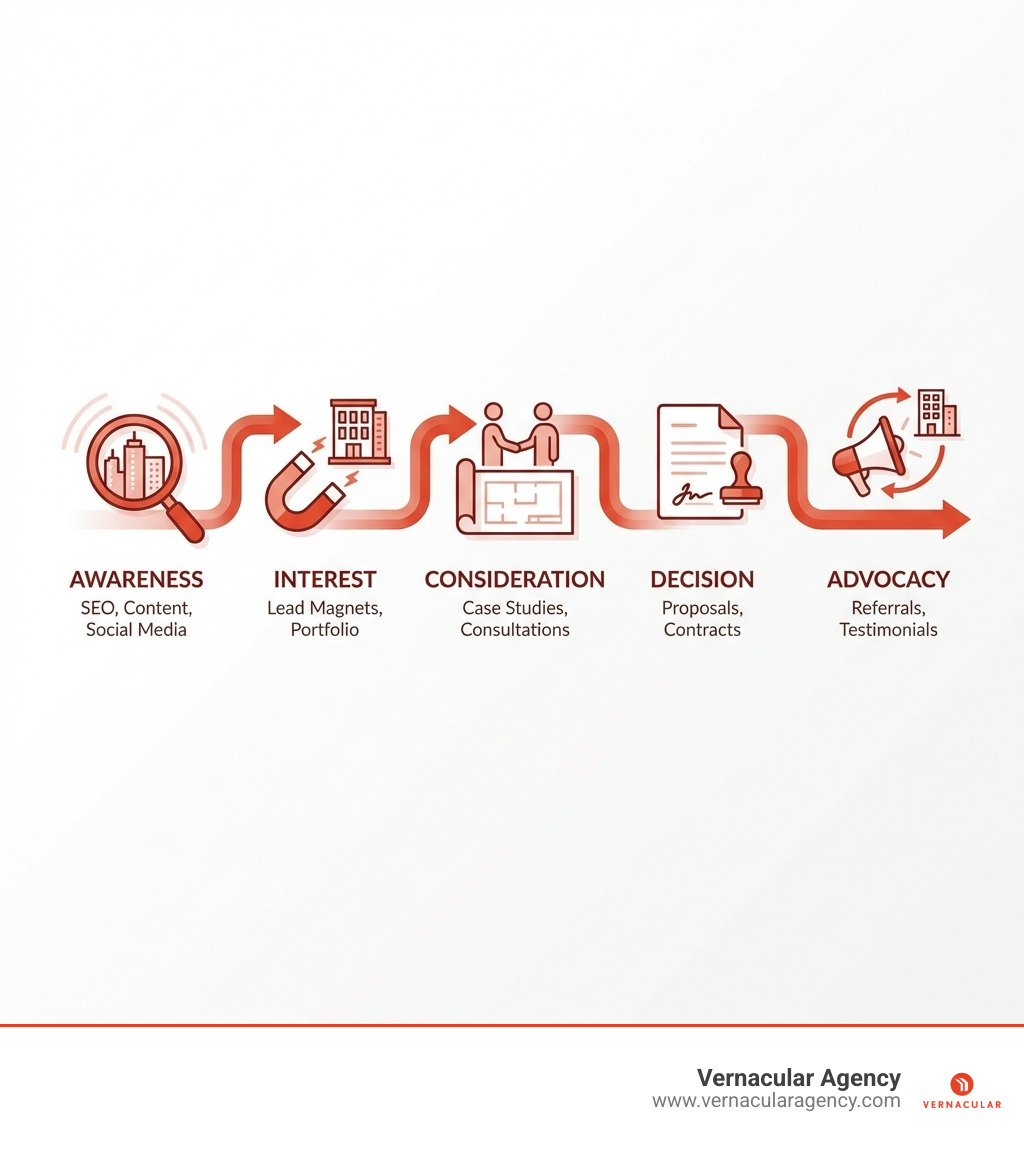
Imagine a potential client lands on your website, impressed by your portfolio. What's the next step? If it's just a "Contact Us" button, you might be losing them. This is where lead magnets come in. A lead magnet is a valuable piece of content that you offer for free in exchange for a visitor's contact information (typically an email address). It's a low-commitment way for prospects to engage with your expertise, building trust and moving them further down the sales funnel.
For architects, lead magnets are particularly powerful because they address client fears and questions before they're ready to commit to a full consultation. The best lead magnets solve a real problem, showcase your expertise without being overtly salesy, and deliver an "aha!" moment for the prospect.
Here are some effective lead magnet ideas for lead generation for architects:
- The "Real Talk" Budget Blueprint: A downloadable guide that demystifies architectural project costs, helping clients understand what goes into a budget and how to avoid common financial pitfalls. One firm reported that a budget guide helped a prospect avoid a $50,000 mistake, solidifying trust.
- "What's Your Architectural Personality?" Quiz: An interactive quiz that helps residential clients define their aesthetic preferences and project priorities. A quiz approach has been shown to increase qualified leads by hundreds of percent, with about 40% of quiz takers becoming leads.
- "From Initial Sketch to Smoke Detector: Mapping Your Architecture Journey": A visual timeline or e-book that outlines the typical architectural process, from conceptual design to construction completion. This educates clients and manages expectations.
- "10 Questions Your Architect Hopes You Won't Ask (But We Think You Definitely Should)": A checklist or guide that empowers clients to ask smart questions during initial consultations, demonstrating your transparency and client-centric approach.
- "The Change Files: Before, During & Happily Ever After": A mini-case study collection that highlights specific challenges and your firm's creative solutions, showing real-world impact.
To implement a lead magnet strategy effectively, create a dedicated landing page for each lead magnet. Keep the sign-up form simple (name and email are often enough) and deliver the resource immediately via an automatic email. This initial exchange builds a foundation of trust. We often help our clients develop these valuable resources as part of their Email Marketing for Architects Guide.
Outbound Outreach and Strategic Referral Partnerships
While inbound strategies attract clients to you, outbound outreach involves proactively reaching out to potential clients. For architects in Portland, Maine, this often means a targeted approach to commercial developers, builders, and high-net-worth residential clients. When done thoughtfully, outbound efforts can significantly accelerate lead generation for architects.
Here’s how we recommend tackling outbound strategies and partnerships:
- LinkedIn Prospecting: LinkedIn is a goldmine for connecting with commercial developers, real estate firms, and other potential decision-makers.
- Thought Leadership: Consistently post 2-3 times per week, sharing project showcases, industry insights, and design trends. Share behind-the-scenes content from active projects.
- Engagement: Actively engage with posts from developers, construction firms, and other potential clients.
- Personalized Outreach: Send personalized connection requests and introductory messages, offering value rather than immediately pitching your services. For example, if a developer just acquired a new property in Portland, you might send a message congratulating them and offering an insight into potential design considerations for that specific site.
- Cold Email Best Practices: Cold email can be highly effective for high-value architectural projects when executed correctly.
- Research & Personalization: Never send generic emails. Research each prospect. Reference their recent projects, company news, or specific pain points.
- Concise & Value-Driven: Keep emails short (under 150 words). Focus on their goals and challenges, not just your services.
- Soft Call-to-Action (CTA): Instead of "hire us," suggest a brief call to explore if there's a mutual fit: "Would you be open to a quick 15-minute chat next week to discuss how sustainable design could benefit your next project in Maine?"
- Follow-Up Sequence: Don't expect a response to the first email. Plan a sequence of 2-3 follow-up emails, each offering additional value or a different perspective. Consistency beats intensity here.
- Direct Mail (Yes, Really!): In a digital-first world, a well-crafted physical piece of mail can stand out. For high-value prospects like luxury residential clients or major commercial developers, consider sending custom project lookbooks, branded planning kits, or personalized letters. This can be particularly impactful in a tight-knit community like Portland, Maine.
- Strategic Referral Partnerships: Some of the most consistent and highest-quality leads come from trusted partners.
- Developers & Builders: Forge strong relationships with local developers and builders. They often need architectural services for their projects and can be a steady source of referrals. Consider co-hosting webinars or offering joint case studies.
- Interior Designers & Engineers: Align with complementary professionals. Interior designers often get approached by clients early in a project who need an architect, and vice-versa. Engineers also frequently collaborate with architects. These relationships can create powerful mutual referral systems.
- Commercial Brokers: Commercial real estate brokers often require architects for site feasibility studies or test fits for their clients. Building these connections can open doors to new commercial projects.
- Industry Associations & Local Chambers: Actively participate in local chapters of industry associations (e.g., AIA Maine) and the Portland Chamber of Commerce. Networking with other professionals and business owners can lead to valuable connections and referrals.
While outbound methods require a more proactive stance, they offer direct access to decision-makers and can yield high-quality leads. Building genuine relationships and offering value are key to success, as outlined in our Public Relations for Architects Complete Guide and insights on Construction Industry PR.
| Feature | Inbound Lead Generation | Outbound Lead Generation |
|---|
| Initiation | Prospect finds you (pull) | You find prospect (push) |
| Cost per Lead | Often lower over time, but higher upfront investment | Can be higher, but more immediate and targeted |
| Lead Quality | Generally higher (self-qualified) | Varies, depends on targeting and personalization |
| Speed to Results | Slower (3-6+ months for SEO) | Faster (weeks for cold outreach) |
| Scalability | Highly scalable with content and automation | Scalable with tools and consistent effort |
| Effort | Consistent content creation, website optimization | Targeted research, personalized outreach, follow-up |
| Primary Goal | Attract, educate, nurture | Initiate conversation, qualify, schedule meeting |
Measuring Success and Avoiding Common Marketing Pitfalls
We've discussed numerous strategies for lead generation for architects, but none of them matter if we don't know what's working. As the statistic highlights, 53% of marketing professionals spend half or more of their entire budget on lead gen efforts. This investment demands clear measurement and continuous optimization. Without tracking, you're essentially flying blind.
Here are the key metrics we track to measure the success of lead generation for architects campaigns:
- Website Traffic & Engagement: How many people are visiting your site? What pages are they looking at? How long do they stay? Tools like Google Analytics provide invaluable insights.
- Lead-to-Call Conversion Rate: What percentage of your leads (e.g., form submissions, lead magnet downloads) result in a findy call? For architecture firms, a 10-20% conversion rate is solid. If it's below 5%, we need to re-evaluate your targeting or messaging.
- Project Qualification Rate: Once a call is booked, what percentage of those prospects are actually a good fit for your firm? If less than 30% qualify, your initial targeting might be too broad.
- Cost Per Lead (CPL) vs. Project Value: This is critical. For six-figure architecture projects, spending $200-$1,000 per qualified lead is often normal and profitable. We analyze the ROI to ensure your marketing spend is generating a positive return.
- Sales Cycle Length: Architecture projects have long sales cycles, often stretching 6 to 18 months. Tracking this helps us understand the typical time from initial contact to signed contract, and identify opportunities to shorten it.
- Client Acquisition Cost (CAC): How much does it cost to acquire a new client? This holistic metric helps evaluate the overall efficiency of your lead generation for architects efforts.
To effectively track these metrics, a robust CRM (Customer Relationship Management) system is essential. It helps you manage your pipeline, track leads from source to close, and ensure consistent follow-up. Our CRM Solutions are designed to integrate seamlessly with your firm's workflow, ensuring no lead falls through the cracks.
Common Mistakes Architects Make in Their Lead Generation Efforts
Even with the best intentions, architects often fall into common traps that hinder their lead generation for architects success:
- Relying Only on Referrals: While referrals are great, treating them as your only lead generation for architects strategy leaves you with no control over your pipeline. We view referrals as a bonus, not the sole engine of growth.
- No CRM or Follow-Up System: Tracking leads in spreadsheets or relying on memory is a recipe for disaster. Long sales cycles require consistent nurturing, and without a system, opportunities get lost.
- Weak Positioning ("We Design Everything"): Trying to be everything to everyone makes you seem not great at anything. Specializing in a niche leads to stronger positioning and attracts higher-value projects.
- Not Leveraging Visuals and Storytelling: Your portfolio should tell a story—the problem, your process, the solution, and the client's success. Simply showing pretty pictures without context is a missed opportunity to build trust.
- No Outreach Consistency: Sporadic bursts of marketing activity are far less effective than consistent, targeted efforts. Sending 20 personalized emails every week for six months will outperform 200 emails sent in one week, followed by radio silence.
By avoiding these pitfalls and implementing a data-driven approach, architects can build a predictable and robust pipeline. Our Architecture Marketing Strategy Complete Guide offers more insights into strategic planning and execution.
Frequently Asked Questions about Lead Generation for Architects
We get a lot of questions about lead generation for architects, and these three often come up:
How long does it take to see results from architectural lead generation?
This is a common and excellent question! The timeline for seeing results from lead generation for architects varies significantly depending on the strategies you employ:
- Fastest Results (2-4 weeks): Paid advertising (like Google Ads targeting "architect Portland Maine" or social media ads for specific demographics) and targeted cold calling can book initial meetings relatively quickly.
- Mid-Term Results (4-8 weeks): LinkedIn outreach and well-executed cold email campaigns typically start showing results within this timeframe, leading to initial conversations.
- Longer-Term Results (3-6+ months): SEO and content marketing, while incredibly powerful for sustainable, high-quality leads, take more time to build momentum and rank in search engines.
It's crucial to remember that the architecture sales cycle itself is long—often 6 to 18 months from initial contact to a signed contract. This means the projects you land in the future are often the result of lead generation for architects efforts you start today. Consistency and patience are key.
What is the most effective lead magnet for residential architects?
For residential architects, the most effective lead magnets often address the client's emotional and practical concerns when starting on a significant personal project. We find that lead magnets which empower and educate, rather than just showcase, perform best:
- "The Dream Home Budget Planner": A comprehensive guide or interactive spreadsheet that helps homeowners understand the true costs involved in a custom build or renovation, including architectural fees, construction, and hidden expenses. This helps them avoid costly surprises.
- "Your Architectural Style Quiz": An engaging quiz that helps clients identify their preferred aesthetic, materials, and functional needs. This not only provides valuable data to you but also helps the client articulate their vision.
- "Guide to Navigating Permitting & Zoning in [Your Local Area, e.g., Coastal Maine]": A practical guide that simplifies the often-confusing local regulations, positioning you as an expert who can smoothly manage the process.
- "Checklist: 10 Questions to Ask Before Hiring a Residential Architect": This empowers clients while subtly highlighting your firm's professionalism and client-centric approach.
The key is to offer immediate, tangible value that solves a specific problem or answers a pressing question for your ideal residential client.
How can architects balance automated marketing with personal trust-building?
This is a delicate but crucial balance for lead generation for architects, where relationships and trust are paramount. While automation can streamline repetitive tasks, it should never replace genuine human connection.
Here's how we advise striking that balance:
- Automate the Mundane, Personalize the Important: Use automation for initial lead magnet delivery, basic email nurturing sequences (e.g., sending resources, follow-up after a webinar), and scheduling. This frees up your time for deeper, personalized interactions.
- Thoughtful Follow-Up: After a lead downloads a resource or expresses interest, use automated emails to continue positioning yourself as a guide, not a salesperson. But once a lead shows higher intent (e.g., booking a call), personalize every interaction. Reference their specific needs, project ideas, and previous engagement with your content.
- Human Touchpoints at Key Stages: Ensure that key stages of the lead journey—the first conversation, proposal presentation, and project kick-off—are always personal. A phone call, a custom video message, or a handwritten note can go a long way in building trust.
- Segment Your Audience: Don't treat all leads the same. Segment your email lists based on their interests, lead magnet downloads, or how they engaged with your website. This allows you to send highly relevant, personalized content that feels less automated and more like a direct conversation.
The goal is to use automation to improve efficiency and ensure consistent communication, while reserving your valuable human connection for building deep, meaningful relationships that convert prospects into long-term clients.
Conclusion
Lead generation for architects is no longer a passive exercise in waiting for the phone to ring. It's a dynamic, strategic process that requires a blend of digital prowess, thoughtful outreach, and unwavering commitment to building trust. By defining your ideal client, optimizing your website for inbound leads, leveraging targeted outbound strategies, and carefully measuring your efforts, you can build a consistent pipeline of high-quality projects.
At Vernacular Agency, we understand the unique challenges and immense potential within the architectural industry. Our expertise in branding and identity, coupled with our passion for creating dynamic digital experiences and SEO-optimized websites, allows us to craft comprehensive, creative solutions custom for architects in Portland, Maine, and across the nation. We believe in building brands that not only look exceptional but also perform exceptionally, changing your blueprints into thriving business.
If you're ready to move beyond inconsistent referrals and build a robust, predictable system for lead generation for architects, we're here to help. Explore our Marketing Services to see how we can partner to lift your firm's visibility and attract the clients you deserve.
For a deeper dive into crafting your firm's strategic growth, check out our Architecture Firm Marketing Plan Template Ultimate Guide.
