

LinkedIn for architects is one of the most underused tools in the profession — and that's a missed opportunity. Here's a quick breakdown of what it can do for you:
LinkedIn isn't just a digital resume. For architects, it's a living portfolio, a networking hub, and a business development engine — all in one place.
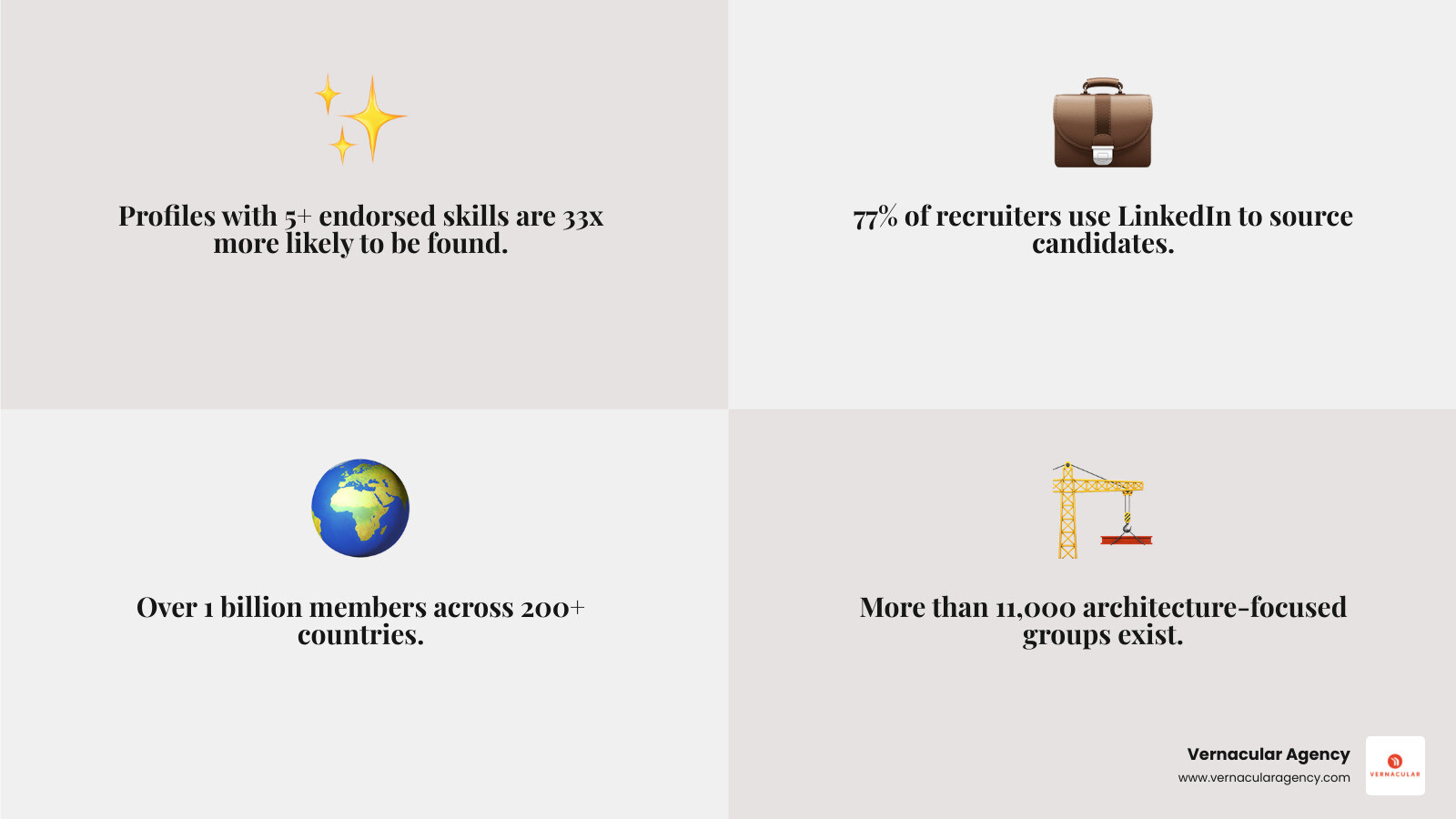
With over 1 billion members across 200+ countries and more than 11,000 architecture-focused groups, the platform gives building professionals a massive stage. The question isn't whether you should be on LinkedIn. It's whether you're using it well.
I'm Rebecca Falzano, Creative Director with nearly 15 years of experience crafting compelling professional narratives for designers, architects, and creative firms — and LinkedIn for architects is one of the most powerful branding tools I've seen transform careers and client pipelines alike. Let's walk through exactly how to make it work for you.
Think of your LinkedIn profile as the "blueprint" of your professional identity. Just as you wouldn't present a client with a messy, incomplete set of drawings, you shouldn't leave your profile to gather digital dust. In the architecture world, visual communication is everything. Your profile needs to reflect the same level of care and precision you put into your Architect Portfolio Design Tips.

First impressions happen in milliseconds. For your profile photo, aim for a clear, high-quality headshot where your face takes up about 60% of the frame. This creates a sense of "eye contact" with visitors, making you appear more approachable and trustworthy.
Your banner is prime real estate. Instead of the default LinkedIn blue, use a custom image that showcases your work or design aesthetic. The recommended size is 1128 x 191 pixels. If you aren't a graphic designer, don't worry—you can use Canva.com to create a professional banner for free. Whether it’s a stunning photo of a completed project or a clean technical drawing, ensure it aligns with your overall brand consistency.
Your headline is the most searchable part of your profile. Most architects simply put "Architect at [Firm Name]," but that’s a missed opportunity for SEO. To truly leverage LinkedIn for architects, your headline should include specific keywords that recruiters and clients search for.
Consider including:
If you're feeling stuck, Taplio’s headline generator can help spark some creative ideas. Your headline should align with where you want to go, not just where you are now.
The "About" section is where you move beyond the resume and tell your professional story. We recommend writing in the first person ("I am...") to make it feel personal and conversational.
Aim for at least 250 words. This isn't just a list of jobs—it's a place to articulate your design philosophy. Why do you do what you do? What problems do you solve for your clients? Mention notable projects, your passion for the built environment, and your career aspirations. If you need a starting point, you can Generate Your Summary with AI to get a draft that you can then refine with your unique voice.
LinkedIn allows you to go much deeper than a standard CV. For architects, the "Featured" section is an absolute must. Think of it as a mini-gallery within your profile.
In the "Experience" section, don't just list your responsibilities. Use the STAR method (Situation, Task, Action, Result) to describe your impact. For architects, metrics are incredibly persuasive. Mention the square footage of a project, the budget you managed, or the energy efficiency ratings you achieved (like LEED Gold).
When it comes to skills, quality and quantity both matter. LinkedIn profiles that list five or more endorsed skills are 33x times more likely to be discovered. Be sure to include:
Ask former colleagues and clients to endorse these skills. This peer validation builds immediate credibility with anyone viewing your profile. For more on building a cohesive firm identity, check out our Architecture Firm Branding Complete Guide.
Networking on LinkedIn isn't about collecting connections; it's about building relationships. Start by joining industry-specific groups. The Architecture group (110k members) and the Interior Architecture + Design group (346k members) are great places to start.
When reaching out to new people, never send a generic connection request. Always include a personalized note. Mention a project they worked on that you admire, or a shared interest in a specific design trend. This is also a fantastic way for how architects can build their professional network by connecting with alumni or professionals in related fields like urban planning or sustainable development.
If your profile is your foundation, your content is the structure you build on top of it. To stay visible, you need to post regularly.
A common mistake is only posting about yourself or your firm. Instead, follow the 4-1-1 rule:
To keep your feed fresh, set a Google alert for architectural news in Maine or your specific niche. Sharing these updates with your own commentary positions you as an informed leader. For those who find content creation overwhelming, tools like Taplio’s content creator can help you draft and schedule posts in advance.
You don't always have to create original content to be active. Engaging with others is just as valuable. Follow and comment on the posts of industry leaders like Bob Borson, David Supple, or Hamid Hassanzadeh.
When you comment, add value. Don't just say "Great post!" Instead, share a thought on how their design approach might work in a different context or ask a thoughtful question. This increases your visibility to their large audiences and helps you build connections with other high-level professionals. For more on the intersection of design and promotion, see our guide on Architecture and Marketing.
For those looking to scale their firm or land a high-level role, LinkedIn offers several advanced tools. However, these require a strategic approach to ensure a return on your investment.
A common frustration for building architects on LinkedIn is "title dilution." Because the tech industry has adopted the term "Software Architect" or "System Architect," your job searches can often get cluttered with IT roles.
To avoid this, always use the "Architecture & Planning" industry filter in the job search tool. Additionally, look into specialized communities like Architecture Social or Archinect which are dedicated solely to the built environment.
LinkedIn advertising is more expensive than Facebook or Instagram, with an average CPC of $5.58. However, the targeting is unparalleled. You can show your ads specifically to "Real Estate Developers in Portland, Maine" or "Hospital CEOs in the USA."
For architects, Sponsored Content (visual posts in the feed) usually performs better than text ads, with an average CTR of 0.44%. If you are running a specific campaign, consider using Message Ads, which boast a 55% open rate. If you're considering this path, we recommend reviewing the LinkedIn content marketing tactical plan to ensure your budget is used effectively.
We recommend the six-month rule. At a minimum, review your profile twice a year to ensure your skills and experience are current. However, you should also update it immediately after significant milestones, such as completing a landmark project, winning an industry award, or earning a new certification like LEED or NCARB. Keeping your profile fresh is a key part of SEO for Architecture Firms.
Yes, but only if you have a very specific target audience and a high-value service. Because the cost per click is higher than other platforms, ads are best used for lead generation where a single new client could cover the entire ad spend. Using "Lead Gen Forms" within LinkedIn can help you capture high-quality inquiries directly on the platform.
According to Sprinklr, the highest engagement typically occurs between Tuesday and Thursday, from 8:00 AM to 10:00 AM. Wednesday at noon is also a "sweet spot" as professionals check their feeds during lunch. However, every audience is different. Use your profile analytics to see when your specific network is most active.
Mastering LinkedIn for architects isn't about being "salesy"—it's about being visible and providing value. By treating your profile as a living extension of your design work, you create a digital presence that works for you 24/7.
At Vernacular Agency, we understand that architects are often too busy designing the future to worry about their digital footprint. Based in Portland, Maine, we specialize in helping architecture firms across the USA bridge the gap between world-class design and effective digital branding. Whether you need a complete Architecture Firm Marketing overhaul or a targeted SEO strategy, we're here to help you build your legacy.
Ready to elevate your firm's presence? Explore our marketing services and let's start building your blueprint for success.