
Professional brand development is the strategic process of creating and communicating a unique professional identity that sets you apart in today's competitive marketplace. Here's what you need to know:
Core Components of Professional Brand Development:
Much of professional and personal success depends on persuading others to recognize your value. In a competitive job market where 85% of all jobs are filled through networking and 95% of recruiters use LinkedIn for candidate sourcing, having an intentional professional brand isn't optional—it's essential.
Your professional brand is the combination of your reputation and the value you bring to the workplace. It's how you express your skills, personality, and values both in person and online. Whether you're applying for jobs, asking for promotions, vying for leadership positions, or simply trying to stand out in your field, your brand is working for you—or against you.
The challenge? Many professionals let their brand develop by accident rather than design. They collect random business cards, post inconsistently on social media, and wonder why their career isn't progressing as they'd hoped. The solution is strategic professional brand development that turns those random acts into a cohesive, compelling narrative.
I'm Rebecca Falzano, Creative Director with nearly 15 years of experience guiding content creation, design, and brand storytelling for businesses and professionals. Throughout my career, I've helped countless individuals and organizations craft authentic narratives through professional brand development that resonate with their target audiences. This guide will walk you through the exact 10-step process for building a professional brand that opens doors and creates opportunities.
In today's world, your professional brand is more than just a resume; it's your story, your promise, and your unique value proposition. It acts as your ultimate career asset, opening doors to opportunities, fostering trust, and distinguishing you in a crowded professional landscape. Hiring managers often report that a candidate’s personal brand plays a significant role in hiring decisions, underscoring its importance in securing desired roles and advancing your career.
At its core, your professional brand is a combination of your reputation and the value you consistently bring to the workplace. It's the "mark" you create around your name or career, highlighting specific strengths and messages that people remember about you. This includes how you express and communicate your skills, personality, and values—both in person and online.
An authentic professional brand is crucial. It's who you are, what you stand for, the values you accept, and the way in which you express those values. It’s not about creating a persona that isn't truly you, but rather articulating and showcasing your genuine self in a professional context. This authenticity builds trust and ensures that the first impressions you make are lasting and accurate.
A well-defined professional brand directly contributes to career advancement and leadership opportunities in several ways:
Your professional brand is your personal marketing strategy. It’s how you define yourself before others define you, ensuring you're recognized for the right things and positioned for success.
| Feature | Personal Brand | Corporate Brand |
|---|---|---|
| Focus | Individual's unique identity, skills, values | Organization's identity, products, services, mission |
| Owner | An individual | A company or organization |
| Goal | Career advancement, influence, reputation | Market share, customer loyalty, revenue |
| Expression | LinkedIn, personal website, networking, elevator pitch | Logo, website, marketing campaigns, product design |
| Authenticity | Represents the individual's true self | Reflects the company's core values and culture |
| Evolution | Adapts with career changes and personal growth | Adapts with market trends and business strategy |
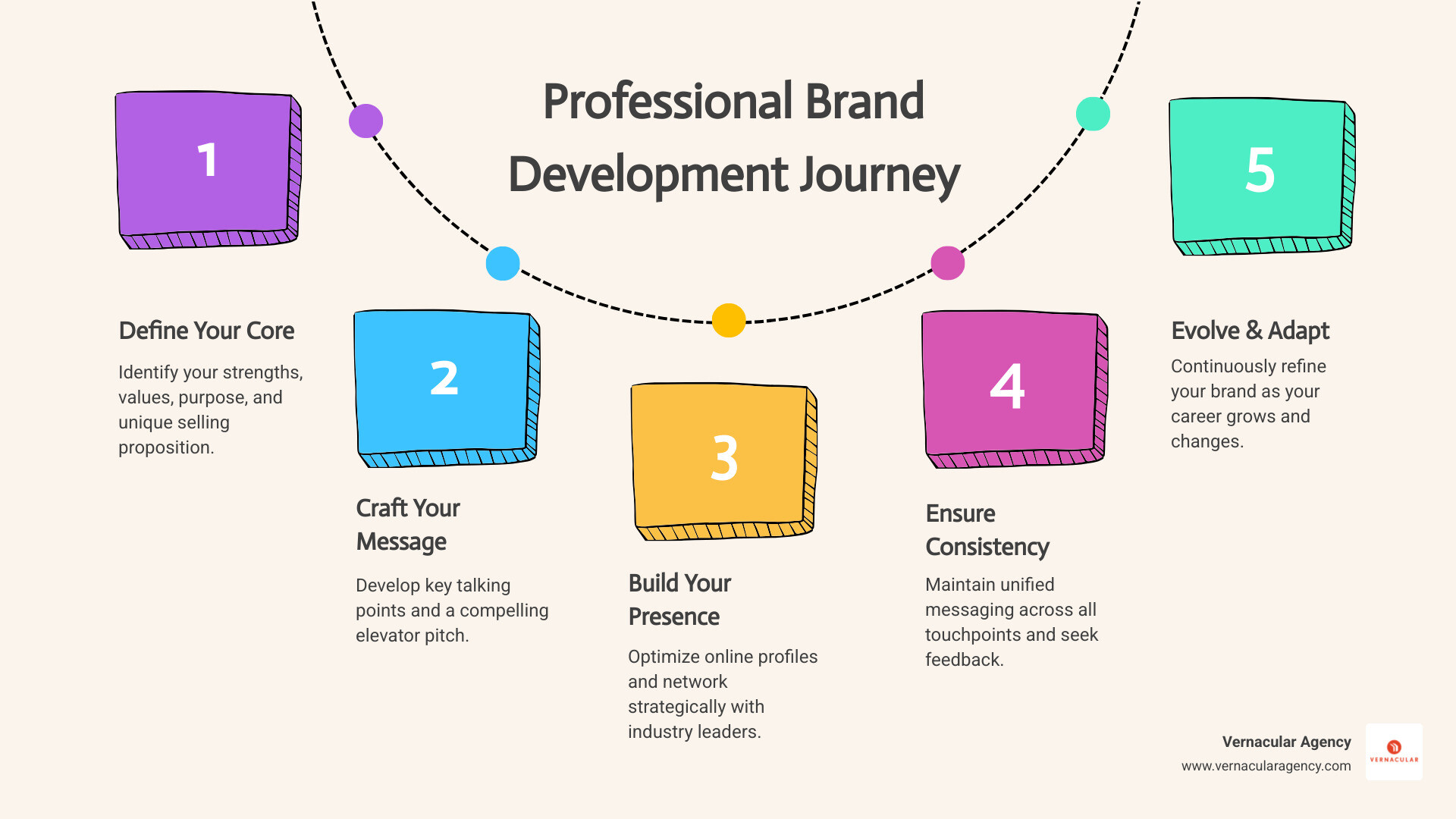
Building a powerful professional brand is a journey, not a destination. It requires introspection, strategic planning, consistent effort, and continuous adaptation. This 10-step guide is designed to provide you with a clear roadmap, changing the often-daunting task of professional brand development into a manageable and rewarding strategic process.

The foundation of any strong brand, whether personal or corporate, begins with deep self-understanding. This phase is all about introspection and clearly defining what makes you, uniquely you.
Step 1: Know Yourself (Self-Assessment)To build an authentic personal brand, we must first identify our unique strengths, values, and passions. Ask yourself:
These questions help us uncover the core of our professional identity. For a more guided exercise in self-findy, we recommend you Download this “Personal Brand Workbook” for guided exercises. It’s about being brutally honest with ourselves to understand what we genuinely bring to the table.
Step 2: Define Your 'Why' & ValuesBeyond what we do, people are often drawn to why we do it. Understanding our core purpose and professional values is paramount. As Allen Adamson, founder of the Center for Global Branding, suggests, knowing why you wake up every day and go to work is more important than exactly what you do. Our brand purpose is the reason we exist beyond just earning a paycheck; it's what drives us and sets us apart. By identifying the most important things to us, we ensure our time and energy are spent on what truly matters, making it easier to communicate our true selves to others. This clarity forms the compass that guides our actions and messages. For businesses looking to establish their core identity, our Brand Identity services can help articulate this foundational "why."
Step 3: Identify Your Unique Selling Proposition (USP)With a clear understanding of our strengths, values, and passions, the next step is to articulate what makes us uniquely valuable. Our USP is what differentiates us from others in our field. What specific skills or experiences do we possess that others don't? What unique perspective do we bring to problem-solving? This involves looking at our background, cultural experiences, and any other unique attributes that set us apart. This isn't about being boastful, but rather about clearly communicating the distinct advantage we offer.
Once we understand our professional core, the next step is to translate that into compelling messages that resonate with our audience.
Step 4: Develop Your Core Brand MessageOur core brand message is the consistent narrative we want to convey about ourselves. It's the overarching theme that ties together our strengths, values, and USP. While our core brand positioning must remain consistent for all audiences, we can adapt our specific messages to emphasize the most relevant points for each group. This ensures clarity and impact, whether we're speaking to a hiring manager, a potential client, or a professional peer. This message should be authentic and reflect who we truly are, making it easier for others to understand and remember our unique contributions.
Step 5: Master Your Elevator PitchAn effective elevator pitch is a concise, engaging summary of who we are, what we do, and what value we offer. It's designed to be delivered in the time it takes to ride an elevator—typically 30 to 60 seconds—and should inspire further conversation. Frank Cutitta emphasizes the need for "short, concise things to say—stories to tell—that frame your attributes in the right light."
Strong elevator pitches generally include the following elements:
We can adapt this pitch for various scenarios, from networking events to job interviews, and even for social media profiles like our LinkedIn headline or summary.
This phase is where we actively share our brand with the world, utilizing various platforms and strategies to ensure our message reaches the right people.
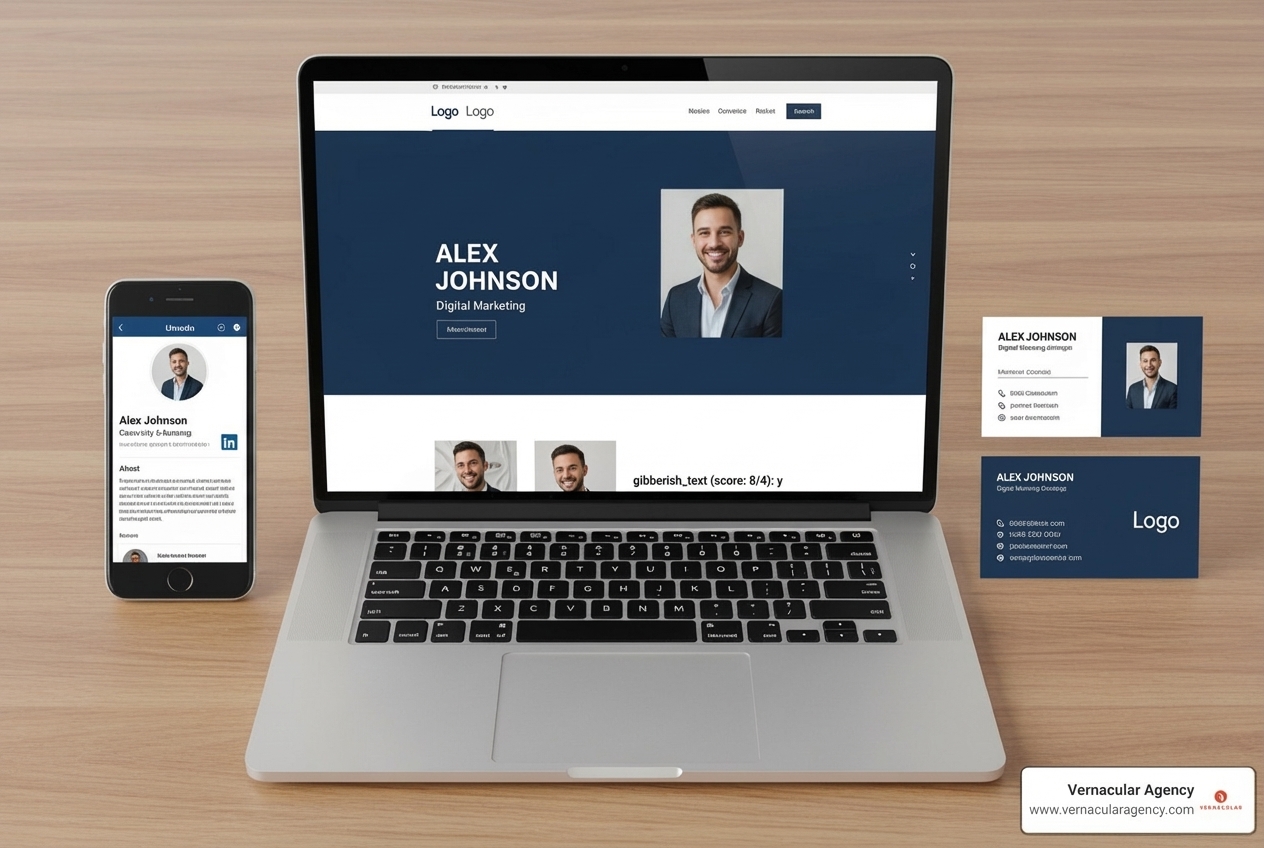
Step 6: Build Your Online PresenceOur online presence is often the first impression we make. Most employers and many colleagues will look us up online before meeting us. Therefore, it's crucial that our online footprint accurately reflects our desired professional brand. This includes maintaining professional social media profiles, and for some, creating a personal website or portfolio. For professionals in fields like architecture, design, or marketing, a personal website or portfolio is especially important to visually highlight work and provide essential information. If you're considering a dedicated online portfolio, our guide on Website Design for Architects offers valuable insights that can be broadly applied to any professional.
Step 7: Leverage Social Media StrategicallySocial media platforms, particularly LinkedIn, are powerful tools for enhancing our professional brand. With 95% of recruiters using LinkedIn for candidate sourcing, optimizing our profile is non-negotiable. This means having a professional headshot (LinkedIn users with one receive 14 times more profile views!), completing all sections, and actively engaging with content. Beyond LinkedIn, platforms like Twitter can be used to highlight industry expertise, while Reddit communities (subreddits) offer niche spaces for networking and sharing insights. The key is to choose platforms where our target audience spends time and to share content that aligns with our brand, avoiding controversial topics. Strategic use of social media is a core component of Digital Marketing, which we specialize in.
Step 8: Network AuthenticallyNetworking is not just about collecting business cards; it's about investing in mutually beneficial relationships that support our long-term goals. It's the top method for finding a job, responsible for up to 83% of new hires. We can start by connecting with people we already know—former bosses, colleagues, classmates, mentors. Then, we expand our list by joining professional organizations, attending conferences, participating in online discussions, and requesting informational interviews. Platforms like WidenerCONNECT can help expand our professional network and access custom career development resources. The more connections we make, and the more value we provide in our interactions, the more likely our professional brand will be recognized and leveraged for career growth.
Professional brand development is an ongoing process. This final phase focuses on sustaining our brand's integrity and adapting it as we grow.
Step 9: Ensure Consistency & Seek FeedbackConsistency is the bedrock of a strong professional brand. Our message, visual presentation, and online presence should align across all touchpoints. This prevents confusion and reinforces our identity. To ensure this, we must actively seek feedback. Colleagues and mentors can offer invaluable insights into how our brand is perceived. During performance reviews, we can assess if our desired strengths are being recognized by employers, or directly ask for their perception of our strengths. This feedback loop is vital for refining our brand, ensuring it accurately reflects our aspirations and resonates with our audience.
Step 10: Adapt & Evolve Your BrandOur careers are dynamic, and so too should be our professional brand. Brand development is a continuous process of testing, researching, and implementing new systems to keep our brand relevant. As we gain new skills, take on different roles, or even transition to a new field, our brand needs to adapt. Personal branding is immensely important if we’re looking to change careers and break into a new field. Employers will want to learn how our skills and experience translate across different industries. This involves identifying and highlighting transferable skills and adjusting our brand narrative to reflect our new direction and aspirations. Regular self-assessment and market analysis will help us stay agile and ensure our brand remains potent throughout our professional journey.
Even with the best intentions, it's easy to stumble on the path to professional brand development. Avoiding these common pitfalls will save us time, effort, and potential reputational damage.
Ensuring our online presence accurately reflects our desired professional brand requires a proactive and consistent approach.
A well-defined professional brand is instrumental in paving the way for leadership opportunities:
Adapting our professional brand during a career transition is crucial for success and requires a strategic approach:
Mastering our mark through professional brand development is not a one-time task but a continuous, empowering journey. It's about taking control of our career narrative, ensuring that our unique strengths, values, and aspirations are clearly and consistently communicated to the world. In a competitive landscape, a strong professional brand is our most valuable asset, opening doors to new opportunities, fostering trust, and positioning us for leadership and sustained success.
As experts in crafting dynamic brand identities and strategic marketing solutions here in Maine and beyond, we at Vernacular Agency understand the power of a well-defined brand. We believe that every professional has a unique story to tell, and we're passionate about helping individuals articulate that story in a way that resonates.
Ready to define your mark? Our Brand Identity services can help you build a powerful and authentic professional presence.