

A public relations agency is a specialized firm that helps organizations build and maintain their reputation through strategic communication, media relations, and storytelling. These agencies work with clients ranging from venture-backed startups to Fortune 100 companies, offering services that include media outreach, crisis management, thought leadership development, and digital content strategies.
What a Public Relations Agency Does:
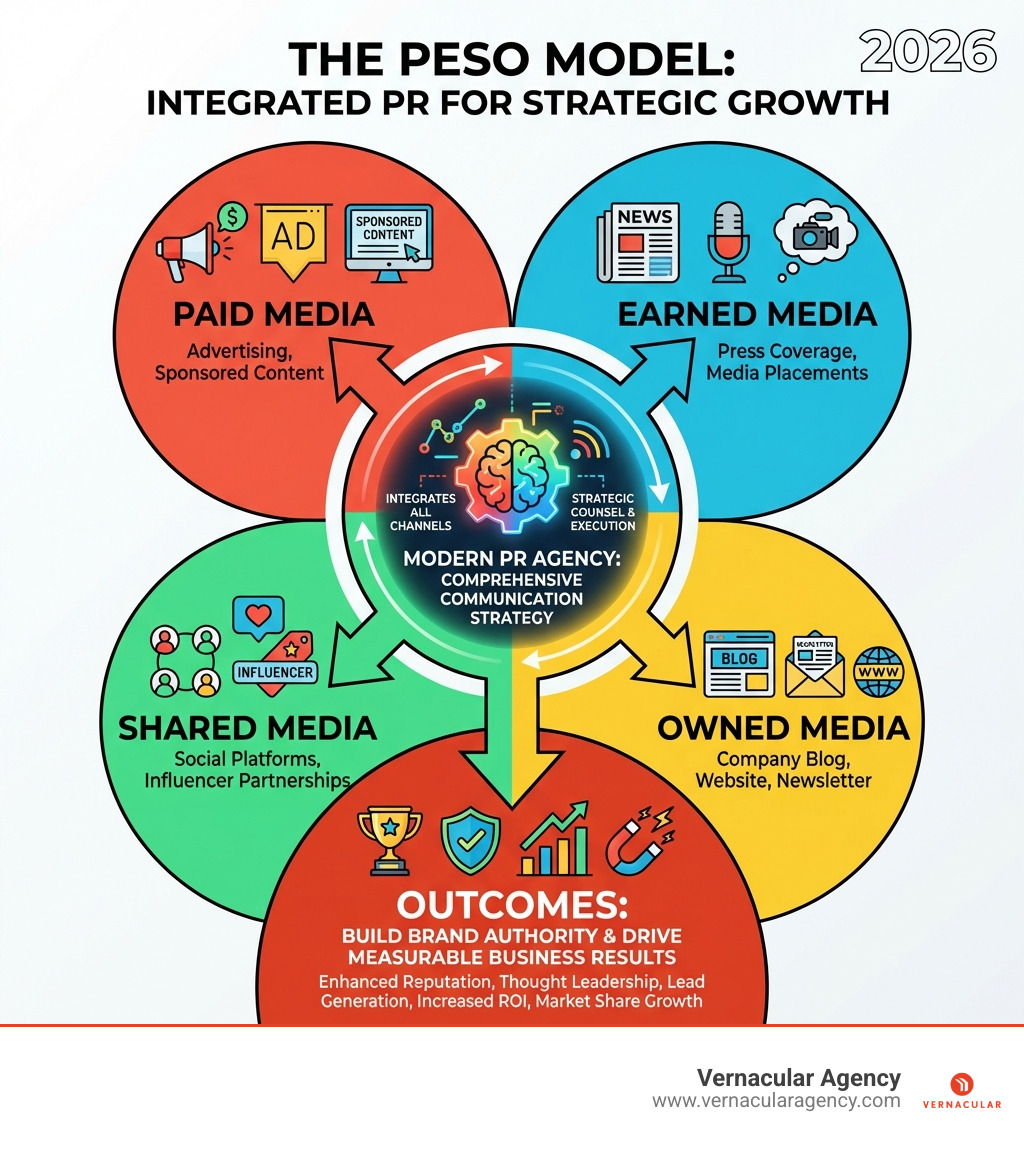
The public relations landscape has evolved dramatically. What once relied on snail-mailed press releases and rolodexes of journalist contacts now requires mastery of the PESO model (Paid, Earned, Shared, and Owned media). Modern agencies blend traditional media relations with digital marketing, social platforms, and content strategy to help brands not just reflect culture, but contribute to it.
The stakes are higher than ever. Every company operates under a microscope, with news cycles running 24/7 and social media amplifying both praise and criticism instantly. A career in public relations requires three key attributes: resiliency, creativity, and grit to land the right story in the right place at the right time.
With 56 years of industry rankings data showing the top firms generating anywhere from $500,000 to nearly $1 billion in annual net fees, the question isn't whether you need strategic communication support—it's finding the right partner who understands your unique challenges and can deliver measurable results.
I'm Rebecca Falzano, Creative Director at Vernacular Agency, and I've spent nearly 15 years guiding content creation and storytelling for diverse brands. My experience working with designers, photographers, and writers to craft compelling narratives has given me deep insight into what makes a public relations agency truly effective at elevating brands.
The world of public relations has undergone a seismic shift. We've seen the "old public relations model" become, as some would say, "busted." What was once a relatively straightforward process of crafting press releases and pitching them to a handful of journalists has morphed into a complex, multi-faceted discipline. The media landscape has changed dramatically, moving from a few gatekeepers to an infinite number of channels, each vying for attention. As a branding and marketing firm based in Maine, we understand that for businesses to truly thrive, they need an integrated communication strategy that goes beyond traditional boundaries.
A modern public relations agency no longer just focuses on earned media (getting stories in news outlets). Instead, we accept integrated communications, blending earned media with paid media (advertising, sponsored content), shared media (social media, influencer partnerships), and owned media (company blogs, websites, newsletters). This holistic approach ensures that your message resonates across all touchpoints. We've seen how crucial digital change and social media platforms have become. News isn't new; it's constant, and everyone is vying for eyes all the time. This means a dynamic, constantly evolving process is essential for earning media attention and breaking through the noise.
The synergy with content marketing is undeniable. Our approach combines tried and true methods with new and now approaches, constantly rebuilding our earned media playbook to adapt. This includes leveraging deep experience, a robust tech stack, strategic savvy, and market awareness to ensure our clients' stories stand out. We believe in providing comprehensive, creative solutions from brand definition to media placement, custom for both local and national markets. Learn more about our integrated approach to Public Relations & Strategic Communications. For a broader overview of how the field has changed over time, you can also explore this background on public relations.
While media has changed, press releases remain central to any smart public relations strategy. We've certainly come a long way from the early 1990s, when press releases were literally snail-mailed to newsrooms. Today, digital distribution is the norm, but the core challenge remains the same: how do you make your press release stand out in a reporter's crowded inbox?
The answer lies in crafting compelling stories. As our research highlights, many PR firms historically struggled with this, failing to understand how to truly engage an audience. A strong press release isn't just a factual announcement; it's a narrative. It requires developing a winning concept, collaborating with clients to understand why the news matters, and then structuring it effectively. This means:
Beyond traditional releases, modern agencies use techniques like newsjacking (inserting a brand into a breaking news story) and leveraging e-newsletters as powerful PR tools. An e-newsletter can be one of the best PR tools because it provides a direct channel to an engaged audience. The structure of a press release might be somewhat formulaic, but the content must be anything but.

The role of a public relations agency has expanded far beyond just securing media placements. Today, we offer a suite of services designed to build and protect a brand's reputation across all channels:
These services represent the dynamic, integrated approach required in today's communication landscape, ensuring that our clients' stories are told effectively and authentically.
The world of public relations agencies is incredibly diverse, offering a range of options for businesses seeking strategic communication support. From global powerhouses to niche local firms, understanding the different types and their specializations is key to finding the right fit.
We often encounter clients wondering whether a large global network or a smaller, more focused public relations agency is right for them. Full-service agencies, for instance, are equipped to partner with brands—both established and emerging—corporations, national organizations, consumer companies, start-ups, unicorn technology companies, high-profile individuals, and regional businesses. They offer a comprehensive suite of services under one roof. Boutique agencies, on the other hand, might specialize in a particular industry or service, offering more custom and often more agile solutions.
For us, located in Maine, we pride ourselves on offering comprehensive, creative solutions custom for local and national markets. While we may not have the global footprint of the largest international firms, we offer the deep understanding and personalized attention that many businesses, especially those rooted in our region, value.

One of the most significant differentiators among public relations agencies is their industry-specific expertise. This specialization allows agencies to understand the unique challenges, terminology, and media landscape of particular sectors, leading to more effective campaigns. For example:
Industry rankings categorize firms by numerous specializations, including Adult Beverages/Spirits, Agriculture, Auto./Transportation, Beauty/Fashion, Education, Energy, Entertainment, Environmental, Food & Bev, Home Furnishings, Industrial, Non-Profits, Professional Svcs., Public Affairs, Purpose/CSR, Real Estate Finance & Dev., Restaurants, Sports, and Travel & Economic Dev. This vast array highlights that almost every industry can benefit from specialized PR support.
Beyond industry focus, agencies may also specialize in particular services, offering deep expertise in specific areas of public relations:
These specializations demonstrate the breadth and depth of services that a modern public relations agency can provide, ensuring that clients receive targeted and effective support for their unique communication needs.
When we talk about a "top tier" public relations agency, we're looking beyond just size and revenue. While impressive net fees—with the largest firms reporting hundreds of millions in annual revenue—certainly indicate market dominance, they don't tell the whole story of an agency's effectiveness or its suitability for every client. For us, a truly successful agency is defined by its core values, its commitment to cultural contribution, and the genuine satisfaction of its clients.
We believe that brands can't simply reflect culture; they must contribute to it. This philosophy guides our approach, ensuring that our work delivers tangible value and helps shape meaningful narratives. Client testimonials often provide the most authentic insights into an agency's impact, highlighting strengths such as deep industry knowledge, strong media relations know-how, strategic communications expertise, and the ability to execute with creative vision under pressure. Clients value responsiveness, creativity, effectiveness, and unwavering focus, considering an agency an integral extension of their own team.
Industry rankings provide a valuable snapshot of the public relations landscape. These rankings are primarily based on net fee income, defined as charges for PR counseling and time spent preparing and placing stories in media. Some publications have been offering this data for over 50 years, providing a consistent metric for comparing firms.
These rankings signify a firm's financial health, scale of operations, and often, its ability to attract large, high-budget clients. They offer an overview of the industry's scale and diversity, showcasing firms with major U.S. operations across various specializations and geographies. However, net fees measure counseling and media contact services, excluding advertising or production expenses. While useful for identifying major players, they don't necessarily reflect the quality of service for every client or the cultural fit.
Here are some of the top PR specializations often highlighted in industry rankings, demonstrating the breadth of the sector:
For us, it's "ROI or bust." We understand that clients need to see tangible returns on their investment in a public relations agency. Measuring success goes far beyond simply tallying media mentions; it involves demonstrating a measurable impact on business objectives.
Key Performance Indicators (KPIs) are crucial here. These can include:
We leverage media coverage to impact thought leadership, SEO, social media, stakeholder communications, reputation management, and content marketing. The goal is to provide strategic counsel and communications that not only tell your story but also drive measurable results that align with your business goals.
Selecting the right public relations agency is a critical decision that can significantly impact your brand's trajectory. It's not just about finding a firm with a big name or impressive rankings; it's about finding a partner that truly understands your vision and can help you achieve your specific goals. As a branding and marketing firm, we emphasize a collaborative approach, ensuring our clients in Maine and beyond receive solutions custom to their unique needs.
Before you even start looking, clearly define what you want to achieve with PR. Ask yourself: What are your PR goals? What does PR success look like to you? Are you aiming for increased brand awareness, improved reputation, lead generation, or crisis management? Having clear objectives will help you narrow down potential partners.
Public relations services come at various price points. Be prepared to discuss your budget, including how much you are willing to invest in your PR strategy on a monthly basis. This transparency helps agencies propose realistic and effective strategies.
Start by researching potential agencies. While industry rankings are useful for identifying large firms, don't overlook local expertise. You can search online for agencies in your area or industry. Look for agencies with experience in your sector or with similar challenges to yours.
Review case studies and client testimonials to understand an agency's track record and approach. Pay attention to what clients say about the agency's strengths, responsiveness, and strategic thinking. Consider the "Thinking Partner" concept: do they seem like an invested partner who will truly understand your business and contribute to your strategy? Look for a cultural fit, as a strong relationship built on trust and consistent communication is paramount. The average tenure of practitioners at some agencies, exceeding 15 years, speaks to a stable, experienced team that clients often value.
We believe an ideal public relations agency acts as an invested "Thinking Partner." This means they don't just execute tasks; they provide strategic counsel, anticipate challenges, and proactively identify opportunities. They are deeply committed to your mission and success, leveraging their expertise to guide your brand toward its objectives.
A successful public relations agency strategy hinges on a combination of innate qualities and practiced skills. We've identified several key attributes that differentiate the best agencies:
These qualities, combined with a collaborative spirit, enable a public relations agency to craft and execute strategies that genuinely work.
When you're evaluating a potential public relations agency, asking the right questions is paramount. These questions help you assess their strategic thinking, measurement capabilities, and overall approach:
By asking these questions, you can gain deeper insights into an agency's philosophy, capabilities, and how they would partner with your business to achieve your communication objectives.
The primary goal of a public relations agency is to shape and maintain a positive public image for a client through strategic communication. This involves managing reputation, building strong relationships with key stakeholders (including customers, employees, investors, and the community), and securing favorable media coverage. It's about influencing public perception to support a client's business objectives, whether that's increasing sales, attracting talent, or navigating challenging situations.
The cost of engaging a public relations agency can vary widely, depending on factors such as the agency's size, its location, the scope of work, and the client's specific needs. Smaller, local firms might charge monthly retainers ranging from a few thousand dollars, while large national or global agencies handling complex, multi-market campaigns can command tens or even hundreds of thousands of dollars per month. Some agencies also work on project-based fees or hourly rates. For example, industry reports show that the largest firms can have net fees approaching $1 billion annually, showing the vast scale of investment in PR at the highest level. It's essential to discuss your budget transparently with potential agencies to find a solution that fits your financial parameters.
While some public relations tactics can yield quick results, such as a well-placed press release generating immediate media pickup, building a strong reputation and consistent media presence is generally a long-term effort. Meaningful and sustained results, such as increased brand authority, significant shifts in public perception, or consistent top-tier media coverage, typically develop over a period of 3-6 months, and often longer. PR is an ongoing process of relationship-building and strategic communication, and its full impact is often realized over time as trust and credibility are established.
The journey through the public relations agency reveals a dynamic and indispensable partner for any modern business. We've seen that a "top tier" agency isn't just about impressive net fees or a long client list; it's about core values, a commitment to contributing to culture, and the ability to deliver measurable results. From the evolution of PR from snail-mail press releases to sophisticated digital storytelling, to the diverse specializations and rigorous measurement of ROI, the landscape is rich and complex.
The shift is clear: it's no longer just about size, but about strategic value. The right public relations agency acts as an invested "Thinking Partner," bringing resiliency, creativity, and grit to every campaign. For businesses in Maine and beyond, choosing a partner means defining your goals, understanding their approach to storytelling, and ensuring a strong cultural fit.
At Vernacular Agency, we believe the right partner helps brands not just reflect culture, but actively contribute to it. Our integrated approach, spanning brand definition to media placement, is designed to provide comprehensive, creative solutions custom for local and national markets. We are dedicated to helping your brand tell its unique story, connect with its audience, and achieve lasting success.
Find out more about our Public Relations & Strategic Communications services.