Why Every Architecture Firm Needs a Strong SEO Foundation

SEO for architecture firms is the process of optimizing your website so potential clients can find you when they search for architectural services on Google. Here's what you need to know:
Quick SEO Checklist for Architecture Firms:
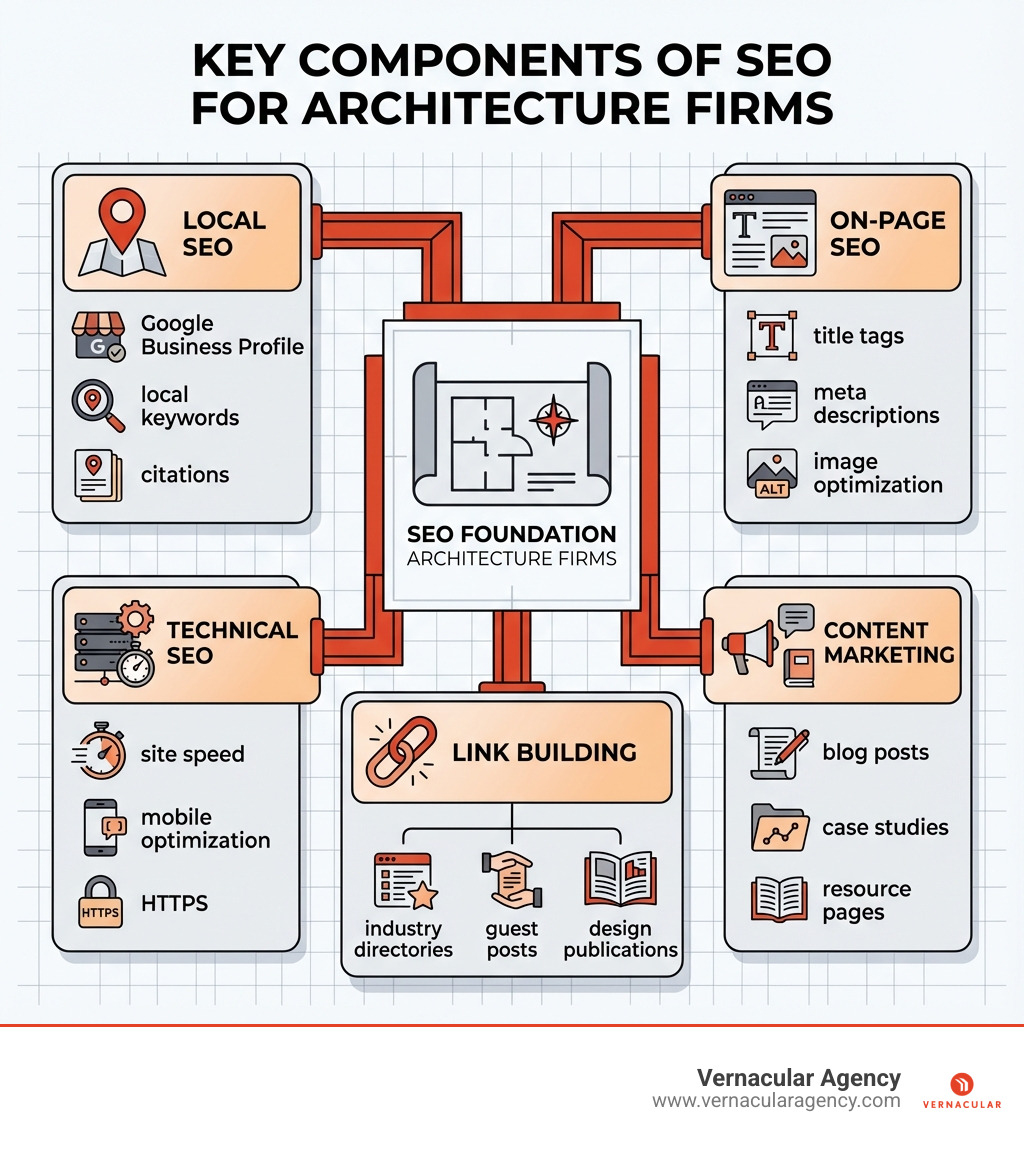
- Local SEO First: Claim and optimize your Google Business Profile with photos, reviews, and accurate information
- Target the Right Keywords: Focus on location-based searches like "residential architect in [City]" instead of generic terms
- Optimize Your Portfolio: Add descriptive text, keyword-rich image names, and alt text to every project
- Build Authority: Earn backlinks from design publications, industry directories, and local business partners
- Create Helpful Content: Answer client questions through blog posts about design process, budgets, and timelines
- Fix Technical Issues: Ensure your site loads fast (under 3 seconds), works on mobile, and uses HTTPS
In today's digital-first world, a stunning portfolio isn't enough to attract clients if they can't find your website. With 46% of all Google searches being for local businesses, not appearing on the first page means losing projects to competitors. Many of the 69,000+ architectural firms in the U.S. have beautiful websites but lack basic SEO. Without descriptive text, keywords, and local signals, Google can't connect your expertise with searching clients.
The good news is that SEO is a systematic approach to making your website speak to both search engines and ideal clients, turning your digital brochure into a lead-generating tool. Whether you're a boutique residential firm or a commercial studio, the right SEO strategy can transform your website into a consistent source of qualified leads.
I'm Rebecca Falzano, Creative Director at Vernacular Agency. With nearly 15 years of experience guiding content strategy for design-focused brands, I've helped architecture firms implement SEO for architecture firms that drives measurable results—more visibility, better leads, and projects that align with their creative vision.
The Blueprint: Keyword Research and Search Intent
To connect with potential clients, you must understand what they type into Google, like "architects near me" or "sustainable home design Portland ME." This is the cornerstone of keyword research for SEO for architecture firms. It's a strategic process of identifying the phrases people use to find your services, ensuring your firm appears when clients are actively searching. Without effective keyword research, even a beautifully designed website can remain invisible.
Architecture-related terms don't typically have a high search volume, but that's okay. You only need a handful of great clients to change your firm's trajectory. The goal isn't mass appeal; it's attracting the right clients.
Long-tail keywords—longer, more specific phrases like "historic home renovation architect Portland ME"—are highly effective for attracting niche clients with defined needs. This specificity helps you connect with clients who are more likely to convert.
Understanding keyword intent is also crucial. Are searchers looking for information ("how to choose an architect"), a service ("residential architect Portland ME"), or ready to hire? Matching your content to this intent ensures you're providing value at every stage of the client's journey.
Want to dive deeper into how we approach this? Check out More info about our SEO Strategies for Architects.
Identifying High-Value Keywords for Your Firm
To identify the most effective keywords, we start by putting ourselves in your clients' shoes. Here’s our approach:
- Brainstorm Core Services & Specialties: List all your services (e.g., residential design, commercial renovations) and unique selling propositions.
- Seed Keywords: These are broad terms related to your business (e.g., "architecture," "home design").
- Competitor Analysis: We analyze keywords that successful firms in your niche and location rank for to understand market demand and find opportunities.
- Using Keyword Research Tools: Tools like Google Search Console, SE Ranking, Ahrefs, and SEMrush help uncover what potential clients are searching for, showing data like search volume and competition. Google Keyword Planner is another valuable free tool.
- Balancing Search Volume and Relevance: We prioritize relevance over sheer volume. A low-volume keyword with high commercial intent (indicating a searcher is ready to hire) is far more valuable than a high-volume, general term.
- Focusing on Transactional and Commercial Intent: We target keywords that indicate a potential client is actively researching services or ready to make a decision.
Here are some example keywords we might target for a firm in Portland, Maine:
- "residential architect in Portland ME"
- "sustainable building design firm Maine"
- "cost to hire an architect for a custom home"
- "historic preservation architect Kennebunkport"
- "commercial architect in Augusta Maine"
- "modern home design Falmouth ME"
The Power of Local and Niche Keywords
For SEO for architecture firms, local SEO is paramount, as most projects are location-based. Local and niche keywords are your secret weapon.
- Location-based keywords: Phrases like "architects in Portland ME" are vital. Nearly 46% of Google searches have local intent, and Google favors local businesses.
- "Near me" searches: These are increasingly common on mobile. Optimizing for them means having a robust Google Business Profile.
- Targeting specific architectural styles: If you specialize in contemporary coastal homes, incorporating these styles into your keywords will attract clients looking for that aesthetic.
- Attracting specialized projects: Use keywords that reflect your niches, such as multi-family housing, healthcare facilities, or adaptive reuse.
A powerful local and niche keyword combination like "historic home renovation architect Portland ME" connects you with highly qualified leads.
To learn more about how we integrate these strategies, explore our Digital Marketing for Architecture Firms services.
Building Your Digital Foundation: On-Page and Technical SEO
With your keywords identified, the next step in SEO for architecture firms is building a website that captures traffic through on-page and technical SEO. On-page SEO optimizes the content on your pages, while technical SEO focuses on the site's underlying infrastructure. Together, they improve user experience and help search engines crawl and index your site.
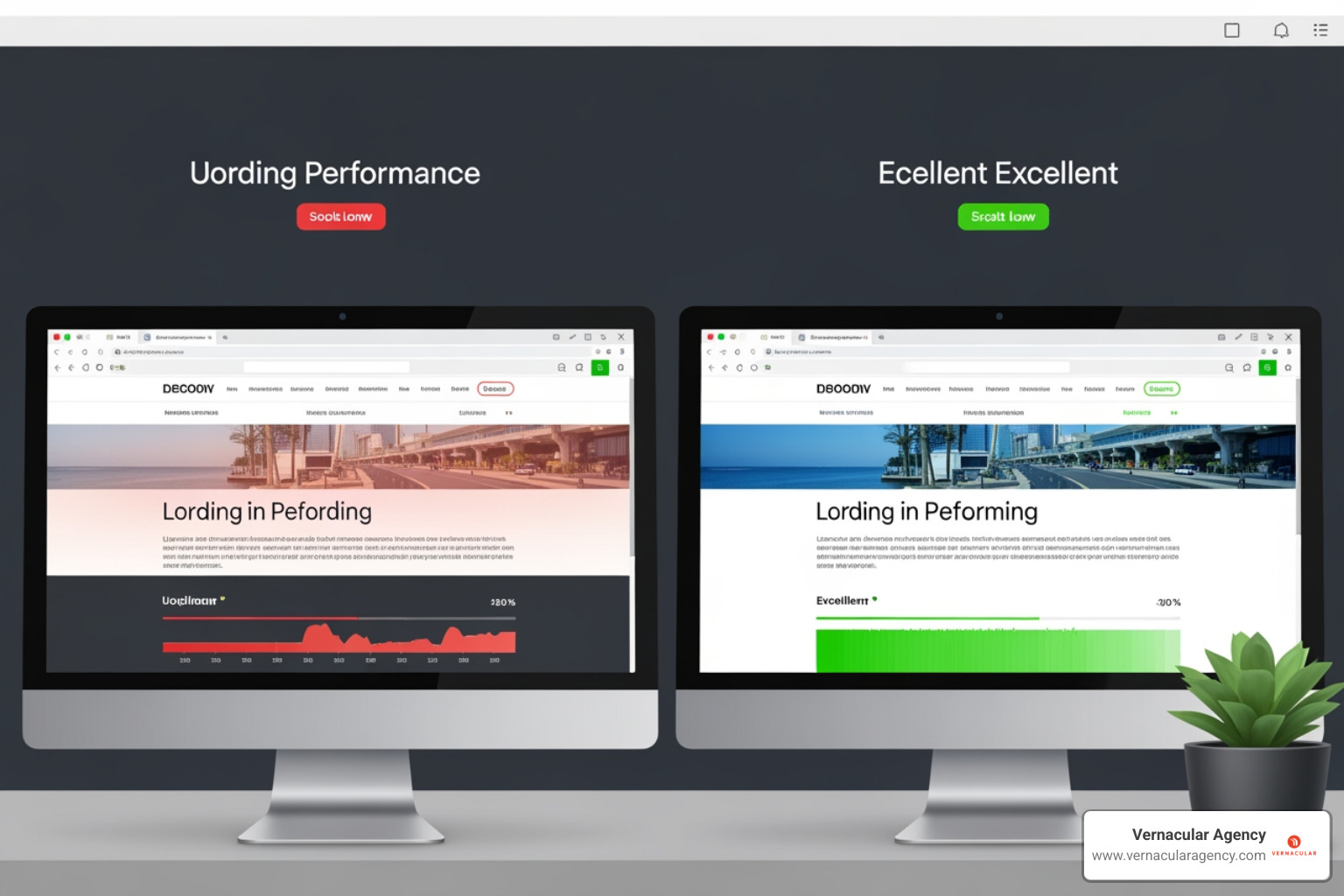
A well-designed website won't help your SEO if search engines can't understand it, or if users leave in frustration. We ensure your site's foundation is strong, making it easy for both people and bots to steer. If you're curious about your site's current performance, tools like GTMetrix can provide valuable insights.
For comprehensive support in this area, consider our SEO Website Optimization & Management services.
On-Page Optimization for Project Portfolios and Services
Your website's pages need to be crafted for both visual appeal and search engine visibility.
- Optimizing title tags and meta descriptions: The title tag (search result headline) and meta description (summary below) should be compelling, include primary keywords, and encourage clicks. Keep title tags under 60 characters and meta descriptions under 155 to avoid being cut off.
- Structuring content with headers (H1, H2, H3): Headers make content readable and help search engines understand the page's hierarchy. Each page should have one H1 for the main topic, with H2s and H3s for sub-topics.
- Image SEO for architects: This is vital for image-heavy architecture websites. Search engines can't "see" images, but they can read associated text.
- Descriptive alt text: This describes the image for visually impaired users and search engines. Instead of "IMG_1234.jpg", use "alt='modern residential kitchen design Portland ME'". This is also important because 23% of all Google searches happen through Google Images.
- Keyword-rich file names: Rename image files with relevant keywords before uploading (e.g., "contemporary-home-exterior-falmouth-maine.jpg").
- Optimizing portfolio and service pages: Each project and service needs its own page with unique, keyword-rich content. Add descriptive text explaining the project's scope and your firm's approach, incorporating keywords naturally.
- Internal linking strategy: Internal links connect your pages, helping Google understand your site's structure. We use descriptive anchor text to link from portfolio projects to service pages or from blog posts to case studies. This can boost organic traffic by up to 40%.
For a deeper dive into optimizing your online presence, consult A guide to Architecture Firm Websites.
Key Technical SEO Elements for Architects
Your website's technical backbone plays a huge role in its search performance.
- Mobile-first indexing: Google primarily uses the mobile version of your site for ranking, so your website must be mobile-friendly and responsive. With over 60% of searches on mobile, this is a user experience necessity.
- Website speed optimization: More than 53% of visitors leave if a page takes over 3 seconds to load. We optimize speed by compressing images, minimizing code, and leveraging browser caching.
- HTTPS for security: A secure website (HTTPS) is a non-negotiable ranking factor. It protects user data and signals trust to visitors and search engines.
- Creating an XML sitemap: An XML sitemap is a roadmap for search engines, listing all important pages to help Google crawl and index your content more efficiently.
- Using Schema markup for local businesses: Schema markup is structured data that helps search engines understand your content's context. Using "LocalBusiness" schema improves your visibility in local search by providing specific details about your firm (address, phone, services).
These technical elements ensure your website is crawlable, fast, and secure. If you're looking to build a new website with these principles in mind, our Website Design for Architects services can help.
Winning Locally: Mastering Local SEO for Architecture Firms
Since most clients are local, local SEO is an indispensable part of SEO for architecture firms. With 46 percent of Google searches being for local businesses, appearing in local results is non-negotiable for connecting with high-intent prospects in your area.
Two critical components of local SEO are NAP consistency and local citations. NAP stands for Name, Address, and Phone Number. Ensuring this information is consistent across all online platforms is crucial. Local citations are mentions of your business on other websites and directories. The more consistent and accurate your NAP information is, the more trustworthy your business appears to Google, boosting your local search rankings.
Optimizing Your Google Business Profile
Your Google Business Profile (GBP) is arguably the most important local SEO tool for architecture firms. It's your firm's free storefront on Google Search and Maps.
- Claiming and verifying your profile: This is the essential first step to managing your listing.
- Filling out every section: Completely fill out your profile with services, hours, a business description, and correct categories for better visibility.
- High-quality photos of projects and team: Showcase your work with stunning photos of completed projects, your office, and your team. Google notes that listings with images get 42% more requests for directions and 35% more clicks.
- Encouraging and responding to reviews: Encourage client reviews and respond to all feedback. Responding to reviews and keeping them recent is crucial, as 56% of users prefer responsive businesses and most ignore reviews older than 3 months.
- Using Google Posts to share updates: Use Google Posts to share news and updates directly on your GBP listing. This keeps your profile active with fresh content.
Building Local Authority and Citations
Beyond your GBP, build local authority by getting your firm mentioned across the web.
- Getting listed in key directories: List your firm in relevant business and industry-specific directories like Houzz, ArchDaily, Architizer, and AIA.org.
- Sponsoring local events: Sponsor or participate in local events to earn mentions and links from community organizations.
- Partnering with local builders and realtors: Partner with local builders and realtors for valuable cross-promotion and backlinks.
- Creating location-specific service pages: If you serve multiple towns (e.g., Portland, Kennebunkport), create dedicated landing pages for each. Highlighting projects and testimonials specific to that area with local keywords can lead to up to 40% more organic traffic.
By focusing on these local SEO strategies, you'll ensure that when a potential client in your service area searches for an architect, your firm is front and center. Learn more about our approach to Lead Generation for Architects.
Expanding Your Influence: Content, Backlinks, and Authority
Effective SEO for architecture firms goes beyond being found; it's about building trust and credibility. High-quality content and a strong backlink profile are key to showcasing your expertise and expanding your influence.
Think of backlinks as votes of confidence. When another reputable website links to yours, it tells Google your site is a valuable source. In fact, a website's rank is determined by how often it is referenced by others. Websites with solid backlink profiles rank significantly higher than those without, which is crucial for establishing your firm's authority.
Why is Content Marketing Crucial for SEO for Architecture Firms?
Content marketing is the fuel for your SEO. It helps you answer client questions, target long-tail keywords, build authority, and keep your website fresh.
- Blogging for architects: A blog is an excellent platform to share your knowledge and insights. Consistently creating high-quality content is one of the most important things you can do for SEO and can lead to 67% more leads per month.
- Answering client questions: Turn common client questions into blog posts. Topics like "Do I need an architect for a renovation?" or "How does sustainable architecture add property value?" are great starting points.
- Blog topic ideas:
- Project case studies (detailing your process and solutions)
- Design process explanations ("From Concept to Construction: Our Design Process")
- Budget and timeline guides ("Understanding Custom Home Design Costs in Maine")
- Sustainable material guides ("Choosing Eco-Friendly Materials for Your Home")
- Local zoning or permit process explanations
- Behind-the-scenes glimpses of your firm
- Creating resource centers: Beyond blog posts, create dedicated resource pages with glossaries, project estimators, or guides to local building codes. The Up Studio's resource page, for example, includes tools like calculators and quizzes. Such resources naturally attract links and establish your firm as an expert.
Consistent, high-value content establishes your firm as an authority, a key component of Google's E-E-A-T signals. For guidance on structuring your content strategy, refer to Our guide to creating an Architecture Marketing Plan.
Strategies for Building High-Quality Backlinks
Building backlinks is about earning endorsements from other reputable websites, where quality matters more than quantity.
- Guest posting on design blogs: Write guest articles for design blogs or publications like Dwell, Dezeen, or ArchDaily to gain exposure and a valuable backlink.
- Submitting projects for awards: If you win an award, ensure the awarding body links to your site for an authoritative backlink.
- Getting featured in publications: Pitch projects to design magazines and request a link back to your site when featured.
- Leveraging industry profiles: Ensure your profiles on industry platforms like the AIA website, Houzz, and Architizer link to your website.
- Digital PR: Create shareable assets like infographics or original research to attract media attention and backlinks.
- Collaborations: Cross-link with project partners like builders and interior designers.
These strategies help build your firm's domain authority, signaling to search engines that you are a trusted voice in the industry. For more on how to strategically position your firm, see More on our Brand Identity services.
Measuring Success and Future-Proofing Your Strategy
Just like designing a building, SEO for architecture firms requires a clear vision and measurement. It's a continuous process, not a one-time fix. Tracking key performance indicators (KPIs) and adapting to changes are crucial for long-term success. SEO is a marathon; while some results appear in weeks, significant impact takes 3-6 months and grows over time.
Social media can also indirectly support your SEO. While social links don't pass direct authority, sharing your visual work on platforms like Instagram, Pinterest, and LinkedIn increases traffic and promotes content to a wider audience, which can lead to more backlinks.
To know if your SEO efforts are paying off, you need to track them diligently.
- Using Google Analytics and Google Search Console: Use free tools like Google Analytics to track traffic and user behavior, and Google Search Console to monitor keyword rankings and technical issues.
- Monitoring organic traffic and keyword rankings: Monitor for steady growth in organic traffic and improvements in your target keyword rankings.
- Tracking leads and conversions: Track form submissions, phone calls, and other inquiries from organic search to calculate your return on investment. You'll be 60% more likely to hit your marketing goals when you track your metrics.
- Quarterly strategy reviews: Review your SEO for architecture firms strategy quarterly to update content and adapt to new trends or algorithm changes.
Common Mistakes in SEO for Architecture Firms
Here are some common pitfalls to avoid:
- Image-only portfolios with no text: Without descriptive text and alt tags, your beautiful projects are invisible to search engines.
- Overusing industry jargon: Use clear, accessible language your clients will understand, not just industry jargon.
- Neglecting mobile optimization: A site that isn't fast and user-friendly on mobile loses traffic and risks lower rankings.
- Inconsistent content creation: Google favors regularly updated sites, so a consistent content strategy is key.
- Ignoring local SEO: Ignoring your Google Business Profile and local keywords is a major missed opportunity.
- Lack of internal linking: Failing to link related pages hinders Google's ability to understand your site's structure and distribute authority.
For a comprehensive understanding of these and other mistakes, check out Our complete guide to SEO for Architects.
Emerging SEO Trends for Architects
The digital landscape is constantly evolving. Staying ahead of these trends ensures long-term visibility.
- The rise of AI in search: With over 1 billion people using AI chatbots monthly, AI is the new front door to your business. It favors credible, detailed sources, making expert content more important than ever.
- Voice search optimization: Optimize for conversational, question-based phrases used in voice search (e.g., "Hey Google, find a sustainable architect near me").
- Visual search with tools like Google Lens: People use visual tools to find design inspiration. Optimize images with descriptive filenames and alt text for success in visual search.
- The increasing importance of E-E-A-T (Experience, Expertise, Authoritativeness, Trustworthiness): Google prioritizes content from experts. Showcase your licenses, detailed portfolio, awards, and testimonials. Strong E-E-A-T signals give you a 30% higher chance of ranking in the top 3 results.
Frequently Asked Questions about SEO for Architects
We often hear similar questions from architecture firms looking to boost their online presence. Here are some of the most common ones:
How long does it take to see results from SEO?
SEO is a long-term investment. You may see initial improvements within 3-4 months, but significant results like a noticeable increase in qualified leads typically take 6-12 months. Returns compound over time, so consistent effort is key.
Can I do SEO myself, or should I hire a professional?
While architects can handle basic SEO like content creation and updating a Google Business Profile, technical SEO, advanced keyword research, and backlink building often require professional expertise. A DIY approach can work for fundamentals, but hiring an agency like Vernacular Agency yields faster, more comprehensive results.
What is the most important part of SEO for an architecture firm?
For most architecture firms, local SEO is the most critical component. Being found by clients in your service area (like Portland, Maine) is paramount, making an optimized Google Business Profile and local content essential. However, a technically sound, mobile-friendly, and fast-loading website is the foundation for all other SEO efforts.
Turn Your Blueprints into Business
We've covered keyword research, technical SEO, local optimization, content, and backlinks. With over 70,000 architectural firms in America and 75% of searchers never leaving page one, competition is fierce. Your online presence must be more than a website; it must be a lead-generating machine that connects your expertise with clients actively searching for your services in Portland, Maine, and beyond.
At Vernacular Agency, we help firms like yours build a powerful online presence that reflects your vision and attracts your ideal clients. We combine creative strategy with data-driven SEO for architecture firms to ensure your firm stands out.
Ready to stop blending in and start winning projects? Explore our marketing services to start building your digital legacy.
