
Maine architectural design blends centuries-old New England traditions with cutting-edge sustainability practices, creating homes and buildings perfectly suited to the state's rugged coastlines, dense woodlands, and harsh winters. Whether you're exploring site-specific residential projects, award-winning renovations, or high-performance builds, Maine's architecture reflects a deep respect for place, durability, and craft.
Key characteristics of Maine architectural design include:
Maine's architectural landscape is as varied as its terrain. Projects range from renovated public libraries that strengthen community ties to beachside residences designed to weather salt air and shifting tides. The 2025 Architecture Listing showcases 19 residential and commercial projects that demonstrate how Maine architects balance historic preservation with innovation—salvaging materials from old barns, integrating passive house principles into shingle-style cottages, and designing accessible one-story homes for aging in place.
What sets Maine apart is the marriage of humble, vernacular forms with modernist aesthetics. Architects use agrarian building shapes, cedar shakes, and board-and-batten siding, then pair them with floor-to-ceiling glass, Corten steel panels, and open floor plans that maximize natural light and coastal views. Firms like 30X40 Design Studio have gained over 1 million YouTube followers by documenting this "simple, modern" approach inspired by Mount Desert Island's landscape near Acadia National Park.
Sustainability drives much of the conversation. Many new builds exceed energy codes through continuous insulation, triple-glazed windows, and energy recovery ventilation. Solar arrays, heat pumps, and tight building envelopes help homes stay below 70°F on hot days without air conditioning—and warm through Maine's brutal winters without fossil fuels. The "Pretty Good House" philosophy, developed by Maine architects, promotes high-performance homes that don't cost more than necessary.
Challenges shape the work. Shoreland setbacks, ledge outcroppings, historic preservation requirements, and zoning restrictions force creative solutions. Architects design compact footprints on constrained coastal lots, salvage foundations from demolished structures, and preserve mature trees and existing gardens. These constraints often become the most celebrated features of finished projects.
I'm Rebecca Falzano, Creative Director with nearly 15 years as a shelter magazine editor and writer covering Maine architectural design in both New York City and Maine. I've collaborated with architects, designers, and photographers to document how Maine's built environment reflects regional identity through durable materials, thoughtful craftsmanship, and precise responses to place.
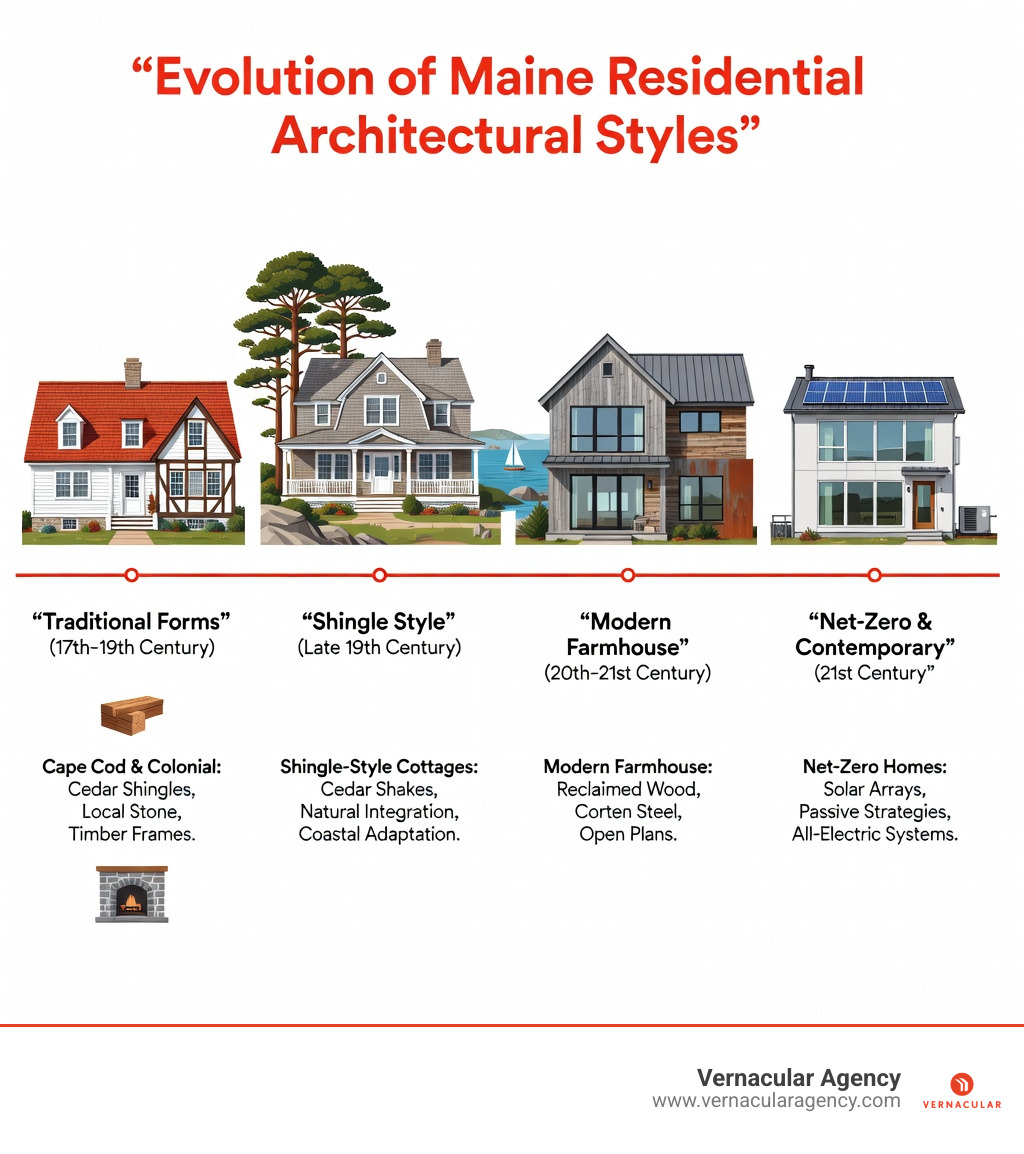
When we look at the most successful examples of Maine architectural design, we see a consistent dialogue between the past and the present. It isn't just about building a house; it’s about creating a "shelter" that feels like it has always belonged to the land.
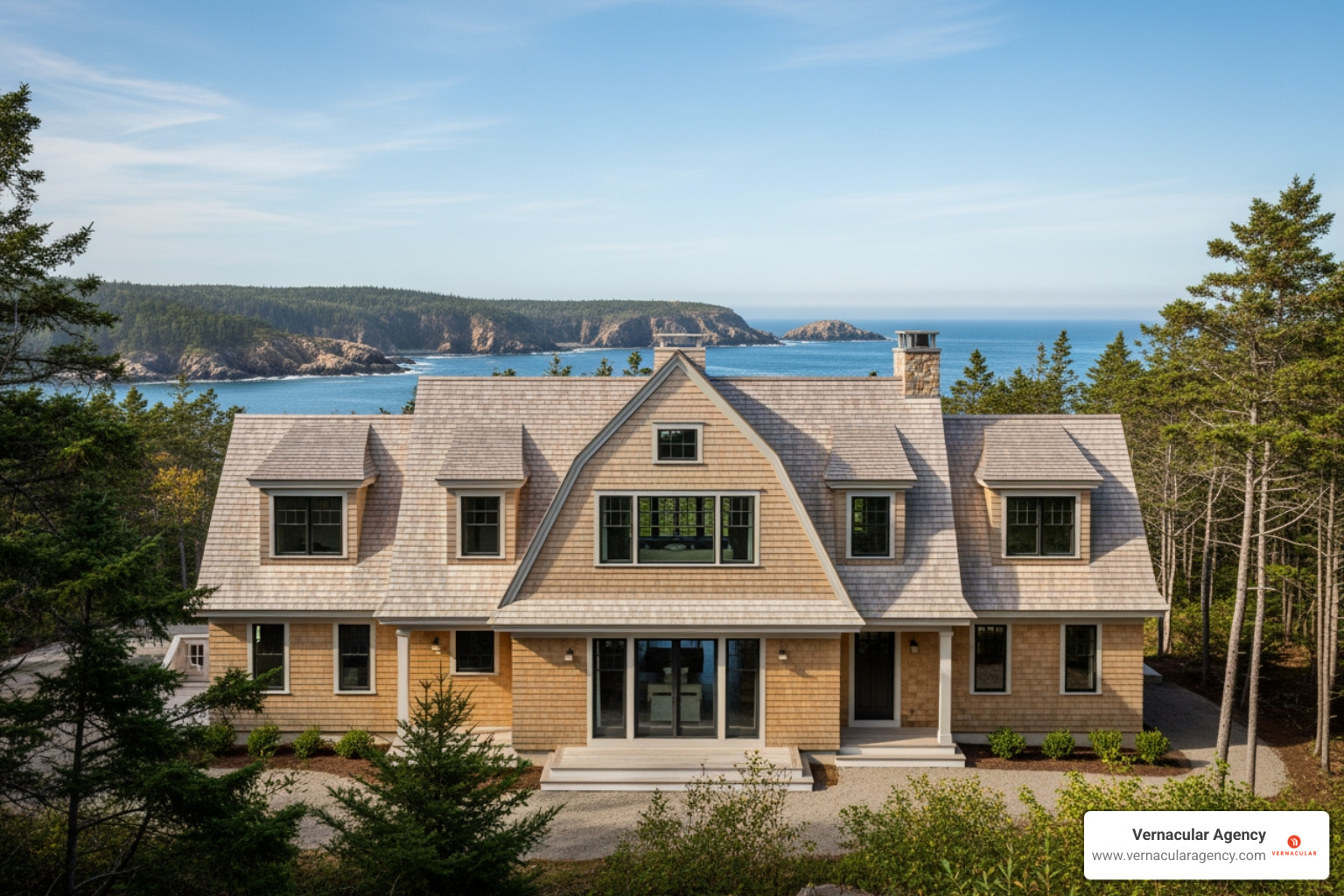
| Element | Traditional New England | Modern Maine Influence |
|---|---|---|
| Windows | Small, multi-pane (heat retention) | Large, triple-glazed (solar gain/views) |
| Materials | Local timber and stone | Corten steel and charred wood |
| Heating | Central masonry chimney | Air-source heat pumps and solar |
| Layout | Compartmentalized rooms | Open-concept with "aging-in-place" flow |
To stay inspired by these evolving styles, you can Subscribe to Maine Home + Design to see the latest projects delivered to your door.
We are seeing a bold shift toward "weathering" materials that require little maintenance. Weathering steel (Corten) and charred wood (Shou Sugi Ban) are becoming staples for homes located in harsh coastal environments. These materials don't just "resist" the elements; they use them to develop a protective patina.
For instance, the "Weathering Steel House" in Kittery Point uses Corten panels that turn a deep rust orange, echoing the tones of the surrounding oak trees and ledge. Similarly, black locust siding is being used for its incredible durability against rot, often outlasting traditional pressure-treated lumber.
Maine is a treasure trove of Victorian landmarks and Georgian Revival structures. The challenge for a modern Architect Firm is adding modern livability without erasing history.
Adaptive reuse is a major theme. We’ve seen projects where salvaged foundations from 19th-century structures are used as the base for ultra-modern glass-and-steel additions. In Pownal, the "Meadow Ridge" project even repurposed old farmhouse floorboards as mudroom built-ins, creating a physical link between the site's history and its new inhabitants. If you're looking for inspiration on how firms present these complex stories, check out our guide on the Architecture Portfolio Website.
The Maine design scene is currently booming with talent. In 2024, Whitten Architects made headlines by receiving three AIA Maine Design Awards for their projects: Tidehead Woods House, The Narrows, and Falls Pasture. Their work is a masterclass in site-specific design, often nestling buildings into the landscape so they are barely visible from the water. You can explore more of their portfolio at the Whitten Architects project showcase.
Another firm pushing boundaries is Kevin Browne Architecture, known for creating "Modern Spaces inspired by the outdoors." Their approach often involves taking the limitations of a site—like a steep ledge—and turning them into the home's most striking feature.
We also can't discuss Maine architectural design without mentioning 30X40 Design Studio. Founded by Eric Reinholdt on Mount Desert Island, it has become the most popular architectural channel on YouTube with over 1 million followers. Reinholdt’s focus on "simple, modern" residential architecture has demystified the design process for a global audience, all while staying rooted in the humble materials of the Maine vernacular. For firms looking to emulate this digital success, our Architecture Firm Website Complete Guide offers deep insights.
Maine’s geography is incredibly diverse, and the architecture reflects that.
Architecture in Maine isn't just about luxury homes; it's about community resilience. Recent library renovations, such as the Louis B. Goodall Memorial Library in Sanford and the Rice Public Library in Kittery, show how historic Georgian Revival buildings can be expanded with transparent, welcoming additions that serve as modern community hubs.
Infill housing is another critical area. Seavey Terraces in Westbrook is a 64-unit project providing much-needed workforce and senior housing, proving that good design can solve urban density issues while maintaining a sense of place. Architects working on these public-facing projects often rely on specialized marketing; see our SEO Agency for Architects page for how these firms reach their communities.
In Maine, sustainability isn't a luxury; it’s a necessity for comfort and longevity. The "Pretty Good House" philosophy—pioneered by local experts—posits that we should design homes that are energy-efficient, durable, and "cost no more than necessary."
Key strategies include:
One client of the "Pretty Good House" approach noted that their house stays below 70°F during Maine’s increasingly hot summers without any air conditioning. That is the power of smart Website Design for Architects and engineering coming together.
Designing for Maine means designing for "The Salt and The Snow." Coastal homes must withstand shifting tides and salt air that can corrode standard hardware in months. This leads architects to choose black locust, stainless steel, and high-performance finishes.
Building here isn't easy. Architects frequently deal with:
Successfully navigating these problems requires a strong brand and clear communication with clients. For more on how firms manage these professional challenges, see our Architect Marketing Complete Guide.
While the traditional Cape Cod and Colonial remain staples, the Modern Farmhouse and Craftsman styles are currently leading in popularity. According to Maine House Plans, there are over 203 "Country" style plans and 132 "Craftsman" plans currently active. For those looking for pre-designed options, Maine House Plans offers a curated selection custom to our climate.
They use a "site-specific" approach. This means mapping the path of the sun to maximize natural light, preserving mature trees rather than clear-cutting, and using "humble materials" like cedar and stone that mirror the colors of the Maine woods. You can see many examples of this on top Architecture and Design Websites.
The future is resilient homesteads. We are moving toward all-electric designs that can function off-grid if necessary, using low-carbon materials and building in locations that account for rising sea levels and shifting coastal boundaries.
Maine architectural design is a testament to the idea that buildings should be "of" a place, not just "on" it. From the award-winning coastal retreats of Whitten Architects to the community-saving library renovations in Sanford, Maine's built environment continues to set a national standard for beauty, resilience, and craft.
At Vernacular Agency, we understand the unique language of Maine's design community. We specialize in helping architects, builders, and designers define their brand identity and create SEO-optimized websites that showcase their life's work. Whether you are looking for a comprehensive marketing plan for your architecture firm or need a dynamic new brand identity, we provide the creative solutions to help you stand out in the Maine market and beyond.
Ready to build your brand’s future? Explore our marketing services today.
