

Successful marketing campaigns for small business don't need a Fortune 500 budget. They require strategic thinking and unconventional tactics larger competitors often overlook. Here's what works:
To break through the noise and grab buyers' attention, you need something compelling to say. The challenge isn't just big budgets; it's that most small businesses use the same tired playbook that stopped working years ago.
The data is clear: email marketing generates an average return of $36 for every dollar spent, ranking first on Google earns approximately 29% of users' clicks, and 80% of consumers want retailers to personalize their shopping experience. Small businesses can win, but not by playing the same game as everyone else.
This guide reveals seven unconventional, effective marketing hacks to help you stand out, connect with customers, and grow your business without breaking the bank. These are battle-tested tactics used by successful small businesses to punch above their weight.
I'm Rebecca Falzano, a Creative Director with nearly 15 years of experience helping brands execute effective marketing campaigns for small business. From New York City to Maine, I've seen which strategies move the needle for resource-constrained businesses and which ones just drain budgets.
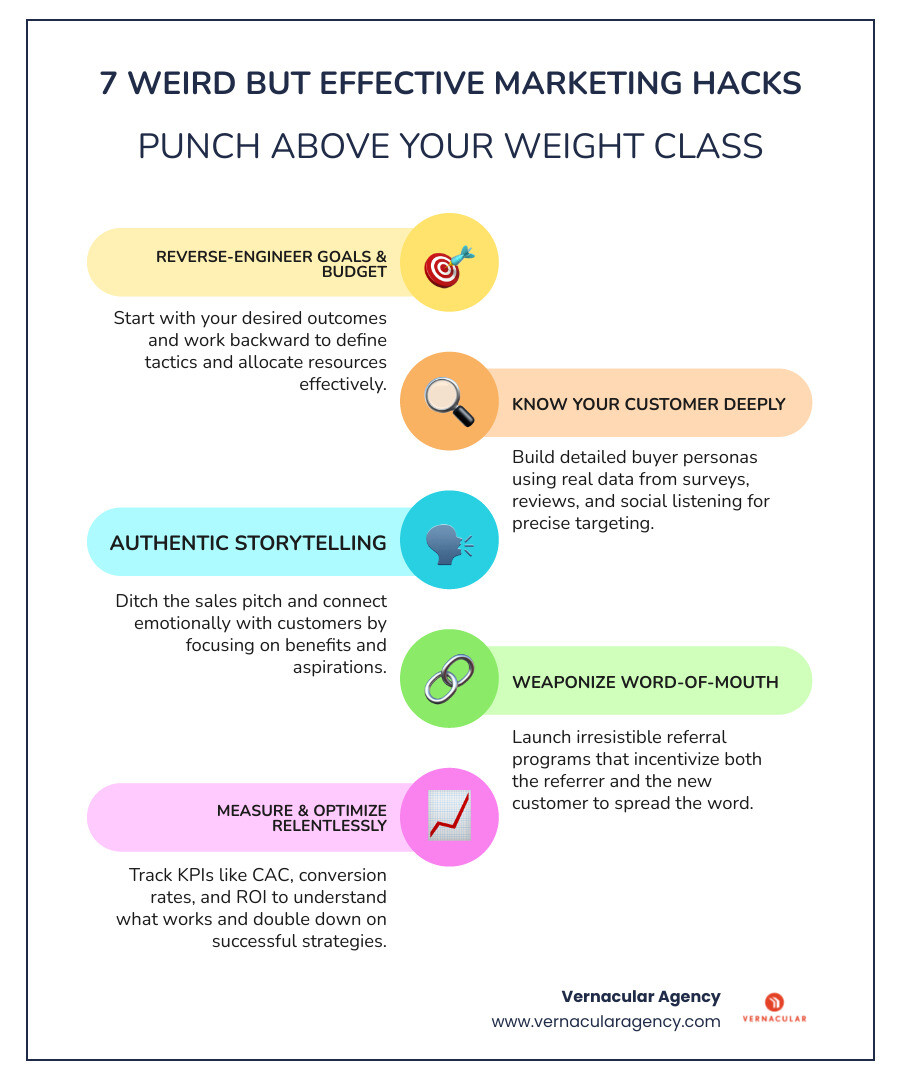
Before getting creative, you need a solid foundation. These first hacks ensure your efforts are aimed at the right target with a clear purpose. The most impactful marketing campaigns for small business are built on clear objectives and deep customer understanding.
It's crucial to know the difference between a campaign and ongoing marketing. A marketing campaign is a strategic, time-bound initiative with a specific goal, budget, and deadline (e.g., a product launch). Think of it as a focused sprint. Ongoing marketing includes the continuous activities that maintain your brand presence, like social media posts or newsletters. A campaign is a concentrated effort to achieve a measurable objective.
A common mistake is launching a marketing campaign for small business without a clear destination. Just like a road trip, your marketing needs a goal.
The first step is to set clear and measurable goals for a marketing campaign. We recommend using the SMART framework:
So, a SMART goal might be: "Increase sales of our new eco-friendly product line by 15% by the end of the next quarter." This level of clarity gives your marketing campaign for small business a true north. For a deeper dive into setting effective objectives, check out A guide to setting marketing objectives.
With clear goals, you can set a realistic budget. This is "reverse-engineering": if you need to sell X units, how much can you spend to acquire each customer? A common rule is allocating 12-20% of gross revenue for new businesses and 6-12% for established ones.
Another crucial metric to consider is Customer Lifetime Value (CLTV). This helps you understand how much income you generate from an average customer over their entire relationship with your business. Knowing your CLTV allows you to make informed decisions about how much you can reasonably spend to acquire a new customer. For more insights into planning and budgeting, our guide on a Marketing Plan for Architecture Firm offers relevant strategies that can be adapted for any small business.
A word to the wise: never borrow money for marketing. Budget what you can afford. Even with a tight budget, many free and low-cost ideas can lift your business.
A brilliant marketing campaign for small business idea is useless if it doesn't reach the right people. This hack is about 'ethical stalking'—deeply researching your potential customers to understand their needs, desires, and behaviors.
Start by defining your target audience beyond just broad categories. Who are your current customers? What products or services are they buying and why? How are they finding you? Where do they spend their time online? These questions help paint a detailed picture.
Then, create buyer personas. These are semi-fictional representations of your ideal customers, based on real data and some educated guesswork. A good buyer persona includes:
For example, if you're a local bakery in Portland, Maine, your persona might be "Busy Parent Brenda," 35-45, works full-time, lives in the suburbs, values organic ingredients, struggles to find time for baking, and uses Instagram for local recommendations.
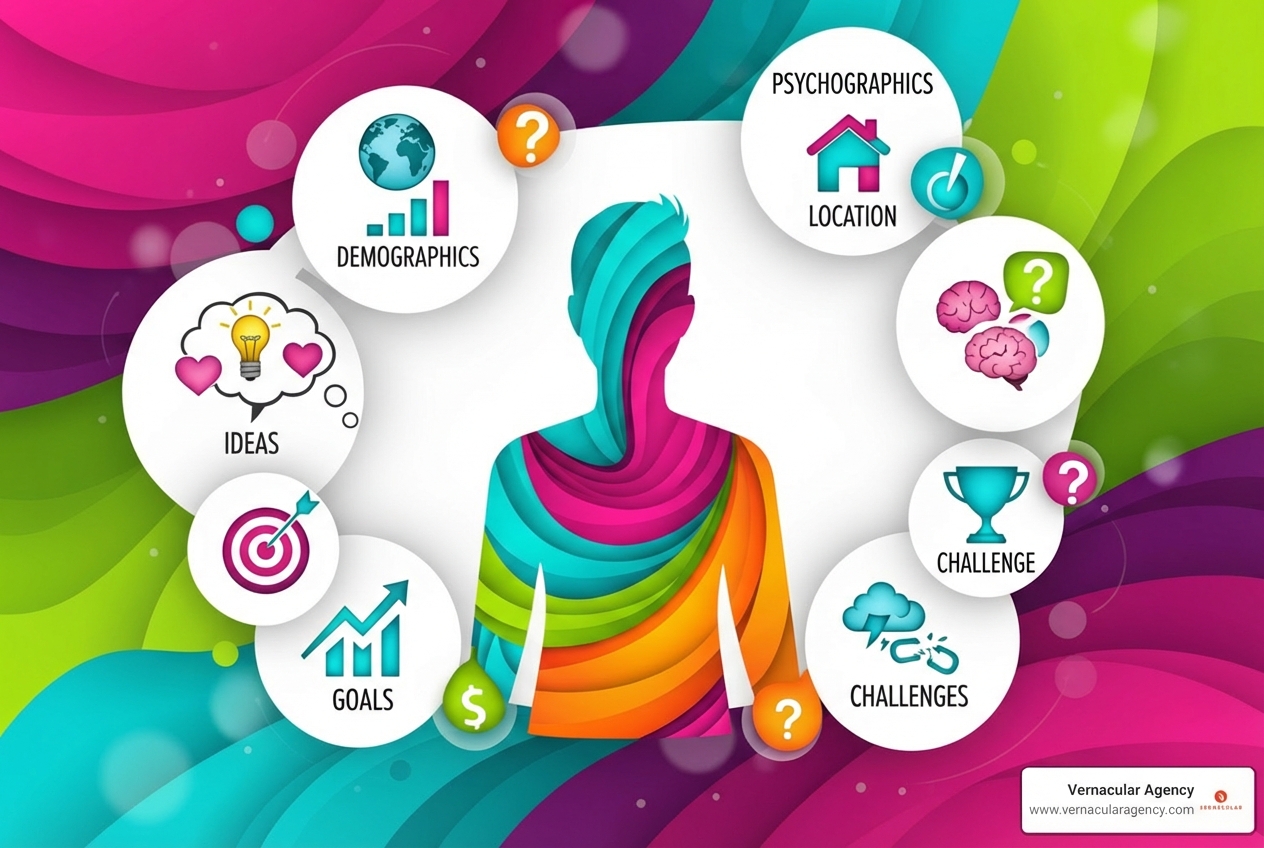
How do we gather this information? Customer research is key.
Understanding your audience at this level allows for powerful personalization. 66% of customers expect companies to understand their unique needs and expectations. When you speak directly to their challenges and aspirations, your message resonates, and your marketing campaign for small business becomes more effective. To learn more about honing in on your customer base, explore the "Identify Your Customer" lesson on Salesforce Trailhead.
The challenge is cutting through digital noise on a limited budget. Simply being present isn't enough; you must stand out. The solution is using authenticity, storytelling, and strategic design. Creativity, not capital, is your superpower. For insights on crafting compelling narratives, our guide on Architectural Content Writing digs into similar principles that can lift any business's content.
Consumers are tired of ads; they crave connection and authenticity. This is where storytelling shines. A compelling marketing campaign for small business weaves a narrative that resonates emotionally, rather than just listing features.
Focus on benefits, not features. Instead of "Our coffee is 100% Arabica beans," tell a story: "Our coffee helps you seize the morning, turning your daily ritual into a moment of bliss." This connects with aspirations and solves a pain point (a groggy morning).
Authentic messaging is paramount. Your brand voice and tone should reflect your business's true personality and values. Can you be playful, or should you maintain a more serious demeanor? This isn't about being slick or polished; it's about being real.
Consider the success of RXBAR. Their packaging famously features the ingredients, "No B.S." This simple, authentic message resonated deeply with consumers seeking transparency and real food.

Dove's #Faceof10 campaign is another powerful example. Building on its 'Campaign for Real Beauty,' Dove joined the conversation around young girls using advanced skincare. Instead of selling products, the campaign addressed a cultural concern, reframing skincare as age-appropriate creativity. It garnered over 1.5 million organic views and led to a 209% increase in related searches, showing how purpose-driven storytelling builds brand affinity.
In an age of polished corporate videos, low-fi content has surprising power. Less 'produced' your content is, the more authentic and relatable it feels. It’s about raw honesty over glossy perfection.
Think founder-led videos, behind-the-scenes glimpses, or even simple smartphone recordings. This content builds trust and feels more genuine than slick ads because it humanizes your brand, showing the real people and passion behind it.
A legendary example of this is Dollar Shave Club's viral video. With only a $4,500 budget, co-founder Michael Dubin created a hilarious, low-budget video that went viral. It was quirky, unconventional, and perfectly captured the brand's personality. The video's success led to a $1 billion acquisition by Unilever, proving creativity can trump massive budgets.
User-Generated Content (UGC) is another fantastic way to leverage this hack. Encourage your customers to share their experiences with your product or service. This could be photos, videos, or reviews. UGC acts as powerful social proof and is inherently authentic, making your brand more relatable and trustworthy. People trust other people more than they trust ads.
Don't just rely on standard digital ads. While Facebook ads and SEO are important, true growth comes from niche tactics competitors overlook. These hacks focus on community and clever positioning, allowing your marketing campaign for small business to resonate deeply without breaking the bank. For a broader understanding of digital strategies, our guide on Digital Marketing for Architecture & Design Studios provides applicable insights for various industries.
Aim for more than loyal customers—build a "cult of love." This hack is about creating a community of passionate advocates who champion your brand. It leverages social proof: people trust brands more when they see others doing the same.
Slack, the popular instant messaging app, masterfully built its "Wall of Love." This isn't a physical wall; it's an X (formerly Twitter) account, @SlackLoveTweets, dedicated to retweeting users' glowing remarks and positive experiences with Slack. This brilliant strategy amplified user-generated content, provided social proof, and helped Slack grow to over 8 million active daily users. It's authentic, ongoing, and effective.
Central to converting this love into action is a strong Call to Action (CTA). Your CTA is the bridge between your compelling message and the desired action you want your audience to take. What makes a strong CTA for a small business campaign?
Here's a quick comparison:
| Weak CTA Example | Strong CTA Example |
|---|---|
| Sign up for your free trial today. | Open up the exciting potential benefits of [product] today with your free seven-day trial. |
| Learn More | Get Your Personalized Quote Now |
| Download E-book | Claim Your Free Guide to Boosting Sales |
The CTA is arguably the most critical part of marketing content, where your hard work culminates. Add an email signup form to your content to make it easy for your audience to stay in touch with updates and offers.
Word-of-mouth is a superpower for small businesses. This hack formalizes it into a structured, highly effective marketing campaign for small business.
An irresistible referral program incentivizes both the referrer and the new customer. Lyft provides a fantastic example. Their referral program allowed users to invite riders and drivers via the app, email, or SMS. With a max of $2,000 per week in free rides, the high limit incentivized users to promote Lyft aggressively. This generous structure made it attractive for existing users to spread the word, bringing in new customers.
Key elements for a successful referral program:
This strategy is particularly potent for hyper-local marketing efforts. Imagine a local business in Maine encouraging its satisfied customers to refer neighbors. You could also cross-promote with other local businesses. By partnering with a complementary business (e.g., a local coffee shop and a bookstore), you can offer a joint special or promotion, expanding your reach beyond your existing customer base. This approach can be a powerful driver for [Lead Generation for Architects] (https://www.vernacularagency.com/updates/lead-generation-for-architects) and other service-based businesses, leveraging community trust.
Measurement is a hack because it stops you from wasting money. For small businesses, every dollar counts. This hack is about making data-driven decisions to ensure your marketing campaigns for small business are continuously improving and delivering the best possible return on investment.
Key Performance Indicators (KPIs) are your best friends. These quantifiable metrics track campaign success against your goals. Without them, you're just guessing.
A/B testing (or split testing) is a powerful way to optimize your marketing. It involves comparing two versions of an asset (like an email or ad) to see which one performs better. The key is to test only one variable at a time.
For example, you might test:
By systematically testing different elements, you can refine your campaigns to achieve maximum effectiveness. A study from SISTRIX shows that ranking first on the first page of search results earns approximately 29% of users’ clicks, highlighting the importance of optimizing every element that impacts visibility and engagement.
Common pitfalls to avoid when A/B testing:
Understanding these metrics is crucial for measuring the success of your marketing campaigns for small business:
CAC = Marketing Spend / New Customers. Keeping this number low is vital for profitability.ROI = (Revenue - Cost) / Cost.To track these metrics, you need the right tools. We recommend you Set up a Google Analytics account. This free tool tracks visitor data and generates reports to help you make data-based decisions. It provides insights into demographics, content performance, conversions, and more.
A marketing campaign for small business is a specific, time-bound initiative with a defined goal, start, and end date (e.g., a holiday sale). Ongoing marketing refers to continuous activities that maintain your brand's presence, like weekly blog posts or daily social media updates. Campaigns are sprints; ongoing marketing is a marathon.
There's no single answer, but here are guidelines. New businesses often allocate 12-20% of their gross revenue to marketing, while established ones might spend 6-12%. The most practical approach is to budget what you can afford and focus on high-ROI activities. Consider your Customer Lifetime Value (CLTV) to determine a profitable acquisition cost. Some of the most successful campaigns had very limited budgets, relying on creativity.
To maximize impact with minimal spend, focus on these effective low-budget channels for a marketing campaign for small business:
These channels require more time and effort than direct monetary investment, making them ideal for small businesses with limited financial resources.
Effective marketing is about the size of your ideas, not your budget. We've explored seven hacks to empower your marketing campaigns for small business: reverse-engineering goals, understanding customers, authentic storytelling, 'ugly' content, building a 'cult of love,' creating referral programs, and measuring everything. These strategies challenge conventional thinking.
The takeaway is clear: you don't need a massive budget to make an impact. You need to think differently, understand your customers, and commit to continuous learning. Start with one or two achievable hacks and build from there. Each successful campaign will bring customers and build your confidence.
At Vernacular Agency, we specialize in helping businesses, from local gems in Maine to national brands, craft compelling narratives and execute effective marketing campaigns. We know the unique challenges and opportunities that small businesses face, and we're passionate about helping you punch above your weight class.
Ready to launch a campaign that gets results? Explore our marketing campaign strategy services.