
Digital brand integration is the strategic practice of weaving brands authentically into digital content and entertainment—from streaming shows to social media posts to video games—so they improve the story rather than interrupt it. Here's what you need to know:
| Aspect | Key Point |
|---|---|
| What it is | Embedding brands naturally into digital content as part of the narrative or aesthetic |
| Why it works | 73% of viewers find integrations less intrusive than traditional ads, with 100% higher viewability |
| Core benefit | Creates memorable experiences that drive 35% higher brand recall than standard advertising |
| Success factor | The brand and content must have a clear, organic connection |
| Modern advantage | Reaches audiences who actively avoid or block traditional ads (26%+ use ad blockers) |
When consumers are bombarded with marketing messages but increasingly skilled at tuning them out, traditional advertising is losing its grip. Ad blockers are everywhere. Streaming platforms dominate. And audiences would rather skip, swipe, or pay extra to avoid interruptions.
This shift has forced brands to rethink how they connect with people. Instead of shouting at audiences, successful brands are finding ways to become part of the stories audiences already love. When a character in a streaming series casually drives a specific car or sips a recognizable beverage, it doesn't feel like an ad—it feels like reality. That's the power of integration done right.
The stakes are high. Brands that master this approach see remarkable results: a 70% increase in brand opinion, 90% boost in purchase consideration, and even 171% growth in related product sales, according to research on successful campaigns. But brands that force their way into content risk backlash from savvy audiences who can spot inauthenticity instantly.
I'm Rebecca Falzano, Creative Director at Vernacular Agency, where I've spent nearly 15 years guiding content creation and brand storytelling from initial concept to final execution. Through my work developing cohesive narratives across multiple platforms, I've seen how effective digital brand integration transforms scattered marketing efforts into unified brand experiences that truly resonate with audiences.
To truly understand digital brand integration, we first have to distinguish it from its older cousin, product placement. While product placement is the act of putting a logo or a physical product on screen, brand integration goes several steps further. It is the strategic incorporation of a brand’s values, identity, and products into the narrative flow or context of the content itself.
Think of it this way: product placement is a character holding a phone; digital brand integration is the character using that specific phone’s unique features to solve a problem that moves the plot forward. It’s about narrative weaving and aesthetic alignment. When a brand is integrated correctly, it serves a "story-driven utility"—it belongs in that world. This level of professional brand development ensures that the brand isn't just seen; it's felt and remembered.

The landscape of entertainment has changed drastically. We are currently living through the "streaming wars," where content saturation is at an all-time high. Traditional linear TV viewing is falling, while digital video consumption is skyrocketing. According to PWC research on streaming and entertainment trends, the Free Ad-Supported TV (FAST) market is expected to grow at a 25% compound annual growth rate.
This shift means that the "interruption model" of advertising—where we stop the show to play a 30-second commercial—is dying. Audiences are great at avoiding marketing messaging in digital environments. To reach them, brands must pivot toward "branded entertainment." Whether it's a beverage brand creating a storyline within a video game like FIFA or a car brand becoming a cultural icon through a film franchise like Transformers, the goal is to be the entertainment, not the break in between.
The biggest risk in digital brand integration is the "cringe factor." Modern audiences are incredibly savvy; they can smell a forced corporate partnership from a mile away. To avoid this, there must be a deep value alignment between the brand and the creator.
We often talk about architecture firm brand guidelines as a way to maintain consistency, and the same logic applies here. An integration must feel like an organic connection. If a rugged outdoor brand is integrated into a show about high-fashion socialites, it feels out of place and damages the brand's credibility. Authentic integration respects the emotional logic of the story. Fans don't hate brands; they hate bad writing and poor fit. When a brand acts as a utility that enriches the story world, it earns its place in the viewer's mind.
Why are we seeing such a massive shift toward this model? The data speaks for itself. When we compare traditional ads to digital integration, the results are startling.
| Feature | Traditional Interruptive Ads | Digital Brand Integration |
|---|---|---|
| Viewability | Often skipped or blocked | 100% higher viewability |
| Recall | Lower (easy to forget) | 35% higher brand recall |
| Intrusiveness | High (interrupts content) | Low (73% say it's less intrusive) |
| Relatability | Transactional | 63% say it makes brands relatable |
| Ad Avoidance | High (26%+ use blockers) | Low (unskippable narrative) |
By choosing architecture firm branding strategies that prioritize integration, we move away from "ad aversion" and toward genuine engagement.
Integration is a powerful tool for building long-term consumer relationships. By appearing in content that people already love, brands benefit from "halo effects"—the positive feelings associated with the show or influencer transfer to the brand. This creates an emotional connection that a standard banner ad simply cannot achieve.
In our work with branding and content creation, we emphasize that the brand should become a "trusted companion" in the consumer's lifestyle. When a brand is part of a cultural moment—like a specific candy being used to lure an extraterrestrial in a classic film—it gains cultural relevance that lasts for decades.
Does it actually sell products? Absolutely. A Nielsen study on product placement and brand recognition found that placements can raise brand recognition by 20%. But the impact on the bottom line is even more impressive.
For example, when a Buick Enclave was driven by a main character in a popular premium cable drama, Buick saw a 70% increase in brand opinion and a 90% increase in purchase consideration. This isn't just about being "seen"; it's about being seen as desirable within a stylized world. Digital integrations allow us to show, rather than tell, why a product is worth owning.
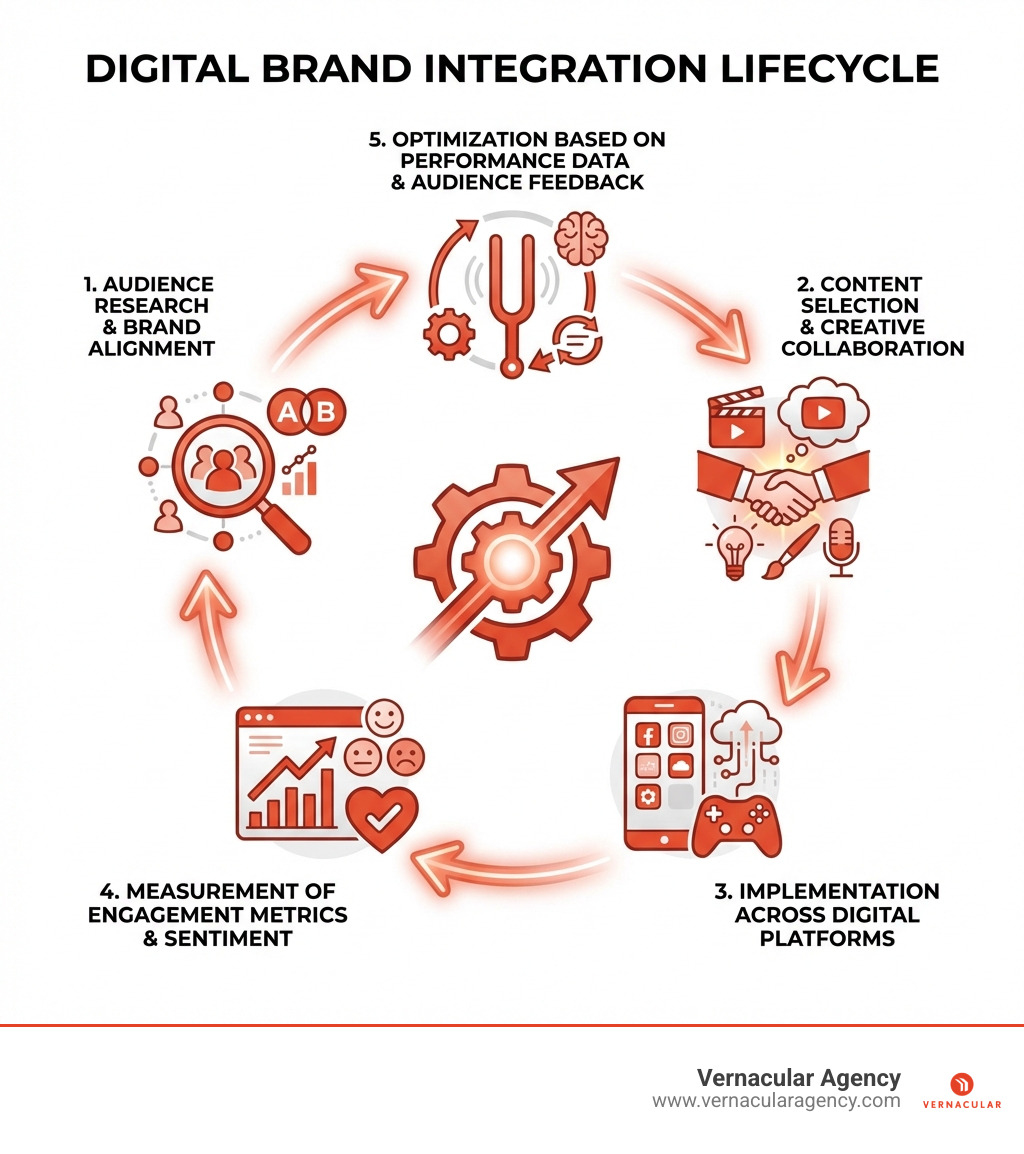
Successful digital brand integration doesn't happen by accident. It requires a blend of data-driven research and high-level creative collaboration.
Influencers are essentially their own media outlets. "Dynamically integrated influencer marketing" is one of the most effective ways to reach niche audiences. Unlike a celebrity endorsement, an influencer integration often involves co-creation. The influencer knows their audience best and can weave the brand into their daily content in a way that feels like a personal recommendation.
For those focusing on digital marketing for architecture and design studios, influencers can provide social proof by showcasing how they interact with designed spaces or specific products in their real lives. This peer-to-peer connection is far more valuable than a traditional commercial.
Even with the best intentions, things can go wrong. The most common pitfall is the "forced placement." If a character stops the plot to give a mini-lecture on the features of their new car, the audience will immediately check out. This narrative disruption breaks the "suspension of disbelief" and can lead to skepticism or even reputation damage.
Another challenge is misalignment. We always advise our clients to look at their marketing strategy for architects and ensure that every partnership reinforces their core truth. If you partner with a creator whose values don't match your own, you risk alienating your loyal base.
In the past, measuring the "vibe" of a brand placement was difficult. Today, we have sophisticated tools to track success. We no longer just look at "impressions" or "logo counts." Instead, we measure:
Using SEO website optimization management techniques, we can also track "downstream impact"—seeing if a digital integration leads to a spike in branded searches or website visits.
Technology is moving faster than ever, and it's making integration more targeted and immersive.
While product placement is about visibility (showing the product), digital brand integration is about participation (making the brand part of the story). Integration involves weaving the brand’s values and utility into the narrative so that it helps advance the plot or improves the world-building.
Beyond simple views, the most effective KPIs are brand lift (measured through surveys), purchase intent, contextual recall, and "participation metrics" like social media shares and user-generated content. For omnichannel campaigns, we also look at click-through rate increases in retargeting efforts.
Authenticity is maintained by choosing the right "fit." Brands should act as a utility within the story—appearing where they naturally belong. This requires a "story-first" approach where the brand supports the creator's vision rather than trying to take it over.
At Vernacular Agency, we believe that the future of marketing isn't about finding better ways to interrupt people; it's about finding better ways to join them. By mastering digital brand integration, we help our clients move from being a distraction to being a destination.
Whether we are developing a 360-degree marketing plan for a local Maine business or a national campaign, our focus remains on strategic storytelling and creative solutions. From brand definition to media placement, we ensure your brand feels like it belongs in the lives of your consumers.
Ready to make a deeper connection? Explore our digital marketing services and let's start telling your story together.